

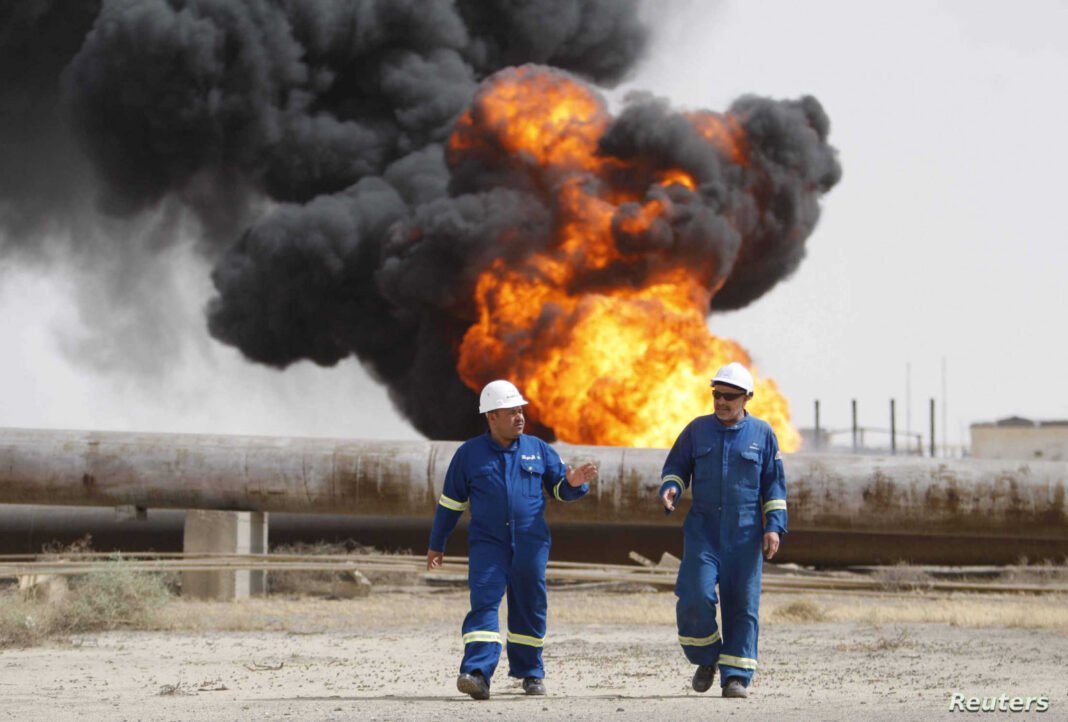
The Iraq gas flaring challenge remains a major concern for energy experts and policymakers, according to a new report from the World Bank. The latest findings place Iraq among the world’s leading gas-flaring countries in 2025. Alongside Iran and Russia, Iraq accounted for a significant share of gas burned off during oil production operations.
The World Bank’s Global Gas Flaring Tracker revealed that these three countries collectively flared around 84 billion cubic meters of gas during the year. That figure represents nearly half of all gas flared worldwide. The report also showed that global flaring increased for the third consecutive year, highlighting the difficulty many nations face in reducing waste and emissions.
Worldwide gas flaring reached approximately 167 billion cubic meters in 2025. According to the report, the estimated market value of the lost gas stood at about $54 billion. Such figures demonstrate the economic impact of flaring, especially for countries that continue to face energy shortages and growing electricity demand.
The Iraq gas flaring challenge carries both economic and environmental consequences. Large volumes of natural gas are burned instead of being captured and used. As a result, the country loses a valuable energy resource that could support domestic industries and strengthen electricity production.
The World Bank identified Iraq as one of nine countries responsible for more than 80 percent of global gas flaring. This concentration suggests that progress in a small group of nations could significantly reduce worldwide flaring levels. Experts have repeatedly emphasized that targeted reforms could produce meaningful results in a relatively short period.
At the same time, the report highlighted the opportunities available to countries that invest in gas recovery projects. Capturing gas from oil fields can improve energy security and create additional sources of fuel for power generation. It can also support economic growth by providing resources for industrial development and new investment.
Environmental benefits remain another important factor. Reducing gas flaring lowers greenhouse gas emissions and helps countries move toward cleaner energy practices. Many international organizations continue to encourage governments and energy producers to adopt measures that limit unnecessary burning of natural gas.
According to the World Bank, technology is no longer the primary obstacle. Instead, successful reduction efforts depend on stronger regulations, modern infrastructure, increased investment, and long-term political commitment. Countries that prioritize these areas often achieve faster progress in cutting flaring levels.
The Iraq gas flaring challenge therefore reflects a broader issue that combines energy management, economic planning, and environmental responsibility. While the country possesses substantial natural resources, experts argue that better utilization of associated gas could unlock significant benefits for both the economy and the energy sector. Future progress will likely depend on how effectively authorities and industry leaders address these long-standing challenges.