

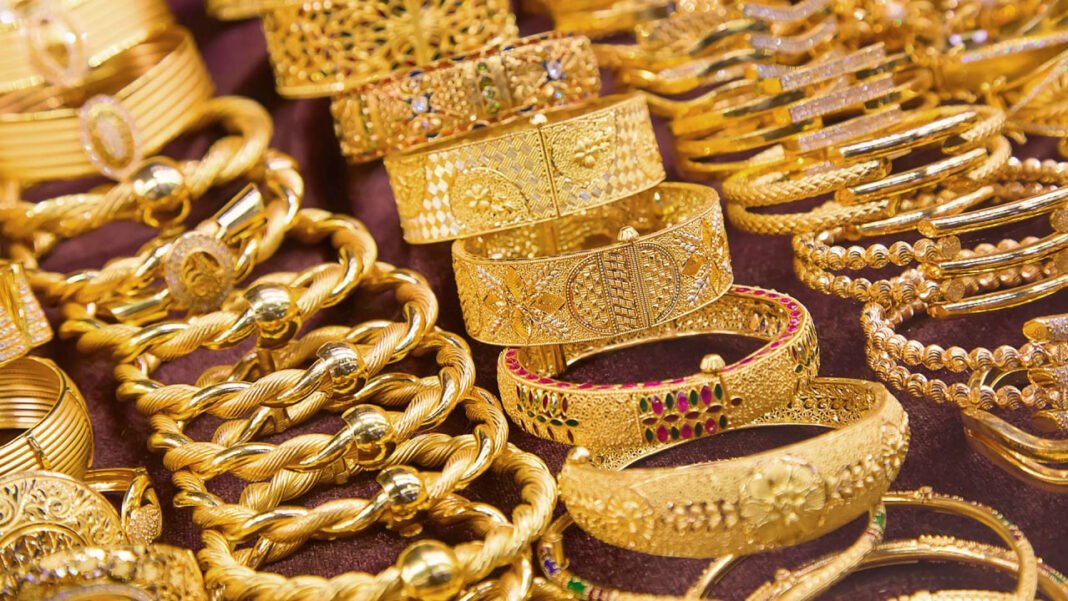
Iraq gold prices moved lower on Tuesday as trading activity reflected a noticeable decline in both Baghdad and Erbil. Market data showed that gold values dropped from levels recorded a day earlier, offering buyers some relief after recent increases. Traders and jewelry shop owners reported weaker prices across several gold categories.
In Baghdad, wholesale markets witnessed a clear decrease in gold rates. On Al-Nahr Street, one of the country’s main gold trading centers, 21-carat gold from Gulf, Turkish, and European sources sold for 905,000 Iraqi dinars per mithqal. Buyers offered around 901,000 dinars for the same quantity. The figures marked a significant decline compared with Monday’s selling price of 922,000 dinars.
Iraqi-made gold also recorded lower prices during the day’s trading. A mithqal of 21-carat Iraqi gold sold for 875,000 dinars, while the buying price reached 871,000 dinars. The decline reflected broader movements in the local precious metals market as traders adjusted to changing conditions.
Retail jewelry stores across Baghdad reported similar trends. Prices varied depending on craftsmanship, design complexity, and shop location. Gulf-produced 21-carat gold sold between 905,000 and 915,000 dinars per mithqal. Meanwhile, Iraqi gold ranged from 875,000 to 885,000 dinars. Despite slight differences among stores, the overall direction remained downward.
The decline in Iraq gold prices also extended to Erbil’s markets. Gold merchants in the Kurdistan Region recorded lower rates across several purity levels. A mithqal of 22-carat gold sold for 957,000 dinars. At the same time, 21-carat gold reached 915,000 dinars, while 18-carat gold traded at 783,000 dinars.
Gold remains an important investment and savings option for many Iraqi families. As a result, even modest price movements attract strong attention from consumers and traders alike. Market participants often monitor daily fluctuations to determine the best time to buy or sell.
Several factors can influence Iraq gold prices, including global bullion trends, currency movements, and regional economic conditions. Local demand also plays a role, especially during holiday seasons and major social events when jewelry purchases tend to rise.
For now, traders continue to watch market developments closely. The latest decline may encourage additional buying activity, particularly among consumers seeking lower entry prices. If international gold markets remain stable, local prices could continue to fluctuate within a similar range during the coming days.
The recent drop highlights the dynamic nature of the precious metals market. While prices can change quickly, current levels provide a snapshot of trading conditions in both Baghdad and Erbil. Market observers expect Iraq gold prices to remain a key focus for investors and jewelry buyers in the weeks ahead.