

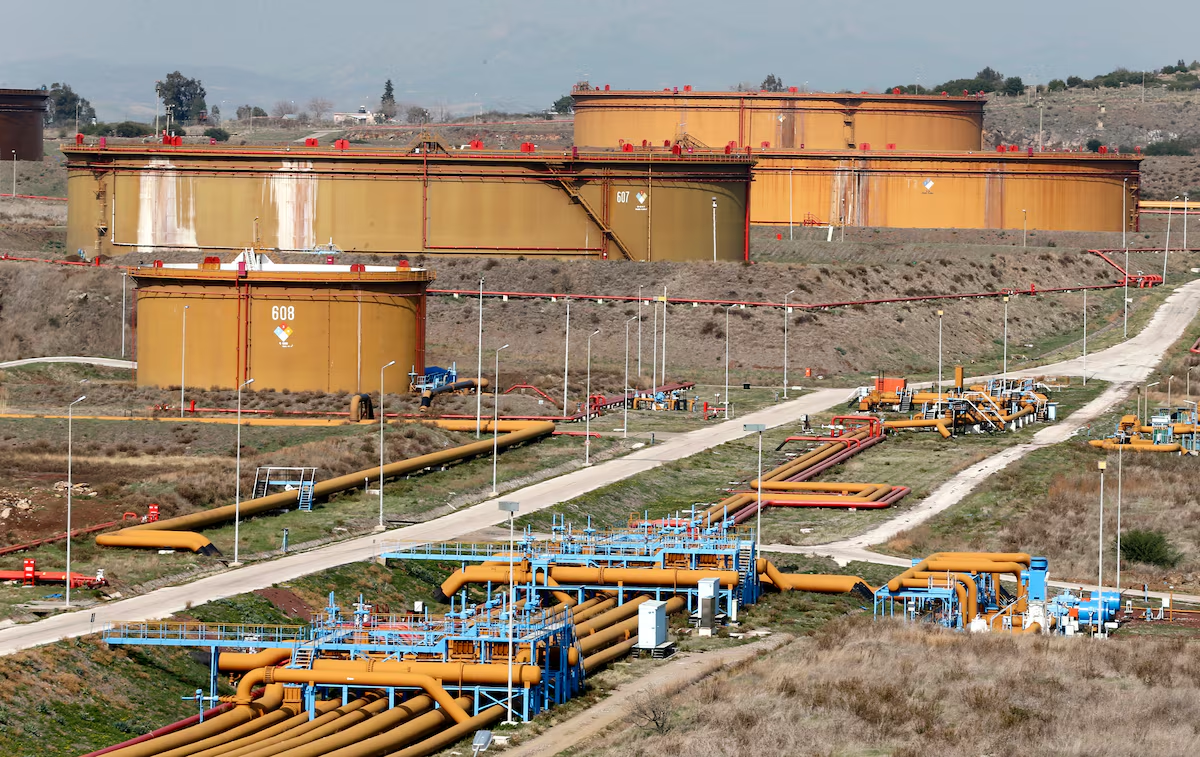
The Iraq-Türkiye oil pipeline talks have entered a critical stage as Baghdad seeks more time to reach a long-term agreement with Ankara. Iraqi officials have formally requested a one-year extension of the current pipeline arrangement, which is scheduled to expire on July 27. The request aims to prevent disruptions while both countries continue discussions on a broader energy partnership.
Ali Nizar, the head of Iraq’s State Organization for Marketing of Oil (SOMO), confirmed that Baghdad submitted the proposal to Turkish authorities. Iraqi officials believe additional time will help negotiators finalize a new framework without creating uncertainty for energy markets. The existing agreement governs the major export route linking northern Iraqi oil fields to Türkiye’s Mediterranean coast.
The Kirkuk-Ceyhan pipeline remains one of the region’s most important energy corridors. It connects crude production centers in northern Iraq with export facilities at the Turkish port of Ceyhan. Because of its strategic role, both governments recognize the importance of maintaining stable operations while negotiations continue.
The extension request follows Ankara’s decision to end the current pipeline agreements when they expire in July 2026. At the same time, Turkish officials have proposed a new and expanded partnership. Their draft proposal covers cooperation in oil, natural gas, petrochemicals, and electricity. Both sides continue to review the details, but they have not yet reached a final agreement.
As a result, the Iraq-Türkiye oil pipeline talks have become increasingly important for regional energy planning. Iraqi officials view the requested extension as a practical solution that would provide breathing room for negotiators. They also want to avoid any interruption to crude exports while discussions remain active.
Meanwhile, Iraq’s energy sector continues to operate at a strong pace. Nizar stated that southern export terminals have shipped around 12 million barrels of crude oil since the start of June. Those exports demonstrate Iraq’s ability to maintain commercial activity through alternative routes even as uncertainty surrounds the northern pipeline.
The pipeline has faced numerous challenges in recent years. Technical issues, financial disputes, and political disagreements have all affected operations. These obstacles have strengthened the need for a clear and durable legal framework that can support future cooperation between the neighboring countries.
However, Türkiye appears reluctant to extend the existing arrangement under its current conditions. According to comments provided to Reuters, a Turkish official said there was little value in renewing an agreement that had already become the subject of arbitration proceedings. The official spoke anonymously because of the sensitivity of the discussions.
Despite those concerns, both governments continue to engage in negotiations. The coming weeks will likely determine whether they can secure a temporary extension or move directly toward a new agreement. Until then, the Iraq-Türkiye oil pipeline talks remain a key issue for regional energy markets and bilateral relations.