

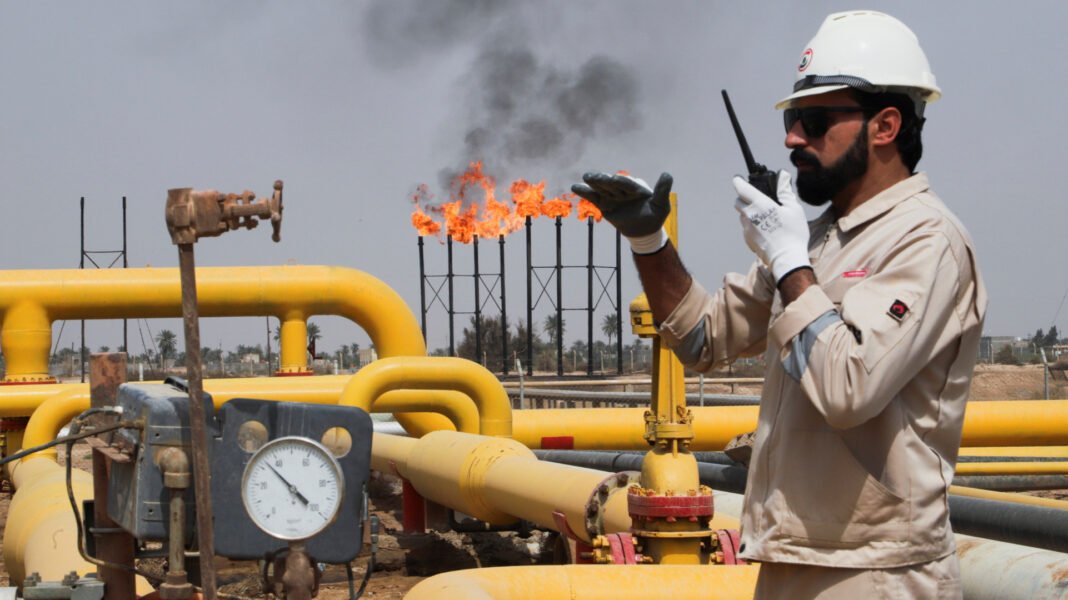
Basrah crude prices recorded a steep decline on Wednesday as global oil markets faced renewed selling pressure. The latest drop placed Iraq’s main export grades significantly below several regional benchmarks. Traders closely watched the movement because it highlighted the growing gap between Iraqi crude and competing Middle Eastern blends.
Basrah Heavy experienced one of the largest declines during the session. The grade lost $2.05 per barrel and settled at $51.45. Basrah Medium followed the same path and also fell by $2.05. That move brought its price down to $53.55 per barrel. The losses pushed both grades deeper into discount territory compared with neighboring producers.
The widening gap attracted attention across energy markets. Saudi Arabia’s flagship Arab Light crude traded at $85.28 per barrel. Kuwait Export Crude stood even higher at $94.84 per barrel. Meanwhile, the United Arab Emirates’ Murban crude reached $71.81 per barrel, while Qatar Land traded at $75.81 per barrel.
As a result, Iraqi crude grades traded far below their regional counterparts. Basrah Heavy remained more than $30 below Kuwait’s export blend. Basrah Medium also carried a substantial discount against major Gulf producers. These differences reflected ongoing market concerns and shifting demand patterns.
Market participants also monitored international oil benchmarks. Brent crude declined to $78.71 per barrel during the trading session. In the United States, West Texas Intermediate crude dropped to $75.71 per barrel. The weaker performance in global benchmarks added pressure to exporting countries across the region.
Several analysts noted that lower benchmark prices often influence regional crude valuations. When international oil prices weaken, heavier crude grades can face stronger downward pressure. Iraq’s export streams appeared particularly vulnerable during Wednesday’s trading activity. Consequently, buyers sought larger discounts before making purchases.
The fall in Basrah crude prices comes at a time when oil markets continue to balance supply concerns with uncertain demand expectations. Investors remain cautious about economic growth prospects in several major consuming nations. At the same time, producers across the Middle East continue to monitor market conditions closely.
Looking ahead, traders will focus on upcoming economic data and energy market developments. Any change in demand forecasts could influence pricing trends in the coming weeks. For Iraq, the direction of Basrah crude prices will remain an important indicator of export revenue performance and market competitiveness. Energy officials and investors alike will watch future sessions for signs of stabilization or further weakness in the country’s key oil grades.