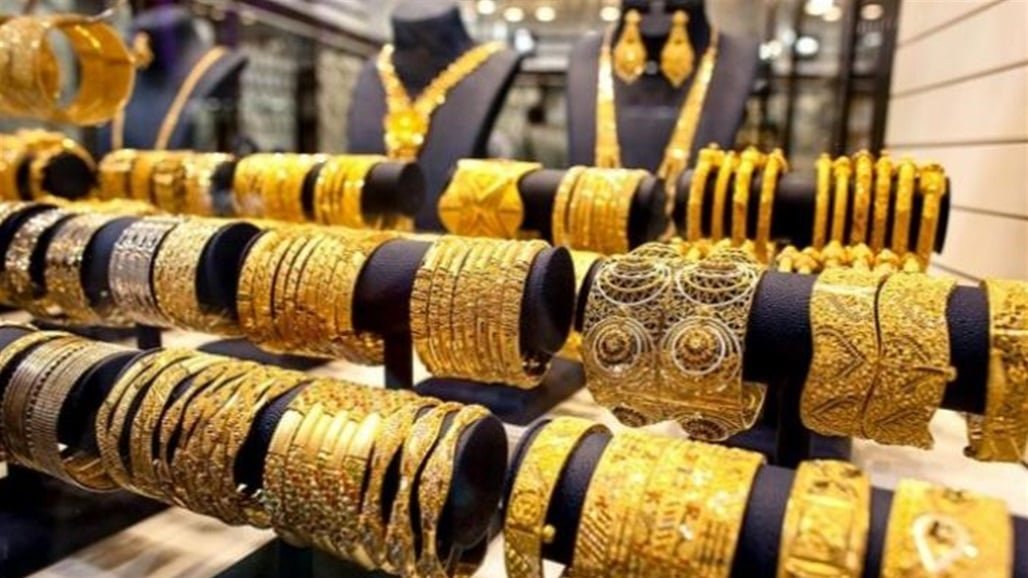
Gold prices in Iraq continued to attract attention on Sunday as the Iraq gold market showed mixed movement between Baghdad and Erbil. Traders in the capital reported stable rates, while markets in the Kurdistan Region registered a modest increase. The latest figures indicate that demand remains steady despite daily fluctuations in regional and international precious metal markets.
In Baghdad, wholesale trading activity on Al-Nahr Street reflected little change from the previous day. Dealers offered 21-carat gold, including Gulf, Turkish, and European products, at 917,000 Iraqi dinars per mithqal. Buyers could purchase the same quantity at 913,000 dinars. Market participants noted that these rates matched Saturday’s levels, highlighting a period of price stability.
Meanwhile, Iraqi-made 21-carat gold traded at lower levels than imported varieties. Sellers offered the local product at 887,000 dinars per mithqal, while buyers paid around 883,000 dinars. The difference between imported and locally produced gold continued to shape purchasing decisions among customers seeking value and quality.
Retail jewelry shops across Baghdad reported slightly higher selling prices than wholesale markets. Store owners sold 21-carat Gulf gold for amounts ranging between 920,000 and 930,000 dinars per mithqal. Iraqi gold reached prices between 890,000 and 900,000 dinars. These variations reflected differences in craftsmanship, branding, and shop operating costs.
The Iraq gold market also showed notable activity in Erbil. Gold prices in the city moved higher compared with recent levels. Traders sold 22-carat gold at 965,000 dinars per mithqal, making it the most expensive category available. Buyers seeking 21-carat gold paid around 922,000 dinars, while 18-carat gold sold at approximately 790,000 dinars.
Jewelry merchants in Erbil said customer interest remained consistent throughout the weekend. Many consumers continued to view gold as a reliable store of value. Seasonal demand and global market trends also influenced buying patterns across the region.
Analysts continue to monitor developments in international gold prices, which often affect local markets throughout Iraq. Currency movements and global economic conditions remain important factors. Even small changes in international trading can quickly influence domestic pricing.
For now, the Iraq gold market appears relatively stable. Baghdad maintained its existing price levels, while Erbil posted a slight increase. Traders and consumers will continue watching the market closely in the coming days for any signs of stronger movement.