

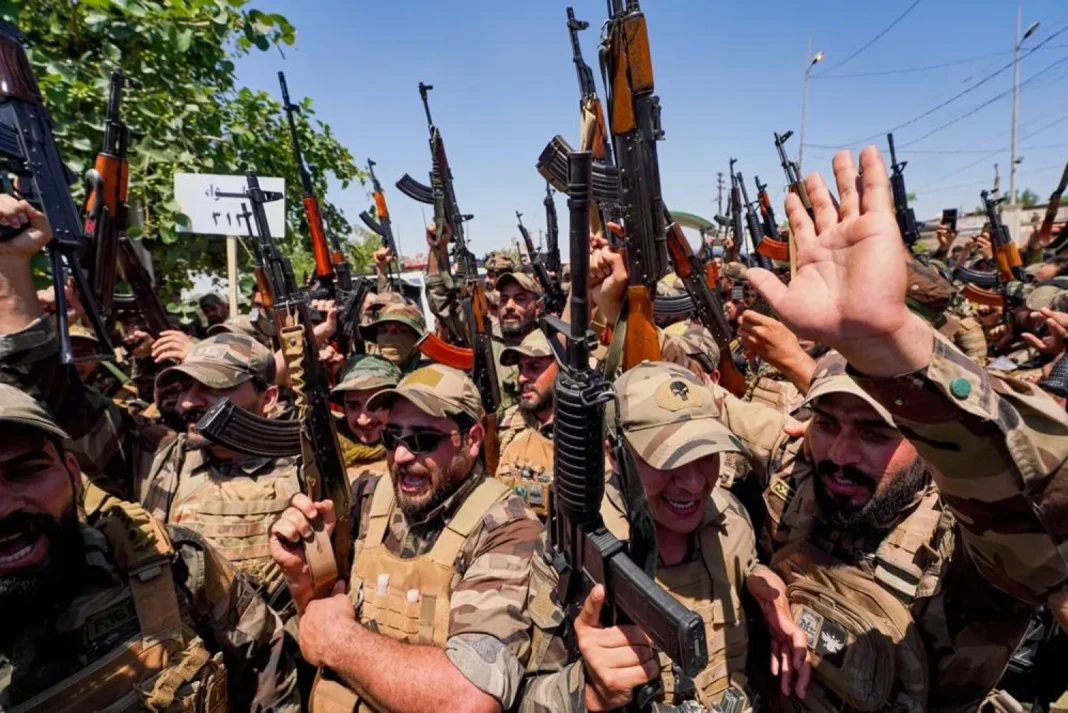
Iraq’s highest political and judicial leaders have renewed calls for state control of weapons, faster government reforms, and the completion of the federal cabinet during a high-level meeting in Baghdad.
The gathering brought together President Nizar Amidi, Prime Minister Ali al-Zaidi, Parliament Speaker Haibat al-Halbousi, and Supreme Judicial Council President Faiq Zaidan. The leaders reviewed major developments inside Iraq and across the region. They also discussed ways to strengthen cooperation among state institutions during a period of political and economic challenges.
During the meeting, officials expressed support for government efforts aimed at improving stability and strengthening public institutions. They emphasized the need to fill the remaining cabinet positions without delay. According to participants, a complete cabinet would help improve decision-making and accelerate government programs.
The leaders also focused on legislative priorities. They encouraged lawmakers to approve important laws and amendments linked to investment and economic development. Officials argued that modern legal frameworks can attract more investors and create better opportunities for growth. They believe stronger legislation can also improve Iraq’s business climate and encourage long-term economic activity.
Economic reform remained a central topic throughout the discussions. Participants highlighted the importance of policies that support development and expand investment opportunities. They stressed that legal and administrative improvements can help create a more competitive economy. In addition, they called for continued efforts to improve public services and strengthen confidence in state institutions.
Security issues received significant attention as well. The four leaders reaffirmed their commitment to state control of weapons, describing it as a critical foundation for law, order, and national stability. They stated that the government must remain the sole authority responsible for armed force. Officials believe this principle strengthens state institutions and supports long-term security.
The question of armed groups continues to be one of Iraq’s most sensitive political issues. Successive governments have sought to increase state authority while managing complex political realities. As a result, leaders often face difficult decisions when balancing security concerns with broader national interests.
Regional developments also influenced the discussions. The participants reviewed ongoing tensions in neighboring areas and examined their potential impact on Iraq. They stressed the importance of maintaining stability and protecting national interests during a period of uncertainty.
Before concluding the meeting, the leaders highlighted the need for closer coordination among the executive, legislative, and judicial branches. They said stronger cooperation can help address national challenges more effectively. They also reaffirmed their commitment to reform, development, and state control of weapons as part of broader efforts to strengthen Iraq’s future.