

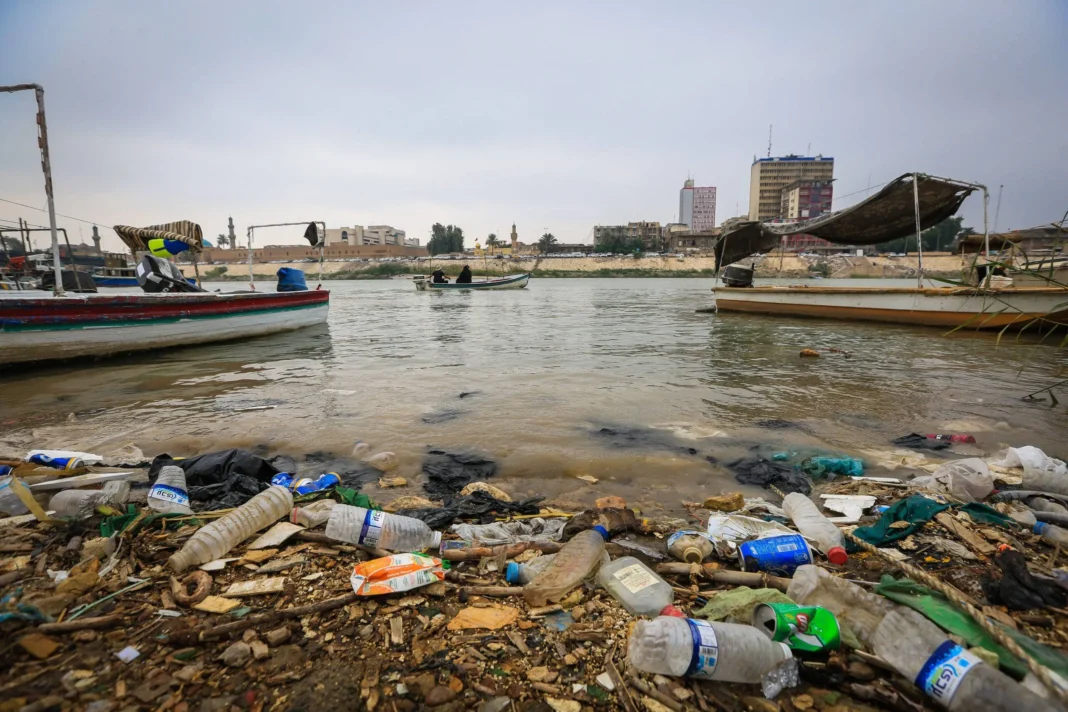
A massive fish die-off in Wasit province has exposed growing environmental challenges facing Iraq’s waterways. Millions of fish perished in sections of the Tigris River, leaving fish farmers with severe losses and raising concerns about water quality across multiple provinces.
The Iraq river pollution crisis became evident after large numbers of fish died in floating cages near Kut, Al-Aziziyah, and Numaniyah. While the disaster appeared local at first, experts say the underlying causes extend far beyond Wasit. Consequently, attention has shifted toward pollution sources upstream and long-standing weaknesses in environmental oversight.
Fish farmers described the event as devastating. Many lost years of investment within days. According to industry representatives, thousands of tons of fish were wiped out. As a result, producers now face major financial challenges at a time when the sector already struggles with declining profits.
Environmental specialists point to a combination of factors. Untreated sewage, industrial waste, and falling water levels have increased pressure on river ecosystems. Moreover, contaminants moving through the Diyala River eventually reach the Tigris, spreading pollution across provincial boundaries.
For many farmers, the disaster arrived without warning. Rasool Karim Ali, who manages a fish farming project in Wasit, said workers expected a normal day. Instead, they found large numbers of dead fish floating in the water. According to Ali, polluted water entering from the Diyala River played a key role in the collapse.
Experts explain that fish die-offs often occur when oxygen levels fall sharply. Likewise, toxic substances such as ammonia, sulfides, or heavy metals can overwhelm aquatic ecosystems. However, authorities have not yet released laboratory findings identifying the exact trigger behind the incident.
According to the Iraqi Association of Fish Producers, sewage-contaminated water entered the Diyala River days before the disaster. Meanwhile, rainfall and stronger water flows may have disturbed polluted sediments resting on riverbeds. Consequently, toxins that had accumulated for years may have re-entered the water.
The contaminated flow eventually reached fish farming areas near Kut. Industry estimates suggest that nearly 95 percent of floating cages in the area suffered damage. Furthermore, losses may have reached between 1,000 and 1,200 tons of fish. The disaster affected carp, grass carp, and other aquatic species.
Beyond environmental damage, the crisis has intensified economic pressure on fish producers. The Iraqi fish market already faces difficulties due to oversupply and regulatory campaigns targeting unauthorized farms. As a result, fish prices have dropped below production costs in many areas.
Another threat continues to worry farmers. Experts warn that a fish herpes virus could spread later this year. Since no vaccine currently exists, producers fear another wave of losses. Therefore, many may attempt to sell stock early, which could push prices even lower.
The Iraq river pollution crisis also highlights growing concerns about water management. Reports indicate that unauthorized fish farms have expanded rapidly over the past decade. Consequently, water consumption has risen sharply, placing additional strain on rivers and lakes already suffering from reduced flows.
Environmental experts say pollution does not remain confined to one location. Instead, contaminated water travels through interconnected river systems. Along its journey, it collects sewage, medical waste, industrial discharge, and heavy metals. Therefore, pollution levels increase as the water moves downstream.
Officials and environmental observers have identified several major pollution sources. Among them is the Al-Rustumiya area near Baghdad, where untreated wastewater continues to enter the Diyala River. Meanwhile, water releases from upstream locations can carry contaminants toward southern regions.
Similar incidents have emerged elsewhere in Iraq. Large fish die-offs have occurred in Babil, Najaf, and Diwaniyah. In many cases, investigators linked the events to oxygen depletion and severe pollution. Consequently, experts now view these incidents as part of a broader environmental pattern rather than isolated accidents.
Public health concerns have also intensified. Heavy metals such as lead and cadmium can accumulate in fish tissue over time. Moreover, people who consume contaminated fish may face long-term health risks. For that reason, experts urge authorities to strengthen testing and monitoring programs.
The Iraq river pollution crisis underscores the urgent need for stronger environmental regulation and better water management. Unless authorities address pollution sources and improve oversight, experts warn that similar disasters could become increasingly common across the country’s river systems.