

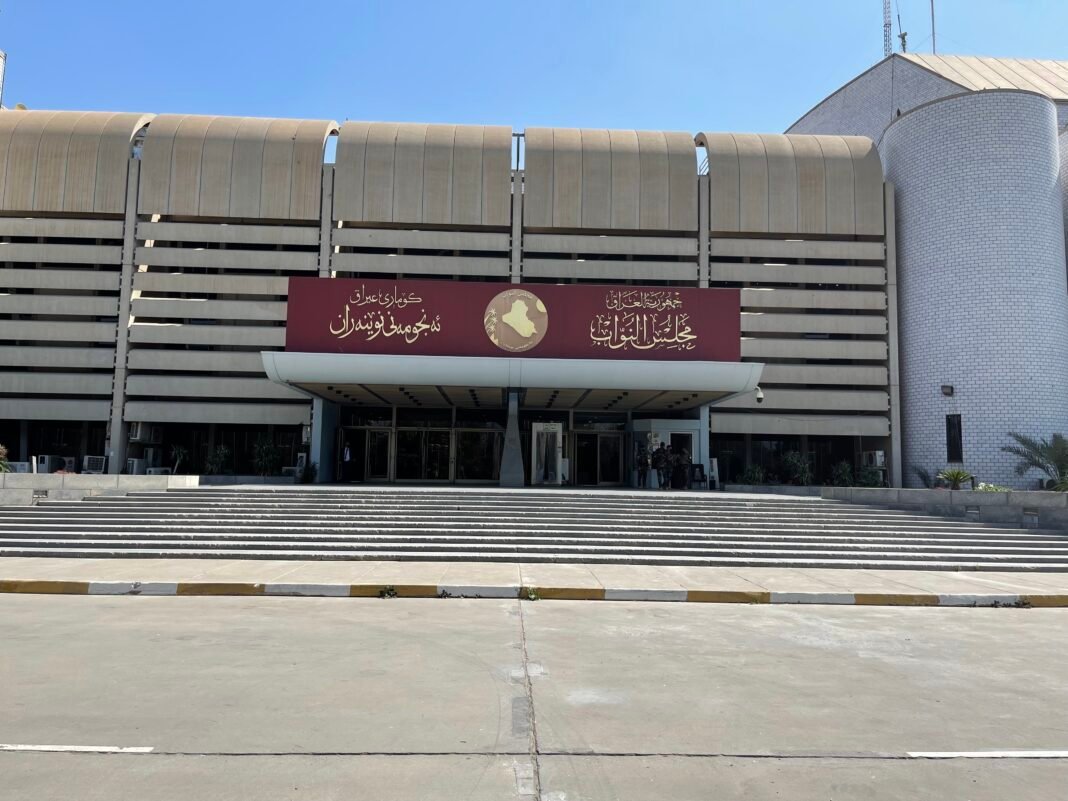
Baghdad – New financial data has reignited debate over government spending in Iraq. According to a leading economic expert, parliament and affiliated institutions spent more than 551 billion Iraqi dinars on salaries during 2025.
The parliament salary expenditure figures were released by financial and legal expert Nabil Al-Marsoumi. As a result, discussions about wage disparities have returned to the spotlight. Moreover, the figures have raised fresh questions about budget priorities and spending efficiency.
According to Al-Marsoumi, the allocation covered around 12,500 employees. These workers serve in parliament and several related institutions. Additionally, these organizations perform important oversight and accountability functions within the Iraqi state.
The spending data includes several independent bodies. Among them are the Federal Board of Supreme Audit and the Commission of Integrity. Meanwhile, the Supreme National Commission for Accountability and Justice also falls under the reported figures. In addition, the Property Claims Commission forms part of the total.
The reported parliament salary expenditure exceeded 551 billion dinars throughout 2025. Consequently, analysts have highlighted the scale of payroll spending within these institutions. Moreover, the amount represents a major commitment from the federal budget.
Al-Marsoumi’s figures also revealed a significant wage gap. On average, employees in these institutions earned about 3.6 million dinars per month. By comparison, many government workers receive considerably lower salaries.
The expert noted a striking difference between these wages and the minimum public-sector salary. According to his analysis, the average income equals roughly 12 times the minimum wage. Therefore, the findings have intensified calls for salary reform.
Economists argue that large wage disparities create concerns about fairness. Furthermore, many believe a more balanced pay structure would strengthen public confidence. At the same time, others say reforms could help redirect resources toward development projects and public services.
The parliament salary expenditure figures come as Iraq reviews its broader financial policies. Meanwhile, officials continue to discuss ways to improve spending efficiency. As a result, fiscal reform remains a central topic in economic debates.
Looking ahead, observers expect the discussion to continue. Consequently, policymakers may face growing pressure to address salary inequalities. If reforms move forward, they could play an important role in shaping Iraq’s future budget strategy.