

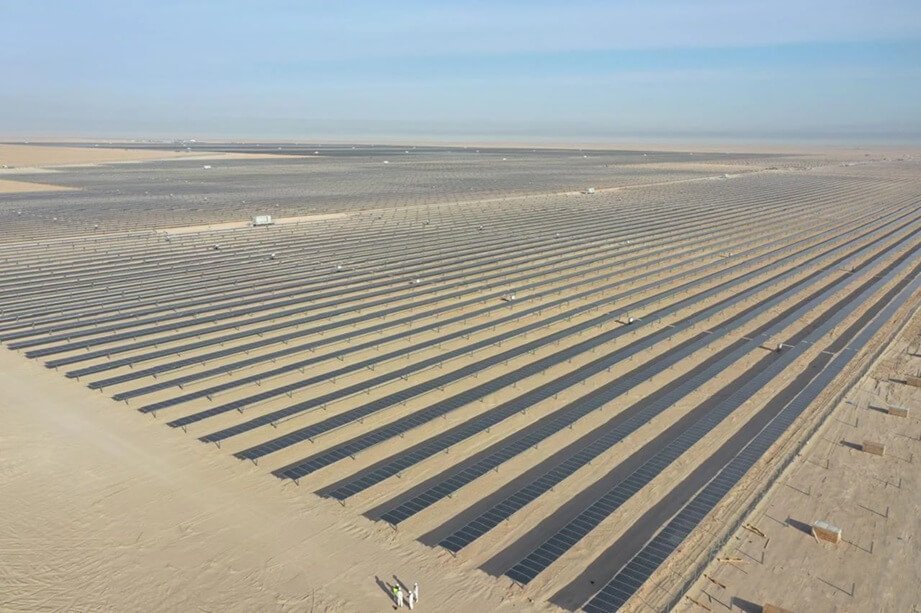
Basra – Iraq has officially started operations at the first phase of the Shams Basra solar facility, marking a major step in the country’s renewable energy strategy. Officials say the project will help reduce pressure on Iraq’s struggling electricity network before peak summer demand arrives. The new Shams Basra solar project also reflects Iraq’s wider effort to diversify energy sources beyond oil and gas.
Project officials confirmed that the first operational phase now generates 250 megawatts of electricity. Engineers expect the second phase to begin service in July, increasing production to 500 megawatts. Once fully completed, the project aims to deliver a total capacity of 1,000 megawatts.
Project director Haider Issa described the facility as one of the region’s largest renewable energy developments. The project covers nearly 9,000 dunams, equal to around 2,220 acres, in southern Iraq. French energy company TotalEnergies developed the project in partnership with Iraq’s Electricity Ministry.
Officials believe the solar facility will improve electricity supplies while reducing Iraq’s dependence on traditional fuel-powered generation. Iraq continues facing severe electricity shortages, especially during the summer season when temperatures rise sharply across the country.
Issa explained that regional instability created some delays during construction. Disruptions affecting maritime traffic through the Strait of Hormuz slowed deliveries of key equipment and materials needed for the project. Despite those challenges, construction teams continued to work to keep the project on schedule.
The Shams Basra solar project forms part of Iraq’s broader renewable energy expansion plans. In late 2025, Iraq signed another renewable energy agreement with a US-UK company to develop a separate 3,000-megawatt solar initiative. That project will also include battery storage systems and more than 1,000 kilometers of high-voltage transmission lines.
Iraq still relies heavily on oil and gas to generate electricity. This dependence has contributed to recurring power shortages and increased vulnerability to disruptions in fuel supply. Officials expect Iraq’s electricity deficit to reach nearly 11 gigawatts during the peak summer season in 2026.
Sanctions pressures tied to Iranian gas imports have also complicated Iraq’s energy situation in recent years. As a result, the government continues searching for alternative energy solutions that can provide greater stability and long-term sustainability.
Renewable energy accounts for a small share of Iraq’s electricity production, despite recent investments. By the end of 2024, renewables accounted for just over one percent of Iraq’s total energy mix. Officials hope projects like the Shams Basra solar project will gradually increase clean energy production and strengthen the national grid.