

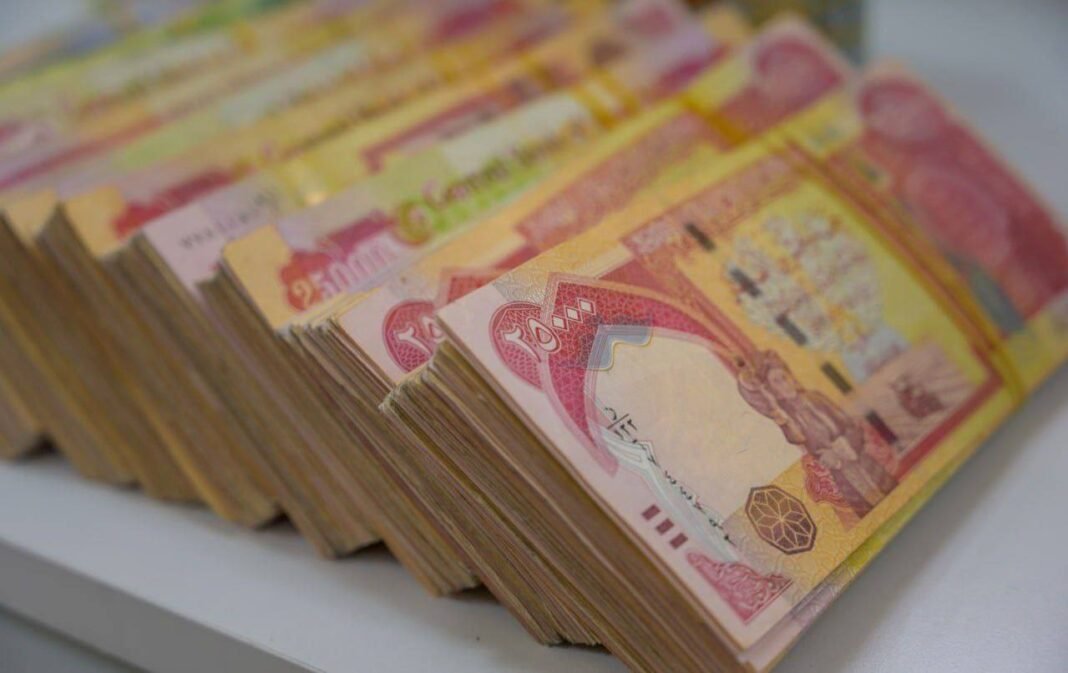
Baghdad – Iraq’s domestic borrowing has climbed rapidly during the first months of 2026 as regional tensions continue to pressure the country’s finances. Rising instability around the Gulf and repeated shipping disruptions have pushed Baghdad to increase spending support through local debt. The growing Iraq domestic debt burden now reflects wider concerns about the country’s economic resilience.
New figures from Iraq’s finance ministry show that domestic borrowing under Prime Minister Mohammed Shia Al-Sudani has exceeded 46 trillion Iraqi dinars, equal to roughly $35 billion. Officials say the increase comes during a period of severe regional uncertainty affecting trade and oil markets.
Economic pressure intensified after tensions escalated on February 28 involving the United States, Iran, and Israel. The conflict disrupted investor confidence across the Gulf and created uncertainty around key shipping routes. Iraq’s economy felt the impact quickly because the country depends heavily on oil exports and regional trade flows.
Government data shows borrowing rose steadily during recent years. Iraq borrowed around 7.6 trillion dinars in 2023 before the figure climbed to 17.1 trillion dinars in 2024. During all of 2025, Baghdad added another 10.8 trillion dinars in domestic debt.
However, borrowing accelerated further in 2026. During the first four months alone, Iraq secured nearly 10.5 trillion dinars in new domestic loans. Analysts say the current pace could push borrowing far beyond last year’s total before the end of 2026.
Iraq’s domestic debt reflects the growing impact of instability around the Strait of Hormuz. The strategic waterway handles a large share of global oil shipments and remains critical for Iraq’s energy exports. Any disruption along the route directly affects government revenues and export reliability.
Regional security risks have also weakened investment activity inside Iraq. Concerns over militia attacks, political uncertainty, and broader regional tensions continue to discourage foreign investors. Businesses across several sectors now face slower commercial activity and rising operational risks.
Despite strong oil revenues in recent years, Iraq still struggles with spending pressures and budget management. Economists warn that continued dependence on local borrowing could increase financial strain if regional instability continues. Some experts also believe Iraq needs stronger economic diversification to reduce exposure to oil market disruptions.
Officials continue monitoring developments around the Gulf while seeking to maintain financial stability. The government hopes regional tensions will ease in the coming months to protect trade and energy exports. For now, the rapid rise in Iraq’s domestic debt highlights how closely Iraq’s economy remains tied to regional security conditions.