

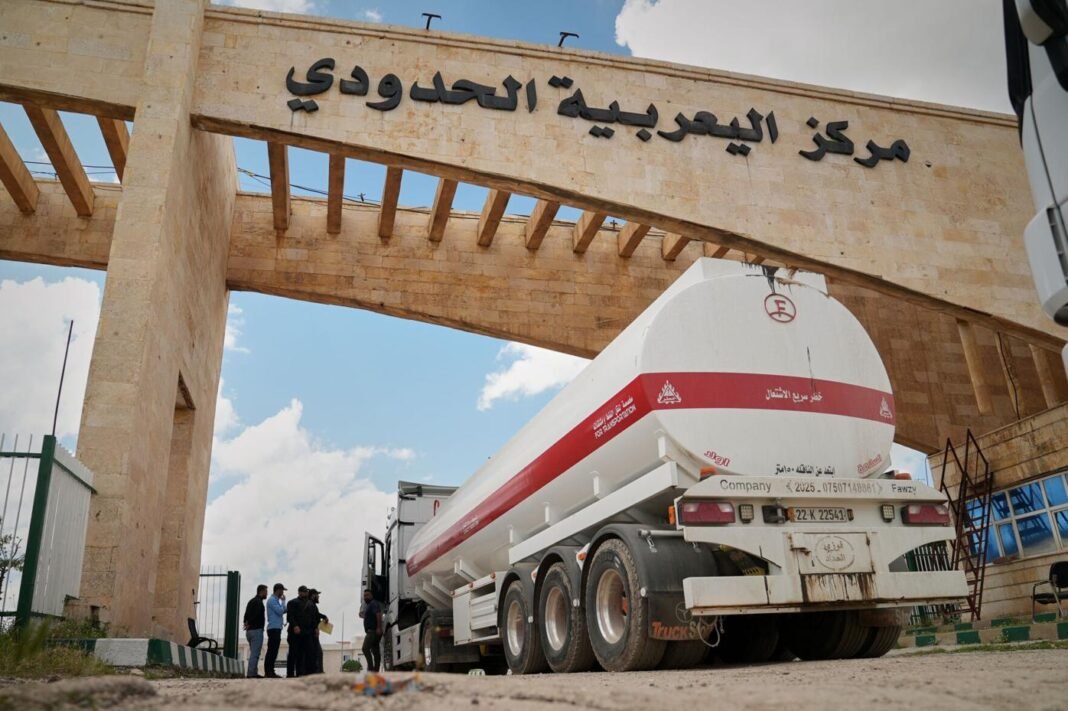
Al-Hasakah – Iraq has resumed large-scale fuel transit operations through northeastern Syria following the reopening of a major border crossing between the two countries. Officials say the renewed activity reflects growing efforts to restore regional trade and export routes after years of disruption. The expanding Iraq fuel transit operations also highlight improved coordination along the Iraqi-Syrian border.
A new convoy carrying Iraqi fuel entered Syrian territory on Monday through the Rabia-Al-Yarubiyah crossing in Al-Hasakah province. The shipment included more than 50 tanker trucks transporting fuel oil toward the Syrian coastal city of Baniyas. Authorities said the cargo forms part of transit operations designed to support fuel exports to international markets.
Border activity has increased steadily since the crossing resumed operations in April. Customs officials reported that between 15 and 40 fuel tankers crossed the route daily during the past week. The latest convoy marks one of the largest movements since authorities reopened the crossing.
The Rabia-Al-Yarubiyah route reopened on April 22 after remaining closed for nearly 13 years. Security concerns linked to the fight against Islamic State had previously forced authorities to suspend operations along the frontier. Changes in territorial control and coordination challenges also delayed the restoration process for years.
Iraqi and Syrian authorities have recently accelerated efforts to rehabilitate border infrastructure and revive commercial activity. Officials continue working on several crossings, including Al-Waleed and Al-Yarubiyah, to improve transportation links between the neighboring countries. These projects aim to support trade, travel, and energy transportation across the region.
The renewed Iraq fuel transit activity could provide Iraq with additional export flexibility through Syrian territory. Analysts say alternative transport routes have become increasingly important because of regional instability and shipping concerns affecting traditional Gulf export corridors.
The fuel shipments also carry economic importance for communities along the border regions. Increased transport activity may create new business opportunities tied to logistics, infrastructure, and customs operations. Authorities in both countries hope restored crossings will encourage broader economic cooperation after years of conflict-related disruption.
Regional observers believe the reopening of these crossings signals a gradual recovery in cross-border trade between Iraq and Syria. Governments on both sides continue discussing ways to expand commercial coordination and strengthen infrastructure connections. The growing Iraq fuel transit operations could become an important part of those long-term economic plans.
Officials expect tanker traffic through the Rabia-Al-Yarubiyah crossing to continue rising in the coming months as rehabilitation work progresses and export demand increases.