

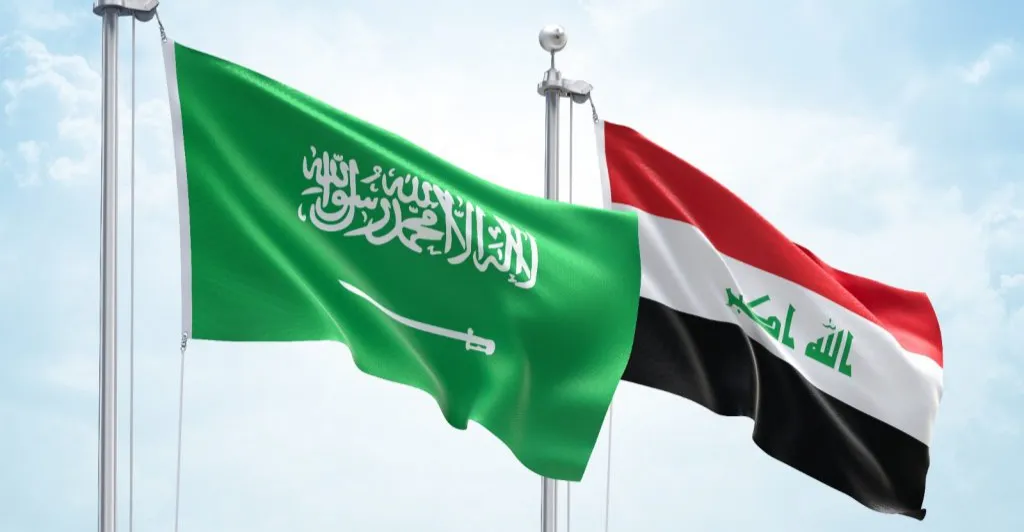
Iraq recorded a 35 percent rise in trade with Saudi Arabia, marking a growing trade exchange between the two neighbors. The total trade volume reached $1.78 billion. This increase shows stronger economic coordination and deeper commercial ties.
First, Iraq expanded its imports from Saudi Arabia at a rapid pace. Iraqi imports climbed to $1.73 billion. In contrast, imports stood at $1.30 billion the previous year. This jump reflects a 33.4 percent increase. Clearly, Iraqi markets demanded more Saudi goods. At the same time, border operations improved and supported faster trade movement.
Moreover, officials highlighted stronger political and commercial dialogue between Baghdad and Riyadh. Iraqi representatives described the relationship as evolving across several sectors. Leaders from both countries increased meetings and economic coordination. As a result, businesses gained more confidence in cross-border activity.
In addition, authorities worked to remove trade barriers and simplify customs procedures. These steps encouraged private companies to expand operations. Consequently, companies increased shipments and widened product categories. The steady rise in imports shows how cooperation translates into economic results.
Furthermore, Iraq and Saudi Arabia strengthened partnerships beyond trade figures. Both governments focused on security coordination and regional stability. This strategy supports long-term economic growth. Therefore, the growing trade exchange reflects more than commercial numbers. It also reflects strategic alignment between two major regional economies.
Meanwhile, Saudi Arabia continues to supply consumer goods, industrial materials, and food products to Iraq. Iraqi traders rely on consistent supply chains. Therefore, smoother border crossings play a critical role in sustaining growth. Authorities improved infrastructure and logistics to support trade expansion.
Notably, the 35 percent increase signals a clear upward trajectory. Trade volume nearly reached $1.78 billion, which shows measurable progress. Policymakers now aim to push figures even higher. They plan to encourage investment partnerships and joint projects.
Additionally, business leaders in both countries see opportunity in energy cooperation and industrial development. Entrepreneurs seek to expand into new markets. As a result, the growing trade exchange may continue in the coming years. Stronger institutional cooperation will likely support this momentum.
Overall, Iraq and Saudi Arabia strengthened economic cooperation through deliberate policy actions. They expanded trade channels and increased market access. Consequently, the growing trade exchange stands as a key indicator of improved bilateral relations.