

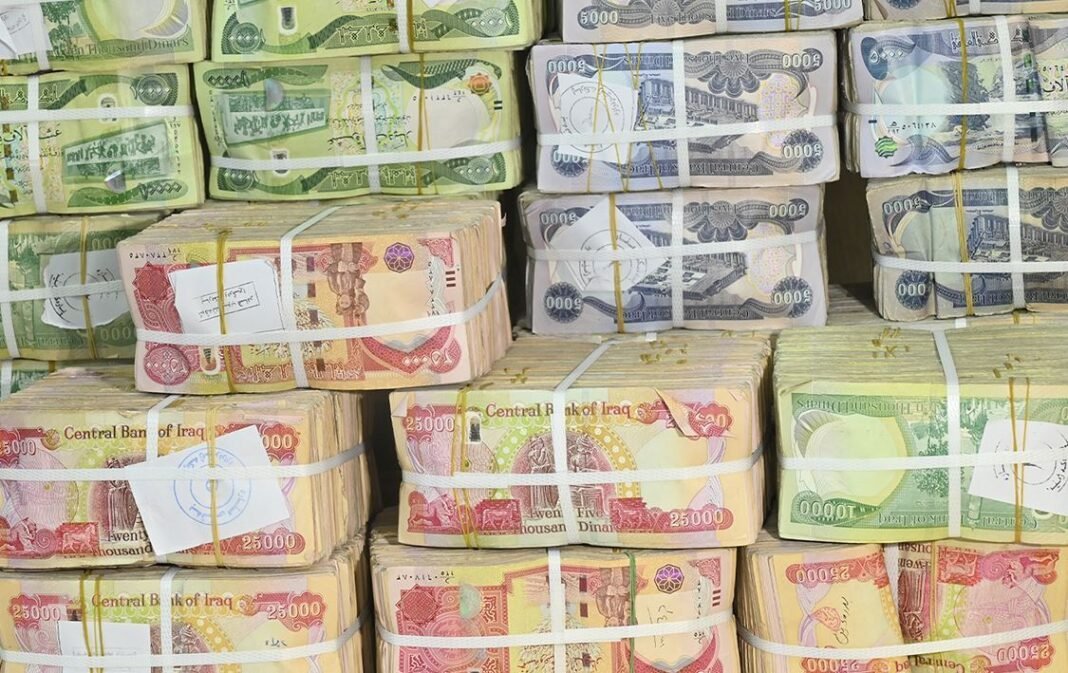
The Iraqi economy faces new dangers as public sector salary spending continues to rise. Economist Manar al-Obaidi has warned that Iraq’s salary bill could double to 5% of GDP within the next five years. This projection highlights a growing concern about salary spending in Iraq, which already consumes a large portion of national funds.
Al-Obaidi, head of the Iraq Future Foundation, stated that public sector wages are expected to rise by 27% in 2024. This jump would bring total salary payments to over 60 trillion Iraqi dinars, or about $42.37 billion. That amount equals 40% of total government spending.
He noted that over the last five years, salary expenses increased by 50%. However, there has been no matching growth in non-oil revenues or improvement in public services. Al-Obaidi questioned the purpose of this surge in payroll spending, asking, “What’s the benefit of raising the salary bill?”
Despite this sharp increase in costs, Iraq still depends heavily on oil income. Non-oil sectors remain underdeveloped. As a result, higher salary spending puts more pressure on the budget, especially during oil price fluctuations.
At the same time, tensions between the federal government and the Kurdistan Region are escalating over delayed salary payments. The central government recently stopped disbursing salaries to employees in the Kurdistan Region, sparking harsh criticism.
The Kurdistan Democratic Party (KDP) responded strongly, calling the halt a violation of constitutional rights. They also accused the federal government of using the issue for political leverage. This move has worsened Baghdad-Erbil relations, which have already been strained over budget and oil-sharing disagreements.
Experts now warn that unchecked salary spending in Iraq could lead to long-term economic harm. It risks crowding out essential investments in infrastructure, education, and healthcare. If current trends continue, Iraq may struggle to manage debt or respond to future financial shocks.
Reducing the salary burden would require deep reforms. These include restructuring public employment, improving revenue sources beyond oil, and enforcing spending controls. However, such changes remain politically difficult.
If Iraq fails to address these challenges soon, the economy may face greater instability. Continued overspending on salaries could damage fiscal balance and weaken trust in state institutions.
The road ahead demands careful planning and national consensus. Iraq must shift toward a more sustainable model that supports both its workers and the broader economy without relying solely on oil.