

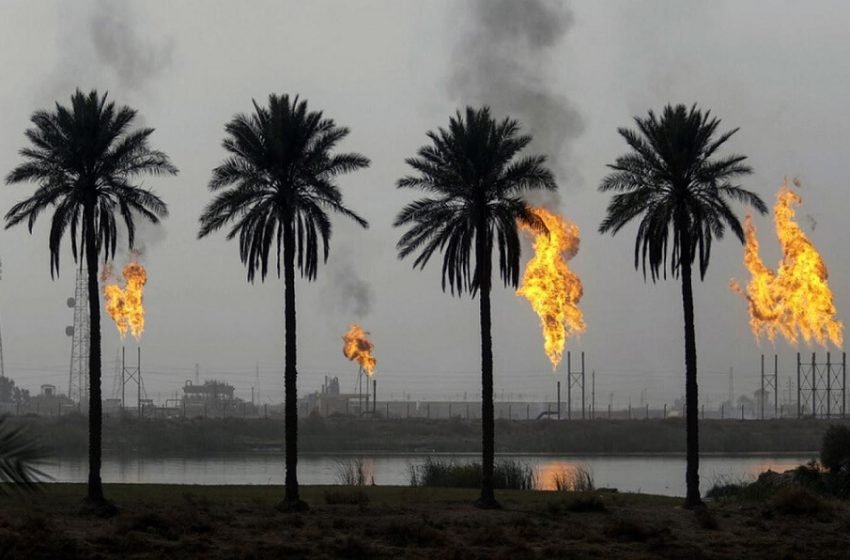
Basrah crude prices moved higher on Tuesday, following a broader rise across several global oil markets. The increase came as international benchmarks posted gains during trading. Market data showed notable advances in both Basrah Heavy and Basrah Medium grades.
Basrah Heavy increased by $1.55 per barrel, reaching $84.23. That represented a gain of 1.87% during the session. Basrah Medium also added $1.55, rising 1.80% to $87.53 per barrel. The moves placed Basrah crude prices among the regional grades recording solid daily gains.
Global benchmarks also strengthened, although their performances varied. Brent crude futures gained 49 cents, or 0.5%, to reach $97.49 per barrel. US West Texas Intermediate rose $1.44, or 1.6%, to $92.92 per barrel.
Several Middle Eastern crude grades recorded larger increases than the major international benchmarks. UAE Murban crude climbed $3.47, representing a 3.36% increase. Its price reached $106.77 per barrel during trading. Arab Light crude also advanced, adding $2.16, or 2.45%, to $90.44.
The wider oil market did not move uniformly, however. The OPEC basket declined by 80 cents, or 0.81%, to $97.70 per barrel. That drop contrasted with gains across several other crude benchmarks. Such differences highlight the varying market conditions affecting individual grades and pricing structures.
Meanwhile, Iraq’s crude export outlook faces additional pressure from recent pricing decisions. Bloomberg reported that Iraq had difficulty securing buyers for September-loading cargoes. The situation followed a reduction in discounts offered by the State Oil Marketing Organization, known as SOMO.
The smaller discounts effectively increased the cost of Iraqi crude for potential buyers. Higher asking prices could make some cargoes less competitive in an already closely watched market. This development may also complicate efforts to restore Iraq’s export volumes.
For Iraq, stronger international crude prices could support export revenues if demand remains firm. However, pricing decisions can influence how quickly buyers commit to Iraqi cargoes. Basrah crude prices will therefore remain closely watched as traders assess both global benchmarks and Iraq’s export strategy.
Tuesday’s gains offer some support for Iraq’s oil market despite the challenges surrounding September shipments. The next moves will depend on global crude demand, benchmark prices, and buyer interest in Iraqi grades. Export pricing will also remain an important factor for Iraq’s position in international oil markets.