

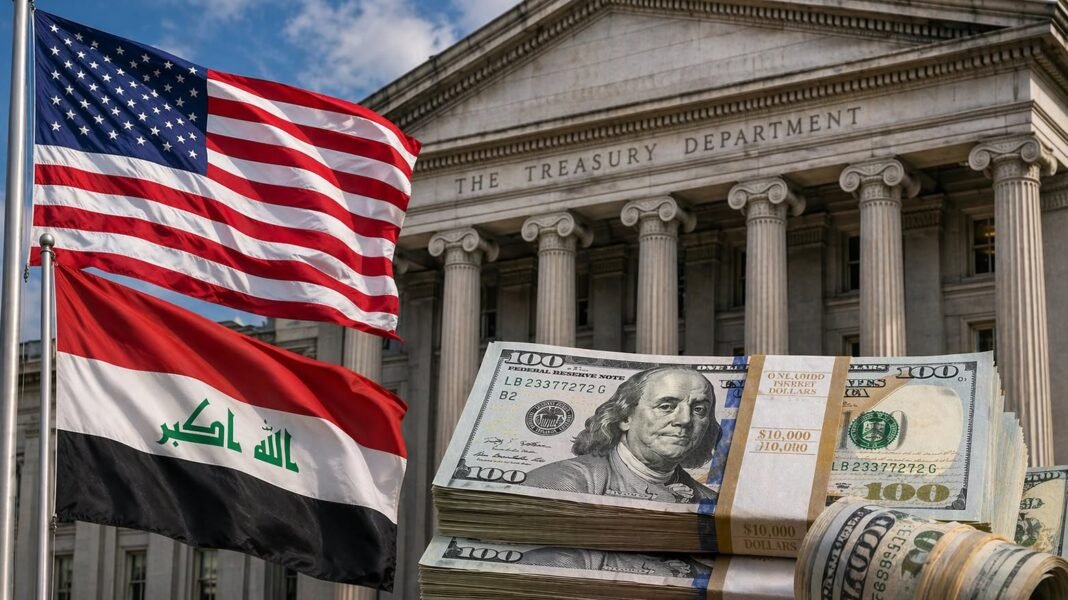
Iraq’s oil-backed loan plan could provide the government with emergency financing as cash pressures grow. Baghdad is preparing to approach US banking institutions about a potential sovereign credit facility. The proposed financing would rely on future crude export revenues for repayment.
The initiative aims to address widening state cash-flow pressures and protect public sector salary payments. Officials are also seeking to avoid financing the shortfall through domestic currency creation. Such an approach could increase pressure on the Iraqi dinar and fuel consumer price increases.
The Finance Ministry and Foreign Ministry are reportedly coordinating the government’s approach. Their work includes preparing terms for formal discussions with selected US financial institutions. The two ministries are expected to define the conditions and structure of the proposed facility.
Under the proposed arrangement, Iraq would use future international oil proceeds to service the debt. Repayments would come directly from revenues generated through crude exports. This structure would link the country’s external borrowing obligations to its future energy earnings.
The government sees foreign-currency financing as an alternative to expanding the domestic money supply. Printing additional dinars could create further pressure on exchange rates. It could also increase inflation risks if monetary growth outpaces economic activity.
Iraq’s oil-backed loan plan would require a specific legal framework before implementation. The government is preparing legislation to authorize the proposed borrowing arrangement. Parliament would then need to review and approve the relevant measures.
The proposed legislation includes a Borrowing, Grants, and Subsidies Law. The measure would create a temporary fiscal mechanism for maintaining essential government operations. It would also provide a legal basis for spending while a full annual budget framework remains unavailable.
The parliamentary Finance Committee is expected to examine the cabinet’s draft legislation. Lawmakers would focus on spending limits and debt sustainability requirements. They would also assess whether the proposal complies with national fiscal objectives.
The potential financing comes as Iraq faces challenges managing public expenditures and available cash. Government salaries represent a major recurring obligation. Maintaining those payments remains important for economic stability and domestic demand.
Using future oil revenues as collateral could provide lenders with greater repayment assurance. However, the arrangement would also create future claims against Iraq’s export earnings. Oil price fluctuations could therefore affect the government’s financial flexibility.
Iraq’s oil-backed loan plan reflects Baghdad’s search for short-term financial tools without expanding domestic currency issuance. The approach could provide additional liquidity if US institutions approve the facility. However, the final terms would determine its long-term impact on Iraq’s finances.
Parliamentary approval remains an important step before the proposed arrangement can move forward. Lawmakers will need to evaluate borrowing limits and repayment obligations. The government’s ability to secure favorable financing terms will also shape the outcome