

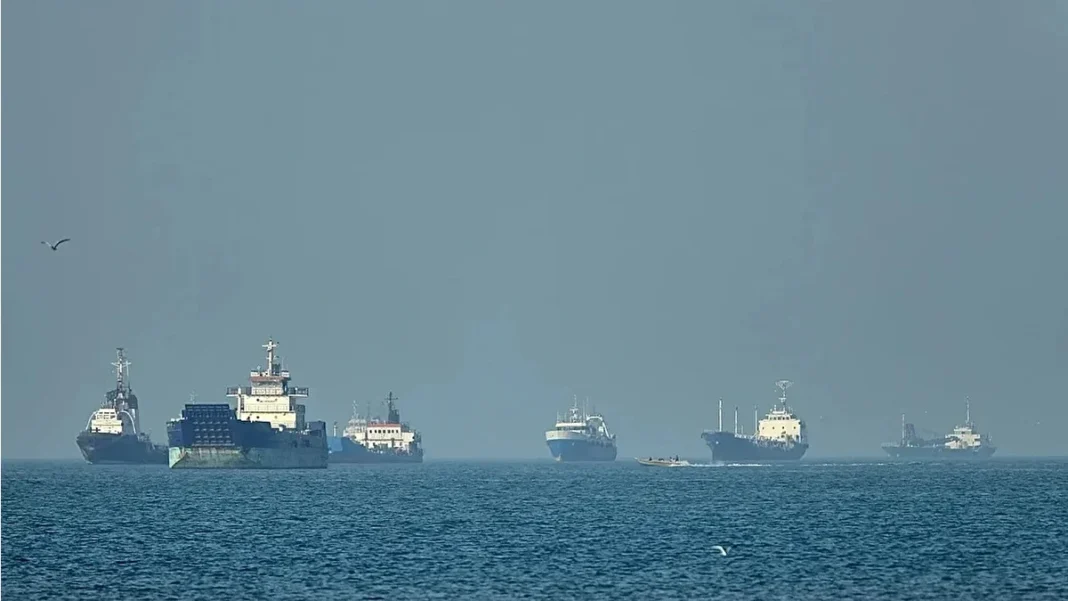
The Strait of Hormuz disruption has sharply reduced maritime traffic through one of the world’s busiest energy corridors. Shipping movements have fallen by almost 90% compared with levels recorded before the US-Iran war. The decline has raised fresh concerns for oil producers that depend heavily on the strategic waterway.
Shipping data showed only 13 vessels crossed the strait on Saturday. Just four vessels made the crossing on Sunday, while 16 crossed on Friday. The figures highlight the rapid slowdown affecting commercial traffic through the narrow passage.
Data from the United Kingdom Maritime Trade Operations also showed weaker activity. During the week ending August 21, 89 vessels exited the strait. Another 103 vessels entered the waterway during the same period.
The slowdown has also affected vessels connected with Iraq’s oil industry. An empty very large crude carrier entered the Gulf on Friday while heading toward Iraq. Separately, shipping records showed another tanker carrying Iraqi crude from Basra entering the Red Sea.
Iraq relies heavily on southern terminals to move crude onto international markets. The Strait of Hormuz disruption has therefore created serious challenges for Baghdad’s export operations. Officials now face growing pressure to secure routes that bypass the vulnerable waterway.
Iraq’s southern crude shipments averaged around 1.4 million barrels per day in July. That figure improved from approximately 500,000 barrels daily in June. Exports had fallen to nearly 100,000 barrels per day in May.
Despite July’s recovery, shipments remain far below normal levels. Basrah exports previously exceeded 3.3 million barrels per day before the disruption began. The gap has placed additional pressure on Iraq’s oil revenues and export planning.
Baghdad has started examining several alternative routes through neighboring countries. Proposed options include routes through Turkiye, Syria and Jordan. These corridors could reduce Iraq’s exposure to future disruptions around Hormuz.
One major proposal involves constructing a pipeline to Syria’s Baniyas port. The project could take about four years to complete. Initial estimates place its cost at no less than $15 billion.
Such a project would require substantial financing, regional cooperation and long-term security guarantees. It would also represent a major strategic shift in Iraq’s export infrastructure. However, the investment could provide greater flexibility during future maritime crises.
For now, Iraq remains exposed to developments around the Gulf’s most important shipping gateway. Continued restrictions could affect export volumes, shipping schedules and regional energy markets. The Strait of Hormuz disruption has demonstrated how quickly maritime instability can affect Iraq’s oil economy.
The latest traffic figures also underline the broader importance of the waterway. Hormuz handles a significant share of global energy shipments and connects Gulf producers with international buyers. Any prolonged disruption could therefore create consequences far beyond Iraq’s borders.
Baghdad’s search for alternative export channels reflects that wider risk. Building new infrastructure will take years, while current shipping problems require immediate solutions. Iraq must balance short-term export needs with longer-term plans for greater energy security.