

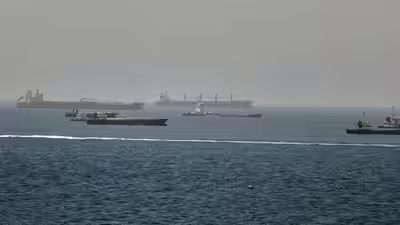
Oil prices fell sharply on Wednesday as Strait of Hormuz talks revived hopes for safer shipping through the strategic waterway. Brent crude declined about 2%, while U.S. crude also extended recent losses. Investors reacted to signs that Iran and Oman may improve navigation through the strait.
Brent futures dropped $1.78 to $86.80 a barrel by 0027 GMT. West Texas Intermediate crude fell $1.49 to $80.87 during the same period. Both benchmarks had already lost more than 3% during Tuesday’s trading session.
The latest decline followed renewed diplomatic activity between Iran and Oman. Tehran said discussions had resumed over managing maritime traffic through the Strait of Hormuz. The neighboring countries have held intermittent discussions for several weeks.
Officials discussed creating a temporary navigation corridor through the waterway. They also agreed to remove mines that could threaten commercial vessels. Those developments helped ease some concerns about prolonged disruptions to global energy supplies.
The Strait of Hormuz remains vital to international energy markets. Before the conflict began in February, roughly one-fifth of global oil and LNG shipments passed through the route. Any sustained disruption could therefore place significant pressure on crude prices and shipping costs.
Market participants remain cautious despite the latest diplomatic progress. Analysts say uncertainty surrounding the conflict could keep prices volatile. Some traders have also returned to the market after the recent declines.
U.S. officials have meanwhile begun restoring staffing at selected diplomatic missions across the Middle East. Two people familiar with the situation told Reuters about the move. The decision suggests Washington currently sees less immediate risk of further regional escalation.
However, tensions remain unresolved. Washington recently expanded sanctions targeting Iran’s economic activity. The United States also warned countries against continuing certain business relationships with Tehran. Officials said penalties would not begin immediately.
A separate maritime incident added another layer of concern. An unidentified projectile struck and disabled an oil tanker near Oman’s Ash Shishah. The location sits close to the entrance of the Strait of Hormuz.
U.S. oil inventories also offered a bearish signal for prices. The American Petroleum Institute reported an increase of roughly 4.2 million barrels last week. Analysts had expected a much smaller rise of about 600,000 barrels.
Official inventory figures from the U.S. Energy Information Administration were due later Wednesday. Traders will watch those figures for additional clues about domestic supply and demand. Meanwhile, the Strait of Hormuz talks remain central to the market’s short-term outlook.
For now, crude prices appear caught between diplomatic optimism and persistent geopolitical risks. Further progress could support additional declines if shipping conditions improve. Any renewed disruption, however, could quickly reverse the market’s latest move.
The Strait of Hormuz talks therefore remain a major focus for energy traders. Their outcome could influence crude prices, shipping activity, and broader inflation concerns. Markets are likely to remain sensitive to every new development around the waterway.