

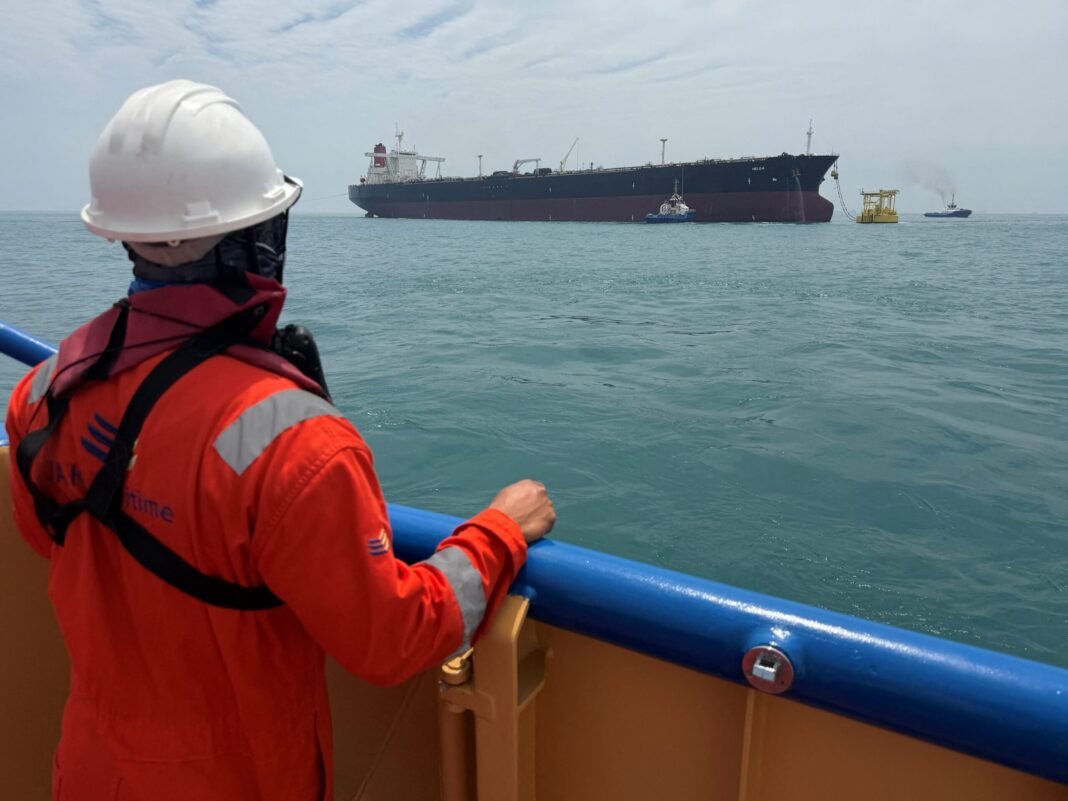
Oil prices edged lower on Tuesday as investors monitored developments in the Middle East and signs of improving shipping activity through the Strait of Hormuz. The recovery in Hormuz oil flows eased supply concerns and added pressure on crude markets following recent diplomatic progress between the United States and Iran.
Brent crude traded at $77.70 per barrel, down 20 cents from the previous session. U.S. West Texas Intermediate also moved lower, slipping 12 cents to $73.74 per barrel. The declines followed a sharp sell-off on Monday, when both benchmarks lost more than three percent.
Market sentiment shifted after Washington granted Tehran a 60-day sanctions waiver following initial peace discussions. At the same time, officials pointed to reduced tensions in Lebanon under a broader regional understanding. These developments encouraged traders to reassess the risk of major supply disruptions across the Middle East.
Analysts noted that improving shipping conditions through the Strait of Hormuz played a key role in the latest price movements. As more vessels resumed their routes, concerns about interrupted energy supplies began to fade. Investors viewed the increase in maritime activity as a positive sign for regional stability.
Data from ship-tracking services showed that two crude tankers carrying nearly two million barrels of oil successfully passed through the strategic waterway on Monday. Traffic had slowed a day earlier due to safety concerns and uncertainty surrounding the route. However, the latest figures suggested that Hormuz oil flows were gradually returning to normal levels.
Industry observers believe market participants now see shipping activity as an important indicator of both physical supply and diplomatic progress. As long as tanker movements continue to improve, traders may remain cautious about pushing oil prices significantly higher.
Despite the recent easing of tensions, uncertainty still lingers. Earlier concerns emerged when the fragile agreement appeared at risk after renewed warnings from U.S. officials regarding shipping security. Statements from both Washington and Tehran highlighted the fragile nature of the current situation and reminded investors that geopolitical risks remain present.
Market experts also pointed to ongoing skepticism surrounding long-term relations between the two countries. Many traders question how quickly trust can return after years of conflict and sanctions. That uncertainty may slow any immediate return to oil prices seen before the recent regional tensions.
Meanwhile, attention has shifted toward U.S. inventory data. Analysts expect crude, gasoline, and distillate stockpiles to show declines for the previous week. Fresh inventory figures could provide additional clues about supply conditions and fuel demand in the world’s largest economy.
Government data released Monday showed that crude reserves in the U.S. Strategic Petroleum Reserve fell to 331.2 million barrels. The level marked the lowest point since June 1983. The decline reflected tighter supplies following disruptions linked to the recent U.S.-Iran conflict.
For now, traders continue to monitor diplomatic developments, shipping activity, and inventory trends. The direction of Hormuz oil flows will likely remain a major factor influencing oil prices in the coming days