

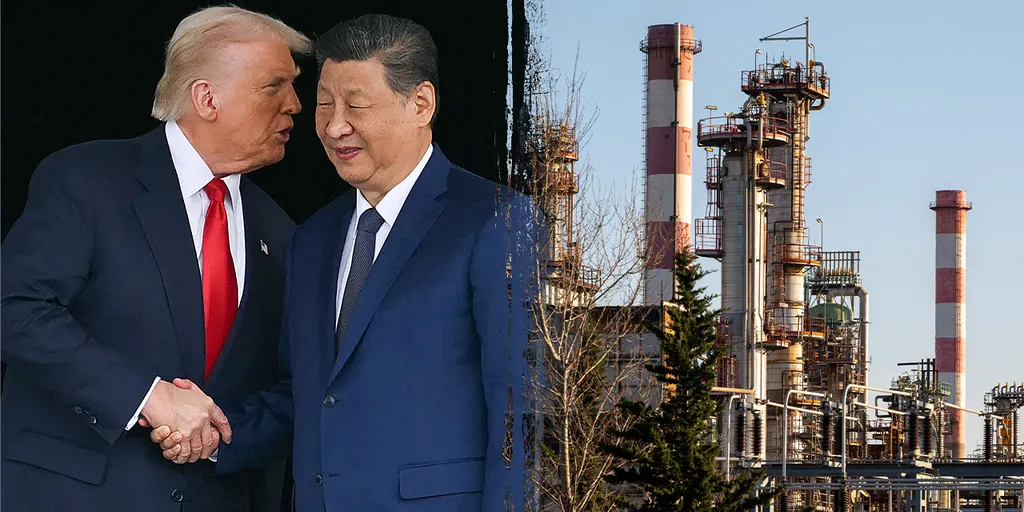
Oil market uncertainty returned on Wednesday as global crude prices declined ahead of a major meeting between U.S. President Donald Trump and Chinese President Xi Jinping in Beijing. Investors also continued monitoring fragile developments surrounding tensions in the Middle East and disruptions linked to Iran.
Brent crude futures fell by more than one percent during early trading. Prices dropped to around $106 per barrel after three consecutive sessions of gains. U.S. West Texas Intermediate crude also recorded similar losses, falling close to $101 per barrel.
Oil market uncertainty has remained high since military tensions involving the United States, Israel, and Iran escalated earlier this year. Concerns over shipping routes and energy supplies continue driving sharp market reactions. Traders remain cautious as any regional escalation could quickly affect global oil flows.
The Strait of Hormuz remains a major focus for investors and energy companies. Iran’s effective closure of the strategic waterway disrupted international shipments and increased fears of supply shortages. The route normally handles a large share of the world’s crude oil and liquefied natural gas exports.
Energy analysts said the market still lacks clear direction despite strong price support. Investors continue reacting to every political and military development from the region. Experts believe prices may remain volatile while uncertainty surrounding the conflict persists.
Oil prices gained more than three percent earlier this week after hopes for a lasting ceasefire weakened. Market expectations for the reopening of the Strait of Hormuz also declined. As a result, traders increased concerns over prolonged supply disruptions and tighter global inventories.
Attention has now shifted toward the upcoming Trump-Xi summit in China. The two leaders are expected to discuss economic issues, international trade, and regional security matters. China remains one of the largest buyers of Iranian oil despite pressure from Washington to reduce purchases.
Oil market uncertainty could intensify depending on the outcome of the Beijing meetings. Analysts believe any changes in U.S.-China relations or Middle East diplomacy may directly affect energy markets. Investors continue searching for signs that could stabilize supply routes and ease geopolitical tensions.
Economic pressure from higher oil prices has already started affecting several countries, including the United States. Rising fuel costs contributed to stronger inflation figures in recent months. Economists now expect central banks, including the Federal Reserve, to maintain higher interest rates for a longer period.
Higher borrowing costs could eventually weaken global energy demand. Businesses and consumers often reduce spending when financing becomes more expensive. Analysts warned that slower economic growth may create additional pressure on oil markets later this year.
Meanwhile, U.S. crude inventories declined again last week, according to industry data. Lower stockpiles added fresh concerns about supply levels as the regional conflict continues. Energy traders now await both political developments and inventory reports for clearer market direction.