

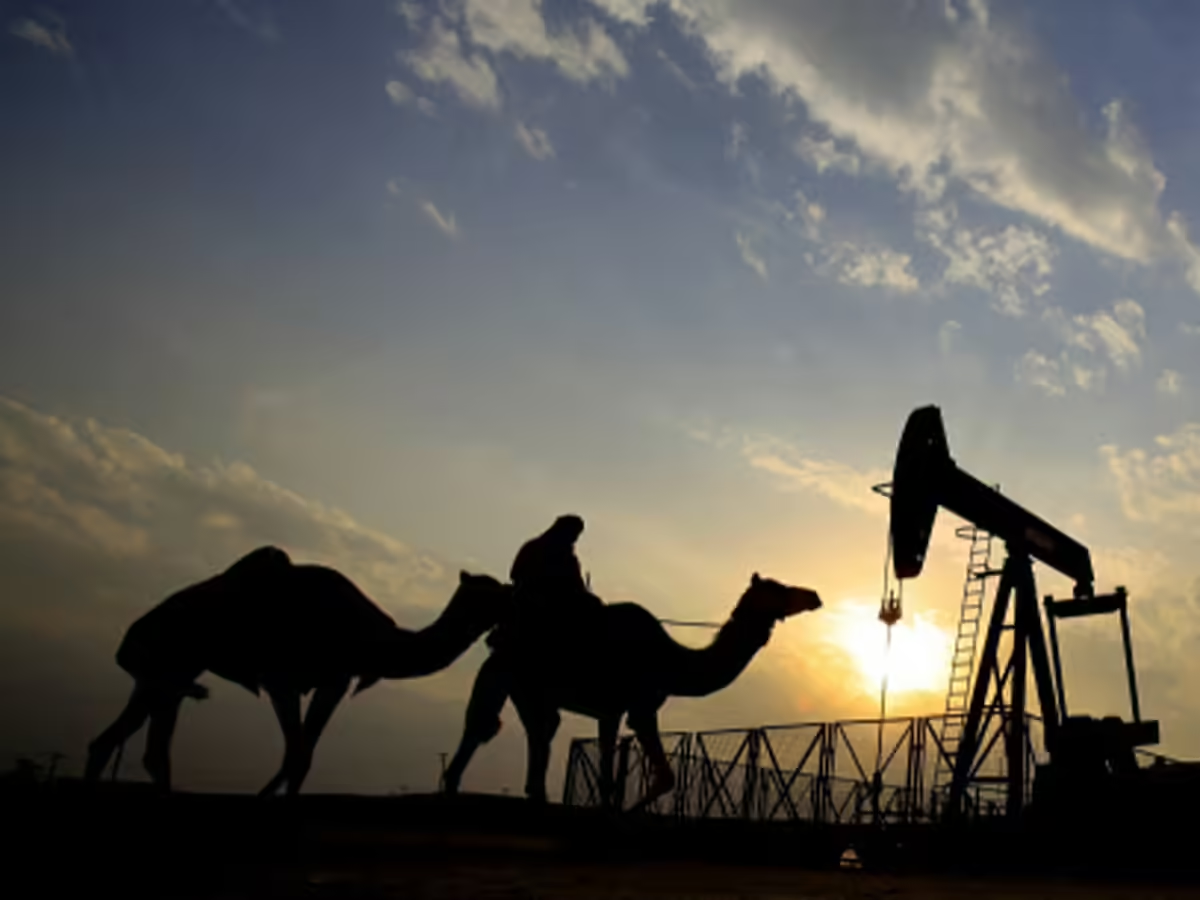
Middle East oil shift sees $120B move to Africa and South America as global firms change strategy. Rising risks in the region push companies to seek safer investments. As a result, energy giants now focus on new markets.
First, companies like ExxonMobil and Chevron lead this transition. Meanwhile, BP and TotalEnergies also expand outside the Middle East. These firms want to reduce exposure to conflict and instability.
Next, ExxonMobil considers a $24 billion investment in deepwater oil fields in Nigeria. At the same time, Chevron increases its presence in Venezuela through asset swap deals. BP also acquires stakes in offshore fields in Namibia. In addition, TotalEnergies signs an exploration agreement with Türkiye.
Moreover, the Middle East oil shift sees $120B move as analysts expect major returns. Experts estimate these projects could generate up to $120 billion in value. Therefore, companies view these regions as strong opportunities for growth.
However, instability in the Middle East drives this shift. The Strait of Hormuz faces repeated disruptions. This route carries about one-fifth of global oil supplies. Consequently, any disruption quickly affects global markets.
In addition, tensions involving the United States, Israel, and Iran increase risks. Attacks on energy infrastructure create delays and financial losses. For example, ExxonMobil reported a 6% drop in global production. The company also faces potential losses of up to $5 billion each year due to damage in Qatar.
Furthermore, the Middle East oil shift sees $120B move as companies diversify operations. Africa, South America, and the eastern Mediterranean attract strong interest. These areas offer new reserves and fewer immediate risks.
Additionally, the global energy industry aims to add around 300 billion barrels to reserves by 2050. Companies must secure new resources to meet rising demand. Therefore, diversification becomes a key strategy.
Meanwhile, Chevron prepares new exploration projects in Egypt, Greece, and Libya. It also strengthens its position in the Gulf of Mexico. These steps show a broader plan to balance risk and reward.
In conclusion, the Middle East oil shift sees $120B move as companies adapt to changing conditions. This trend will reshape global energy investment and supply chains in the coming years.