

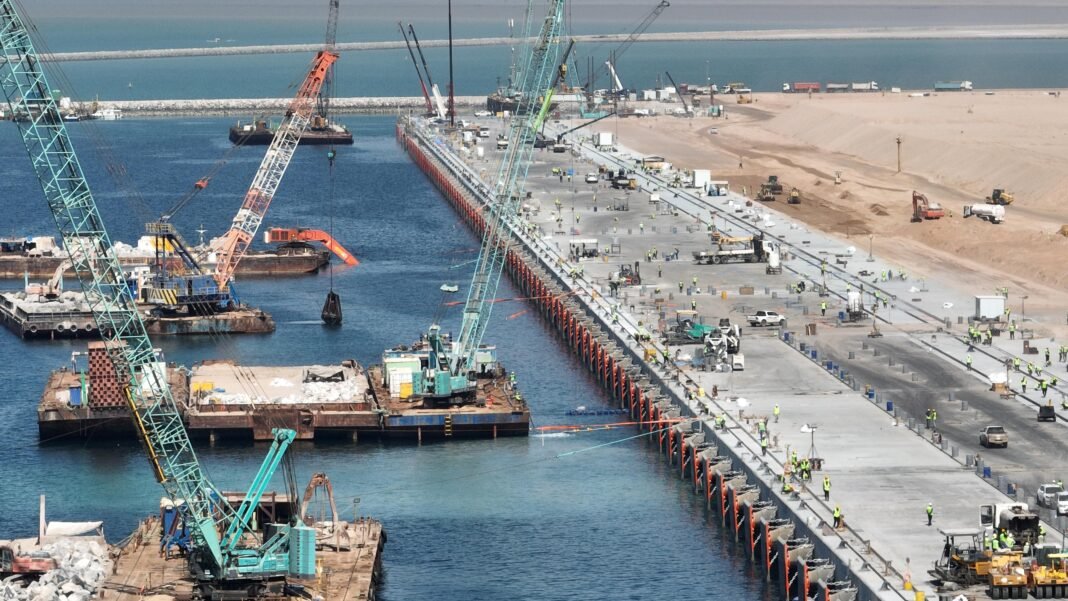
Iraq’s maritime cargo growth continues to rise sharply, as the General Company for Ports of Iraq (GCPI) announced a major increase in ship traffic during the first half of 2025. Director General Dr. Farhan Al-Fartousi confirmed that 1,522 ships docked at the country’s four key commercial ports.
These ports—Umm Qasr North, Umm Qasr South, Khor Al-Zubair, and Abu Flous—handled more than 22.4 million tonnes of cargo during this period. The high activity marks a notable improvement in Iraq’s shipping and logistics capabilities.
Khor Al-Zubair Port led the list with 396 vessels and a record 9.7 million tonnes of throughput. The port continues to serve as a strategic hub for industrial and oil-related shipments. Umm Qasr North Port followed closely, welcoming 689 ships and moving 6.86 million tonnes of goods.
Meanwhile, Umm Qasr South Port handled 252 ships and processed 5.4 million tonnes. Abu Flous Port received 185 vessels, managing a more modest 462,000 tonnes, yet still playing a key regional role.
Dr. Al-Fartousi highlighted how Iraq’s maritime cargo growth reflects the efficiency gains achieved by modernizing port operations. These gains include faster processing, improved cargo handling, and tighter coordination among port staff, shipping agencies, and customs.
The Ministry of Transport also released a statement praising the achievement. It pointed to increased operational momentum and better infrastructure as driving factors behind the strong performance. Additionally, the Ministry mentioned efforts to support trade, enhance logistics, and attract more maritime activity into Iraq’s port system.
Officials at GCPI emphasized that continued investment in port facilities and digital management systems would help sustain this growth. They also aim to attract more regional shipping lines to choose Iraq’s ports as a preferred destination.
This rise in ship traffic shows how Iraq’s maritime cargo growth connects to the broader economic recovery and trade expansion. Ports now act as central arteries for import, export, and industrial supply chains throughout the country.
With more ships arriving and stronger capacity in place, Iraq positions itself as a growing maritime player in the region. Port authorities plan to build on this success through further upgrades and global partnerships.