

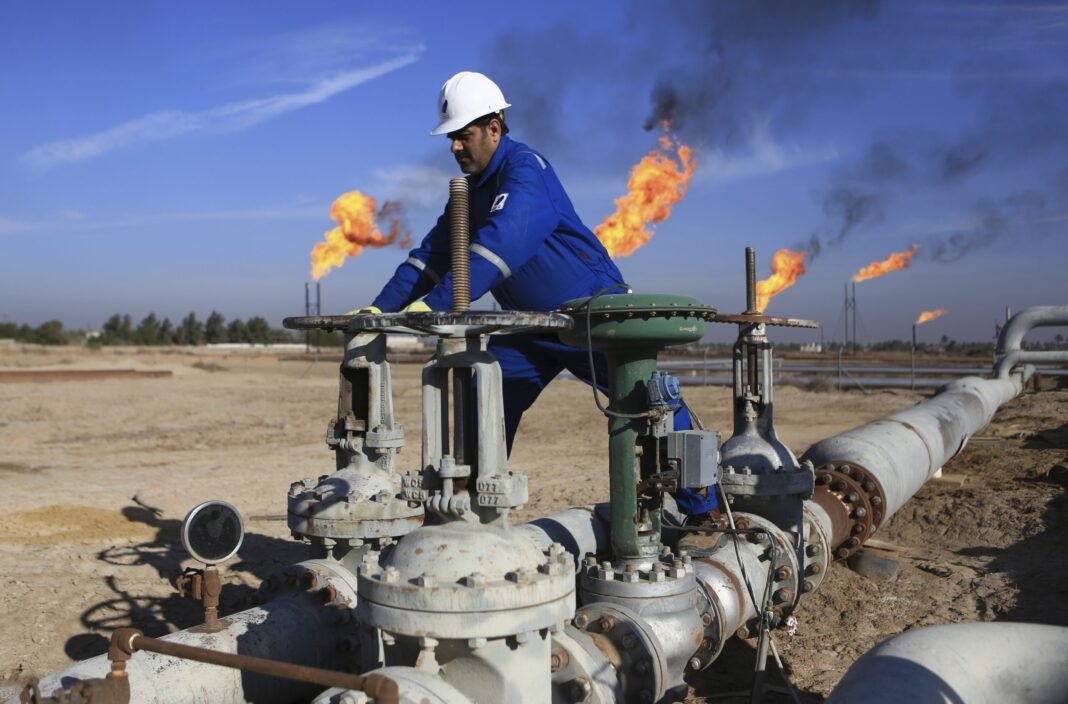
Iraq’s oil slowdown continues to shape the energy sector outlook. Moreover, global firms now report weaker activity across key projects. The companies SLB and Baker Hughes both confirmed the trend. They observed reduced operations during the first quarter.
Furthermore, Iraq’s oil slowdown reflects broader regional tensions. Ongoing conflict has disrupted supply routes and increased uncertainty. In particular, instability around the Strait of Hormuz has raised global concerns. This route carries about 20 percent of global oil flows. Therefore, any disruption quickly affects energy markets worldwide.
In addition, company data shows a clear financial impact. SLB reported a 2.69 billion dollar decline in regional sales. This drop represents more than 10 percent annually. Similarly, Baker Hughes recorded an even steeper fall. Its regional revenue declined by 19 percent to 1.15 billion dollars. As a result, both firms faced strong pressure across operations.
Moreover, Iraq’s oil slowdown has directly affected field activity. Drilling operations slowed down across several sites. Equipment demand also declined. At the same time, supply chains faced delays. Consequently, companies postponed or delayed multiple projects. These disruptions reduced efficiency and increased operational costs.
However, global energy trends may soon shift. Both firms expect higher spending on oil exploration. They anticipate increased investment in production projects worldwide. This expectation follows supply disruptions linked to regional conflict. Therefore, companies now look for stable areas to expand operations.
Importantly, Iraq’s oil slowdown may not last long. Iraq holds large oil reserves and offers relatively low production costs. Because of this, firms may return quickly. In fact, analysts expect Iraq to benefit from future investment waves. Companies aim to compensate for global supply shortages.
Additionally, firms plan to expand work in key sectors. These sectors include drilling, well rehabilitation, and infrastructure upgrades. Such activities could restore production levels and improve efficiency. As a result, Iraq may regain its position in the energy market.
In conclusion, Iraq’s oil slowdown highlights both risks and opportunities. While current activity remains weak, future investment may reverse the trend. Therefore, Iraq stands at a critical point in its energy development path.