

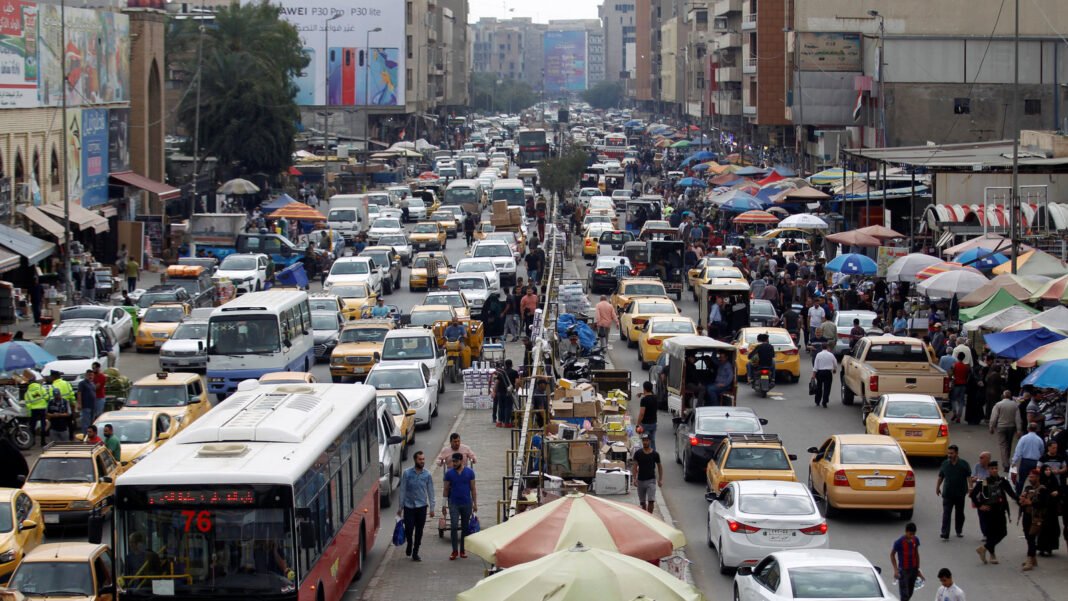
Iraq’s economy shrink 2026 remains the main concern for officials and analysts. Moreover, new projections warn about deeper economic pressure. The Trade and Economic Research Centre highlighted high risks. It explained that Iraq depends heavily on oil income. Therefore, any disruption quickly affects the national economy.
Furthermore, Iraq’s economy shrink 2026 links closely linked to falling oil exports. Research shows that oil output and shipments dropped sharply. As a result, the country faces a serious economic slowdown. In addition, regional tensions continue to influence energy routes and trade flows.
Data from the State Organization for Marketing of Oil confirms this decline. Iraq exported about 18.6 million barrels in one month. However, exports reached about 99.8 million barrels in the previous month. Earlier, exports stood at 107.6 million barrels. These numbers show a steep and sudden drop.
Revenue figures also reflect the downturn. Oil income reached around 1.95 billion dollars. Meanwhile, revenues previously stood at 6.81 billion dollars. Before that, income reached about 6.48 billion dollars. Consequently, the sharp decline reduced national earnings significantly.
In addition, Iraq’s economy shrink 2026 creates pressure on public finances. Government income may fall quickly. At the same time, import costs may rise. Transport expenses may also increase. Therefore, inflation could grow in local markets.
Moreover, the economy remains fragile and sensitive. Even small disruptions in exports can cause major effects. For example, blocked routes or reduced production quickly lower revenue. As a result, markets face instability and uncertainty.
However, experts suggest several solutions. First, Iraq should expand trade channels. Second, it must protect supply chains. Third, it should improve market stability. These steps can support food security and ensure steady product flow. In addition, stronger trade activity may reduce reliance on oil.
In conclusion, Iraq faces a challenging economic period. Oil export declines continue to shape the outlook. Therefore, urgent action remains necessary to stabilize the economy and support growth.