

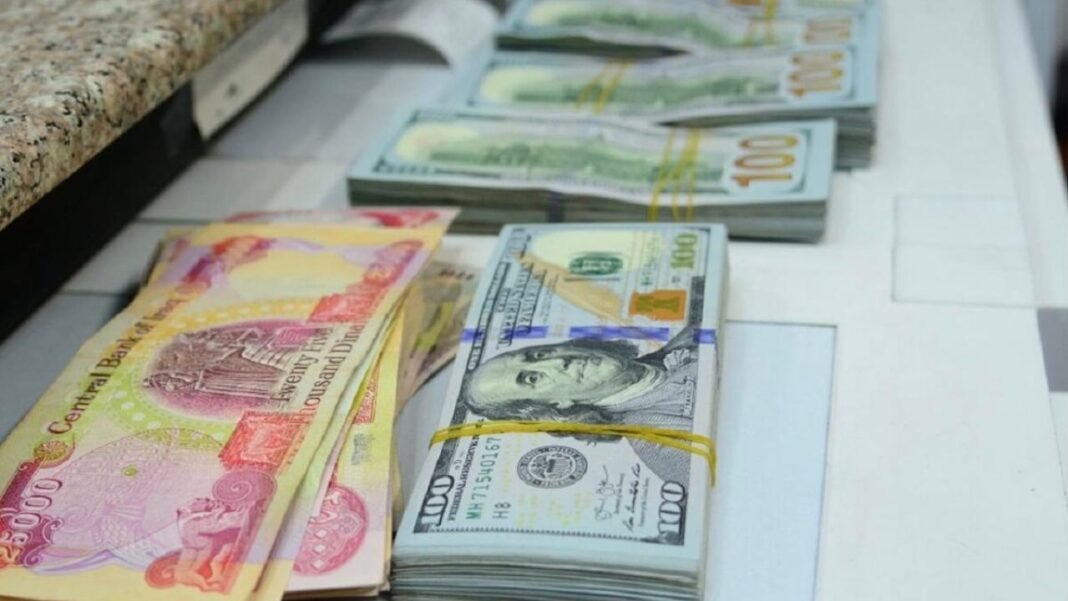
Iraq’s exchange rate policy update drew attention after the International Monetary Fund (IMF) released a clear explanation. The IMF shared the update following its latest report on Iraq’s economic conditions.
The IMF confirmed that Iraq uses a conventional peg exchange rate system. This policy applies both legally and in practice. The Central Bank of Iraq (CBI) manages this system through its Board, as allowed by law.
Since February 8, 2023, Iraq has fixed the exchange rate at ID 1,320 per U.S. dollar. The CBI updates this daily on its website. This peg provides price stability and predictability for trade and business.
According to the IMF, Iraq recently changed its exchange system. The country still follows transitional rules under Article XIV, Section 2. However, it no longer imposes exchange restrictions or multiple currency practices (MCPs)under that rule.
A major shift started in January 2025. All international transactions now go through commercial banks using correspondent banking relationships (CBRs). This ensures better control and transparency Iraq’s exchange rate policy.
The CBI provides weekly funds to these banks based on foreign exchange needs. It also audits the use of these funds. These audits confirm compliance with anti-money laundering and counter-financing of terrorism (AML/CFT)standards.
The CBI wants local banks to expand their global ties. It urges them to form more CBRs, especially with non-U.S. banks. This reduces dependency on limited partners and builds a wider financial network.
These reforms show strong progress in Iraq’s exchange rate policy update. Iraq aims to modernize banking and follow international best practices.
Iraq maintains a fixed exchange rate of ID 1,320 per U.S. dollar, managed by the Central Bank of Iraq. Recent reforms route all international transactions through commercial banks using correspondent banking relationships. The Central Bank ensures compliance with AML/CFT rules and encourages broader global ties, especially with non-U.S. financial institutions.