

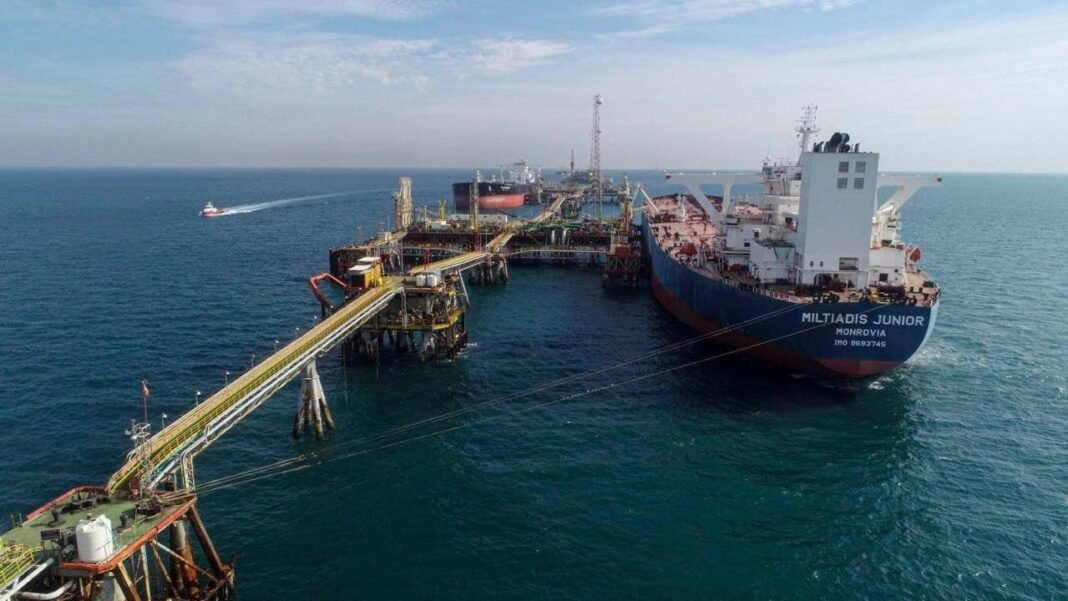
Iraq oil recovery is gathering pace as the country works to restore crude production following months of disruption. Officials expect output to return to levels seen before the recent regional conflict within the next two months. The recovery marks an important step for Iraq’s economy, which depends heavily on revenue from energy exports.
The country’s oil sector faced major challenges after tensions in the Middle East led to the closure of the Strait of Hormuz. The strategic waterway serves as a critical route for oil shipments from the Gulf region. When maritime traffic stopped, Iraq struggled to move crude exports to international markets. As a result, storage facilities filled quickly and forced operators to reduce production across several oilfields.
Recent diplomatic progress between Iran and the United States has changed the situation. A preliminary agreement helped ease tensions and paved the way for the reopening of the strait. With shipping routes operating again, Iraqi authorities have started efforts to increase production and resume exports.
Officials from the Oil Ministry say several oilfields have already begun raising output. These facilities had previously scaled back operations due to limited storage capacity and export restrictions. Now, producers are gradually restoring activity as market access improves. Industry leaders believe this process will continue steadily over the coming weeks.
Before the conflict began, Iraq exported roughly 3.5 million barrels of crude oil each day. Most of those shipments traveled through the Strait of Hormuz. Once the route closed, export volumes dropped sharply. Government data showed a significant decline in crude shipments, creating pressure on both the energy sector and public finances.
During the disruption, Iraq relied on alternative export routes through neighboring countries. However, those channels handled only a fraction of normal export volumes. The limited capacity prevented the country from maintaining its previous production levels. Consequently, many oil operations remained below their potential output.
The reopening of the strait has improved confidence across the industry. Oil Minister Bassim Khudair stated that exports will increase gradually as maritime traffic returns to normal. Shipping companies and energy operators are also monitoring conditions to ensure a smooth return to regular activity.
The success of the Iraq oil recovery carries broader economic importance. Oil sales provide the majority of government income and support essential public spending. Revenue from exports helps finance imports, stabilize the national currency, and cover salaries for public employees and pensioners.
As production rises and exports recover, officials remain optimistic about the months ahead. The renewed flow of oil through regional shipping lanes offers Iraq an opportunity to strengthen its economy and restore stability to one of its most important industries. If current conditions continue, Iraq oil recovery could reach a major milestone before the end of the summer.