

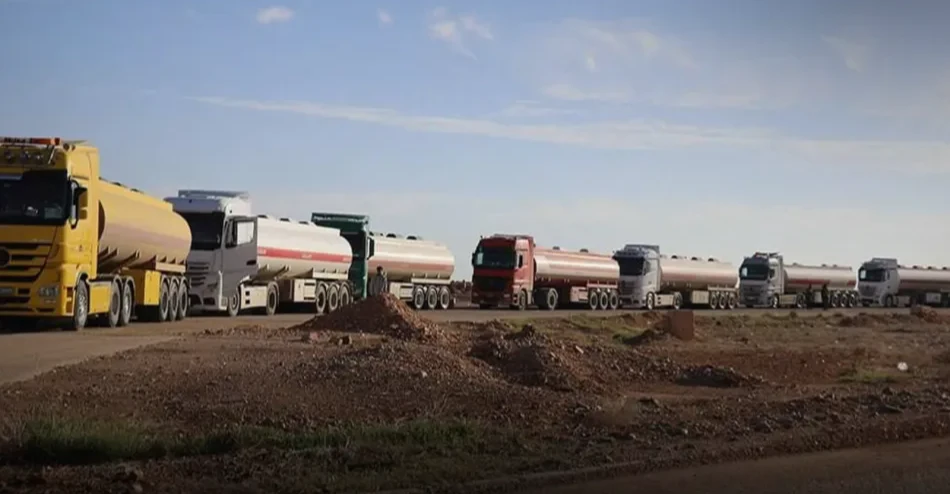
Iraq now sends between 500 and 700 tanker trucks daily to Syria. Oil export shift accelerates as Iraq expands land routes amid regional disruptions. Export shift strengthens alternative supply channels outside maritime risks.
These trucks transport crude oil through a revived land corridor. Officials confirmed that the route runs via the al-Waleed border crossing in western Iraq.
Moreover, local authorities reported steady traffic across the crossing. Emad Mashal, mayor of Rutba, said the flow continues without interruption. The route connects Iraq’s Anbar Province to Syrian territory.
Previously, this land route remained closed for decades. However, regional conflicts and shipping disruptions forced Iraq to explore new export options. As a result, Baghdad shifted focus away from reliance on the Strait of Hormuz.
In addition, recent geopolitical tensions disrupted maritime oil transport significantly. These challenges encouraged Iraq to activate land-based alternatives despite higher costs. Consequently, the Syria route became a practical solution for maintaining exports.
Earlier, only about 60 tanker trucks crossed the border daily after reopening. However, the number increased rapidly to current levels. This sharp rise reflects strong demand and logistical adaptation.
Furthermore, Iraq secured several export agreements to support this strategy. According to the State Organization for Marketing of Oil, multiple suppliers signed contracts for fuel shipments. Two companies agreed to export 720,000 metric tons over three months. Discounts ranged between $160 and $170 per ton.
Meanwhile, another supplier committed to exporting 401,000 tons at around $160 per ton. A fourth contract covered 90,000 tons at approximately $155 per ton. These agreements helped sustain export volumes during uncertain conditions.
At the same time, Iraq faced production challenges in its southern oilfields. Output dropped by nearly 80% at one stage, reaching about 800,000 barrels per day. This decline increased pressure on export strategies and revenue stability.
Oil export shift remains critical as Iraq adapts to regional risks. The government continues to evaluate both land and sea routes for long-term resilience. Officials aim to balance costs with reliability in future planning.
Additionally, improved security conditions in Syria supported the reopening of this corridor. The end of major conflict phases made cross-border transport more feasible. Therefore, logistics networks continue to expand gradually.
In conclusion, the oil export shift defines Iraq’s current energy strategy. Increased tanker traffic through Syria ensures continued exports despite disruptions. This approach highlights flexibility in response to global energy challenges.