

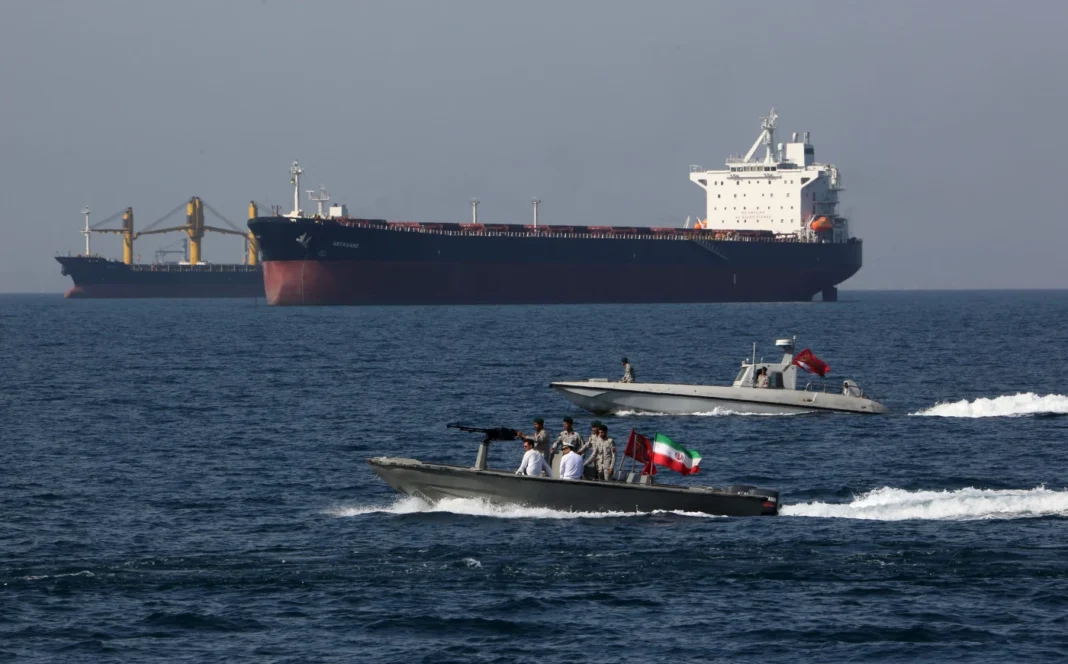
The Hormuz Shock triggered by tensions around the Strait of Hormuz has exposed deep weaknesses in Iraq’s economy. Oil exports faced major disruption, and Iraq quickly felt the strain on its budget and currency stability. The crisis also revealed how dependent Baghdad remains on a single export route. As a result, fiscal pressure spread across government services and salaries.
Iraq relies on oil for nearly all state income. When exports slowed, the government faced immediate cash shortages. Officials responded by cutting production and redirecting limited output to domestic use. Oil output dropped sharply, and gas supplies also weakened, worsening electricity shortages already under pressure.
The state managed to avoid an instant financial collapse by using short-term fixes. Authorities relied on delayed payments, domestic borrowing, and spending adjustments. These tools helped bridge the gap for a few months. However, they also increased long-term financial stress and weakened private sector confidence. The banking system absorbed more government debt as well.
The export crisis also revealed Iraq’s fragile infrastructure. Limited storage capacity forced production cuts at oil fields. Export routes remained heavily dependent on a narrow set of channels. Even partial flows through alternative pipelines could not replace lost capacity through maritime routes. The government struggled to balance exports with domestic fuel demand.
Political fragmentation made the situation worse. Iraq’s power-sharing system often blocks long-term planning. The Hormuz Shock intensified disputes between federal authorities and regional administrations over export control and revenue distribution. This slowed decisions on pipeline investment and delayed expansion of alternative export corridors.
Economic policy also suffered from repeated cycles of expansion and crisis. Past governments increased public spending during high oil prices without building strong reserves. When prices fell or exports weakened, budgets quickly came under stress. The latest crisis followed the same pattern, leaving little room for adjustment.
The oil sector itself remains poorly coordinated. Baghdad and regional authorities often pursue separate strategies. This division limits Iraq’s ability to build stable export routes beyond the Gulf. As a result, even partial disruptions create outsized economic damage. The country lacks a unified long-term energy strategy.
Some relief came from limited exports through alternative routes. Trucking and pipeline links provided small but important buffers. Yet they could not offset losses from maritime shipping routes. The Hormuz Shock therefore continued to pressure reserves and forced more domestic debt issuance. This trend risks future currency stability if it continues.
Looking forward, Iraq may gain from new regional energy corridors. Neighboring states also want diversified export routes to reduce risk. This creates potential for shared pipeline projects and stronger regional integration. However, progress depends on political alignment and sustained investment.
Ultimately, Iraq’s crisis reflects structural weaknesses rather than a single event. The shutdown of a key shipping lane only exposed deeper economic imbalances. Without reform, similar shocks will keep producing severe fiscal stress. The country now faces a narrow window to redesign its energy and budget systems.