

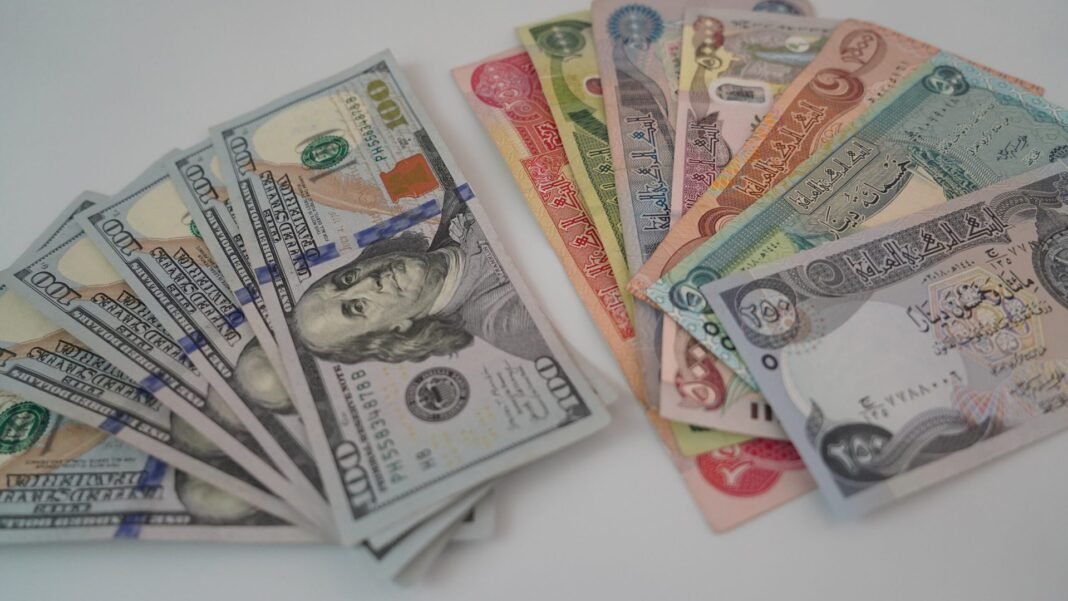
The dollar exchange rate in Iraq moved higher on Tuesday as currency markets in Baghdad and Erbil recorded fresh gains. Traders monitored the market closely after recent developments involving the country’s financial leadership. The latest increase in the dollar exchange rate in Iraq drew attention from businesses, exchange offices, and consumers across the region.
Market activity began the day with the US dollar trading at higher levels compared with the previous session. Currency dealers in Baghdad reported stronger demand during the opening hours of trading. As a result, exchange rates rose above figures recorded on Monday.
According to market data, trading in Baghdad’s major currency exchanges reached 157,250 Iraqi dinars for every 100 US dollars. The figure marked a noticeable increase from the previous day’s level of 156,700 dinars. Dealers said traders remained cautious while watching market developments.
Exchange shops across the Iraqi capital reflected the upward movement. Selling prices reached 157,750 dinars per 100 dollars. Meanwhile, buying prices stood at 156,750 dinars. The difference between buying and selling rates remained consistent with normal market activity.
In Erbil, currency markets also recorded higher rates. Exchange offices offered the dollar at 157,100 dinars for selling transactions. Buying prices settled at 156,900 dinars. The figures showed that both major Iraqi cities experienced similar market trends during the day.
Financial analyst Walid Eidi pointed to speculation as a key factor behind the latest rise. He explained that traders reacted to uncertainty surrounding recent leadership changes at the Central Bank of Iraq. According to his assessment, market sentiment played a larger role than economic indicators.
Eidi noted that current price movements do not appear to reflect major shifts in economic fundamentals. Instead, concerns and expectations among traders seem to be driving activity. Such reactions often occur when investors seek clarity about future financial policies.
The development comes as currency markets continue to respond quickly to political and financial news. Analysts believe stability in official policies could help reduce speculation. Until then, traders are expected to remain attentive to announcements that may influence market confidence.
For now, the dollar exchange rate in Iraq remains a closely watched indicator. Businesses, investors, and consumers will continue monitoring fluctuations in Baghdad and Erbil. Future movements may depend largely on market confidence and signals from financial authorities.