

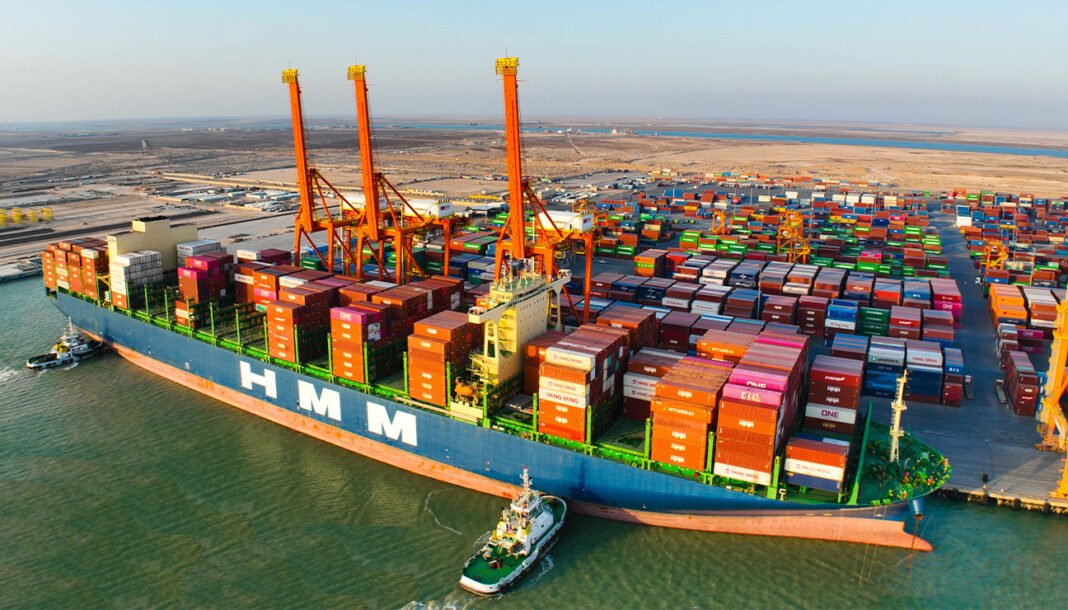
Iraq’s Umm Qasr port trade has gained fresh momentum after the country’s largest commercial port welcomed more than 80 vessels during June. The increase includes several large international cargo ships that signal growing confidence in Iraq’s maritime sector. Officials say the steady return of major shipping lines reflects improving economic activity and stronger regional trade links. The latest arrivals also highlight the port’s expanding role in supporting Iraq’s import and export operations.
One of the month’s most significant arrivals was the container vessel KCL. The ship traveled directly from Chinese ports and docked successfully at Berth 18 in Umm Qasr North Port. Unlike previous routes, it reached Iraq without stopping at intermediary ports. The Ministry of Transport described the voyage as an important achievement for the country’s shipping industry.
Officials explained that direct shipping services improve supply chain efficiency and reduce delivery times. Businesses also benefit from lower transportation costs and more reliable shipping schedules. These improvements strengthen Iraq’s commercial ties with Asian markets. China remains one of Iraq’s largest trading partners and a key source of imported goods.
The ministry noted that international shipping companies have gradually resumed operations at Iraqi ports. Regional instability had previously disrupted maritime traffic across the Gulf. Tensions in the Strait of Hormuz and the conflict between Iran and the United States created uncertainty for shipping companies. As security conditions improved, more operators restored direct routes to Iraq.
Transport authorities expect additional growth in the coming days. Officials confirmed that two to three more large cargo ships should arrive within the next 48 hours. Their arrival will increase cargo handling capacity at the country’s busiest harbor. It will also support the continuous movement of goods into Iraqi markets.
The ministry emphasized that Umm Qasr North Port continues receiving vessels from regional and international destinations. The consistent flow of ships reflects increasing confidence in Iraq’s port infrastructure. Authorities have worked to improve operational efficiency and accommodate larger vessels. These efforts continue attracting more global shipping companies.
The recent progress carries added importance following disruptions across Gulf trade routes. Challenges in the Strait of Hormuz highlighted Iraq’s dependence on secure maritime transportation. Any interruption affects the movement of imported products and industrial supplies. Officials therefore continue prioritizing reliable shipping channels to protect economic stability.
Umm Qasr remains Iraq’s primary commercial gateway and handles most of the country’s imported goods. The port plays a vital role in supporting businesses, industries, and consumer markets nationwide. Strong maritime operations also encourage international investment and expand trade opportunities. As shipping activity continues to recover, Umm Qasr port trade is expected to contribute further to Iraq’s economic growth and regional connectivity. Government officials believe sustained investment and efficient port management will ensure Umm Qasr port trade remains a driving force behind the country’s long-term commercial development.