

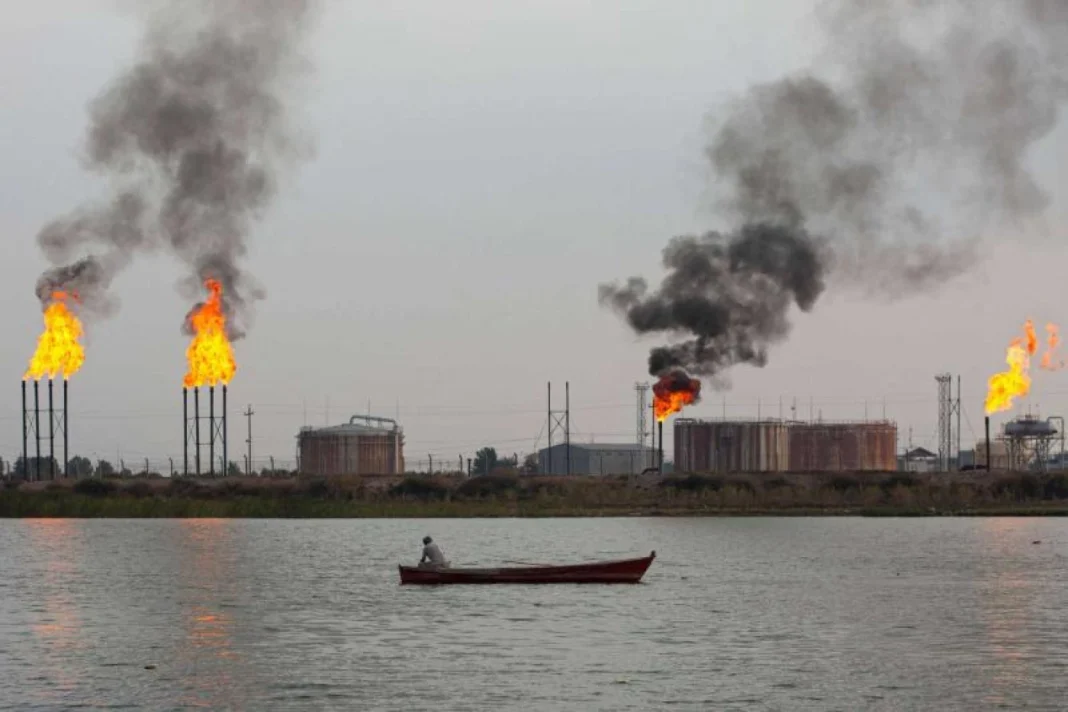
The Basrah crude decline intensified on Tuesday as growing optimism over a potential agreement between the United States and Iran weighed heavily on energy markets. Traders reacted quickly to reports of progress in negotiations, which raised expectations of additional oil supplies entering the market. As a result, Iraqi crude grades recorded some of the sharpest losses among major global benchmarks.
Basrah Heavy experienced a significant drop during the trading session. The grade lost $4.64 per barrel and closed at $53.50. Basrah Medium followed a similar path, falling by the same amount to settle at $55.60 per barrel. The sharp movement reflected concerns that increased Iranian exports could add pressure to already cautious markets.
Market participants closely watched diplomatic developments throughout the day. Many investors believe a preliminary understanding between Washington and Tehran could eventually ease restrictions on Iranian oil exports. That possibility encouraged traders to adjust positions and reassess future supply expectations. Consequently, selling pressure increased across several crude benchmarks.
The Basrah crude decline occurred alongside losses in international oil markets. Brent crude slipped modestly and settled at $82.92 per barrel. Meanwhile, West Texas Intermediate closed at $80.66 per barrel after a slight decrease. Although those benchmarks recorded smaller losses, they still reflected growing uncertainty about future market balances.
Regional producers also faced downward pressure. The OPEC basket registered a notable decline and ended the session at $91.68 per barrel. At the same time, Omani crude traded on the Dubai Energy Exchange fell sharply to $81.91 per barrel. These movements highlighted the broader impact of shifting sentiment across energy markets.
Analysts noted that traders remain focused on supply outlooks rather than immediate demand changes. The possibility of additional barrels entering global markets has become a major factor influencing price direction. Even without a finalized agreement, expectations alone have influenced trading behavior in recent sessions.
Looking ahead, investors will continue monitoring statements from both American and Iranian officials. Any confirmation of progress could create further volatility across oil markets. On the other hand, setbacks in negotiations may support prices and reverse recent losses. For now, the Basrah crude decline stands as one of the clearest signs of how geopolitical developments continue to shape global energy trading.