

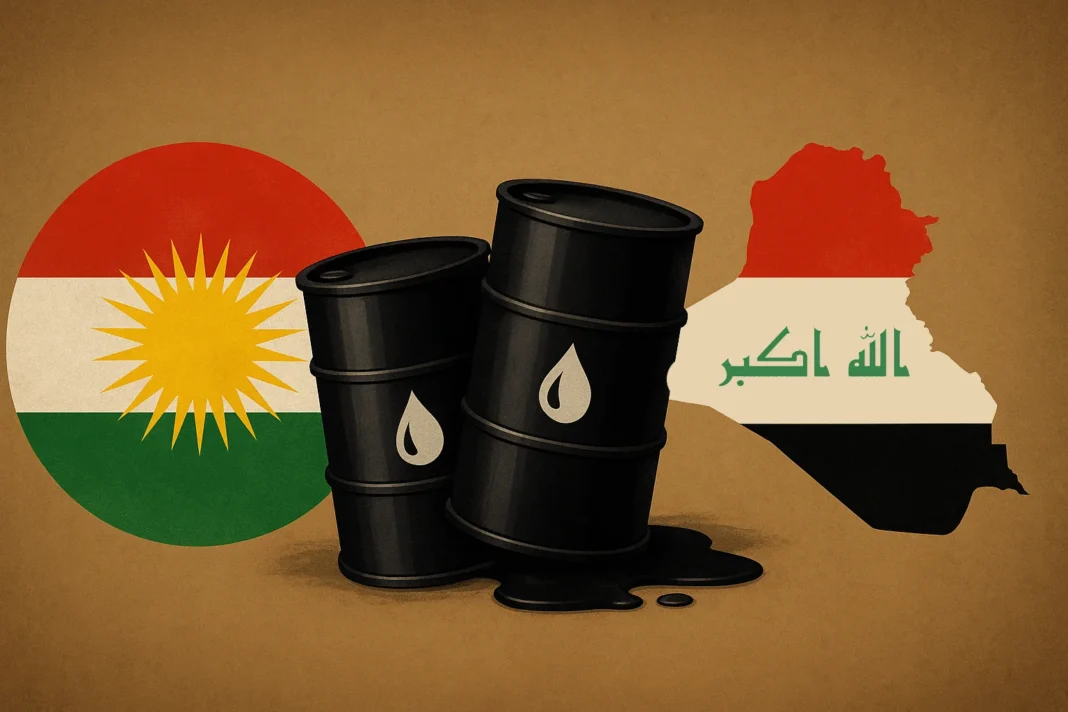
Iraq’s federal government and the Kurdistan Regional Government have agreed on new measures to enhance security around energy infrastructure in northern Iraq. The move comes amid growing concerns over attacks targeting oil and gas facilities. Officials say Kurdistan oil facility protection has become a priority as both sides work to safeguard production and restore investor confidence.
The agreement followed a high-level meeting between senior military officials from Baghdad and leaders in the Kurdistan Region. The discussions focused on strengthening coordination between federal and regional authorities to address security threats facing key energy assets.
Sabah al-Numan, spokesperson for the Commander-in-Chief of the Armed Forces, announced the agreement on Sunday. He said Prime Minister and Commander-in-Chief Ali al-Zaidi directed authorities to take additional steps to improve security around strategic oil and gas installations.
A delegation led by Iraqi Army Chief of Staff Abdul-Amir Yarallah traveled to the Kurdistan Region for talks with regional officials. During the meeting, both sides reviewed current security challenges and discussed mechanisms for closer cooperation. Officials agreed on a broad framework aimed at preventing future attacks and ensuring the continuity of energy operations.
The new security arrangements are expected to support efforts to resume full oil production and exports from the region. Authorities believe stable energy operations are essential for economic growth, investment, and reconstruction projects across Iraq.
The issue of Kurdistan oil facility protection gained urgency after several attacks targeted energy infrastructure in recent years. One of the most notable incidents occurred when the Khor Mor gas field in Sulaimaniyah province came under a drone attack. The strike raised concerns about the vulnerability of strategic energy facilities and their impact on national energy supplies.
In response, Iraqi authorities developed a series of proposals to strengthen security around critical sites. These measures included greater coordination between Baghdad and Erbil as well as additional resources to defend key facilities.
Among the proposed steps is the deployment of air defense systems to help protect energy installations from aerial threats. The Iraqi Ministry of Defense and the Kurdistan Regional Government have also discussed expanding security capabilities around major production sites.
Another important element involves improving intelligence cooperation. Federal and regional intelligence agencies plan to increase information sharing and establish faster communication channels. Officials believe stronger coordination will help identify potential threats before attacks occur.
Recent missile and drone incidents have placed additional pressure on the energy sector in the Kurdistan Region. These attacks have disrupted production, affected export planning, and created concerns among international energy companies operating in Iraq.
As regional tensions continue, policymakers view Kurdistan oil facility protection as essential for maintaining energy stability. Both Baghdad and Erbil hope that closer security cooperation will reduce risks, protect strategic infrastructure, and support the long-term development of Iraq’s oil and gas industry.