

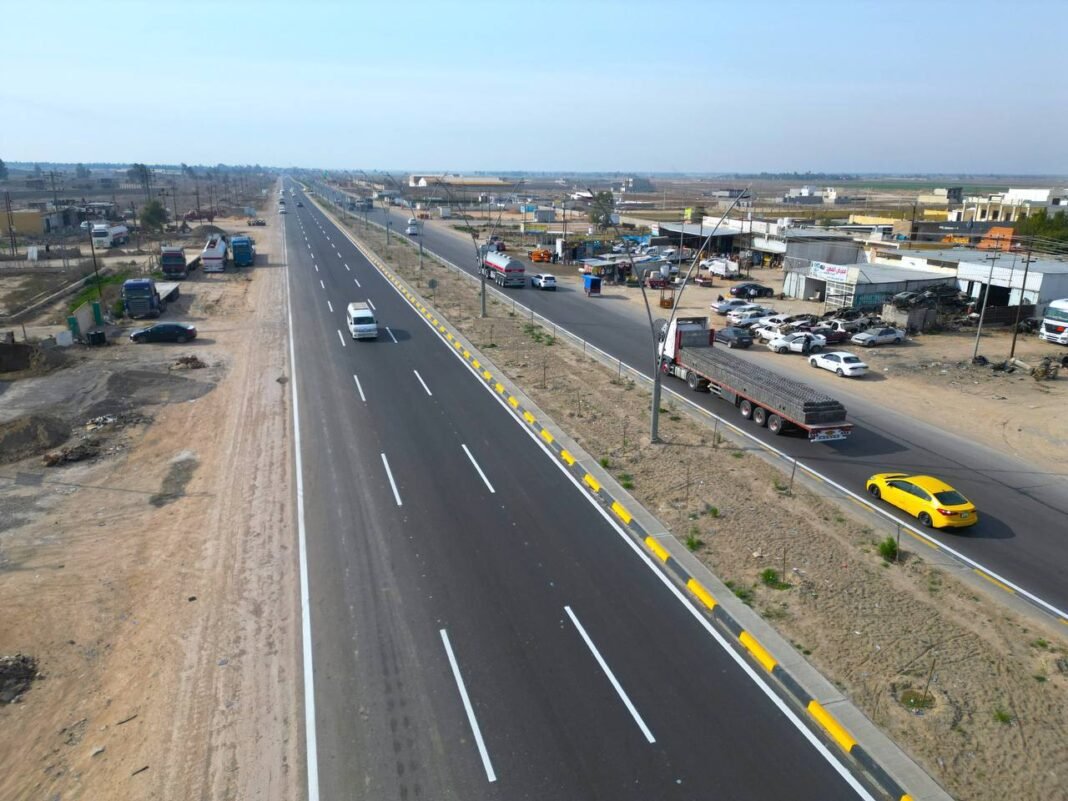
The Iraq road infrastructure project is set to receive a major boost after the World Bank approved a $900 million funding package aimed at modernizing key transport routes across the country. The initiative focuses on improving roads that support economic activity, domestic travel, and regional trade. Officials believe the investment will strengthen connectivity while creating new opportunities for businesses and local communities.
Road transportation remains the backbone of Iraq’s mobility network. Most passenger travel and freight movement depend on highways and road corridors. However, many routes face years of wear, increasing maintenance needs and safety concerns. Consequently, transportation challenges continue to affect trade efficiency and economic development.
The new program will concentrate on upgrading major transportation corridors that connect cities, industrial centers, and border crossings. These routes play a critical role in moving goods across Iraq and beyond its borders. As a result, improvements could help businesses reduce delivery times and transportation costs.
In addition, the project aims to strengthen links between Iraq and neighboring countries. Better road networks can improve access to regional markets and support cross-border commerce. Therefore, policymakers view the initiative as an important step toward deeper economic integration.
The investment also supports long-term infrastructure planning. Modern transportation systems often attract additional investment and encourage private-sector participation. For this reason, officials hope the project will create momentum for future development efforts.
A major objective involves improving road safety throughout the country. Upgraded highways can reduce travel risks and improve transportation reliability. Furthermore, better road conditions allow drivers to move more efficiently between cities and provinces.
Many existing roads require rehabilitation due to aging infrastructure and environmental pressures. Extreme weather conditions have also contributed to deterioration in some areas. Therefore, modernization efforts will focus on durability and long-term performance.
Communities located near upgraded routes may experience additional benefits. Improved access can help residents reach schools, healthcare facilities, and employment centers more easily. Consequently, transportation improvements often generate broader social advantages.
The Iraq road infrastructure project is expected to create jobs during both construction and maintenance phases. Demand for materials, engineering services, and skilled labor could support local economies. In addition, infrastructure spending often stimulates activity in related sectors.
Economic experts frequently highlight transportation networks as drivers of growth. Efficient roads allow businesses to expand operations and improve supply chains. As a result, stronger infrastructure can contribute to increased productivity and investment.
The project could also support small and medium-sized enterprises. Better transportation links may help companies reach customers more effectively. Therefore, many business owners view the initiative as a positive development.
Another important goal centers on climate resilience. Project planners aim to improve the ability of roads to withstand environmental challenges. Stronger infrastructure can reduce future repair costs and improve reliability during severe weather events.
Moreover, sustainable road design supports long-term transportation goals. Authorities want to ensure that infrastructure investments continue delivering value for decades. Consequently, resilience remains a key element of the program.
Officials estimate that nearly 7.9 million people will benefit from the initiative. The figure includes millions of women and young people across different regions. The Iraq road infrastructure project could therefore influence both economic development and daily life for a large segment of the population.
As construction plans move forward, attention will focus on implementation and results. If successful, the program could reshape transportation across Iraq while supporting trade, mobility, and long-term growth.