

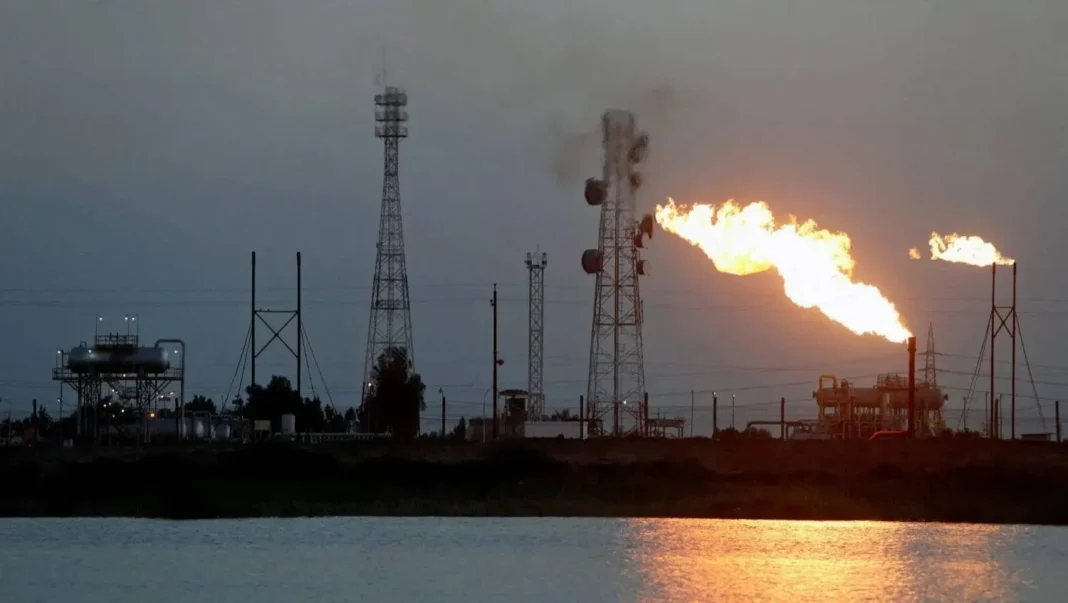
Iraqi oil grades moved lower on Thursday even as international crude markets recorded gains. The decline placed Basrah crude prices against the broader global trend, where benchmark oil contracts continued climbing due to strong market demand and ongoing regional tensions.
Market data showed Basrah Heavy crude dropped by 76 cents during trading. The grade declined by 0.71 percent to settle at $106.85 per barrel. Basrah Medium crude also moved lower, losing 0.69 percent to reach $108.95 per barrel.
Despite the decline, Iraqi crude still traded above several major Gulf oil benchmarks. Dubai crude stood at $105.34 per barrel, while Oman crude reached $106.36. Qatar Marine traded at $105.60, and UAE Das crude recorded $105.85 per barrel.
Some Gulf oil grades continued trading at significantly higher levels than Iraqi crude. Kuwaiti crude climbed to $123.62 per barrel during Thursday trading. Saudi Arab Light reached $116.96, while Arab Medium recorded $115.21 per barrel.
The latest movement in Basrah crude prices came as global markets maintained upward momentum. International benchmark Brent crude gained 78 cents, rising by 0.74 percent to reach $105.80 per barrel. US West Texas Intermediate crude also increased by 0.85 percent, climbing to $99.10 per barrel.
Analysts linked global oil gains to ongoing concerns surrounding energy supply routes and regional instability. Traders continue monitoring shipping conditions in the Strait of Hormuz, where tensions disrupted crude exports and tanker movement in recent months.
Oil markets remain highly sensitive to geopolitical developments across the Middle East. Any disruption affecting Gulf exports can quickly influence international prices because the region supplies a major share of global energy demand.
Iraq remains one of the world’s leading oil producers and depends heavily on crude exports to support state revenues. Changes in Basrah crude prices directly affect Iraq’s economy because oil income funds much of the country’s public spending and infrastructure projects.
Energy experts say short-term price fluctuations often reflect differences in crude quality, regional demand, shipping costs, and refining margins. Iraqi oil grades may occasionally diverge from global benchmarks depending on market conditions and export activity.
Traders expect volatility to continue across energy markets in the coming weeks. Regional tensions, shipping disruptions, and production decisions by major oil producers will likely remain key drivers influencing global crude prices.