

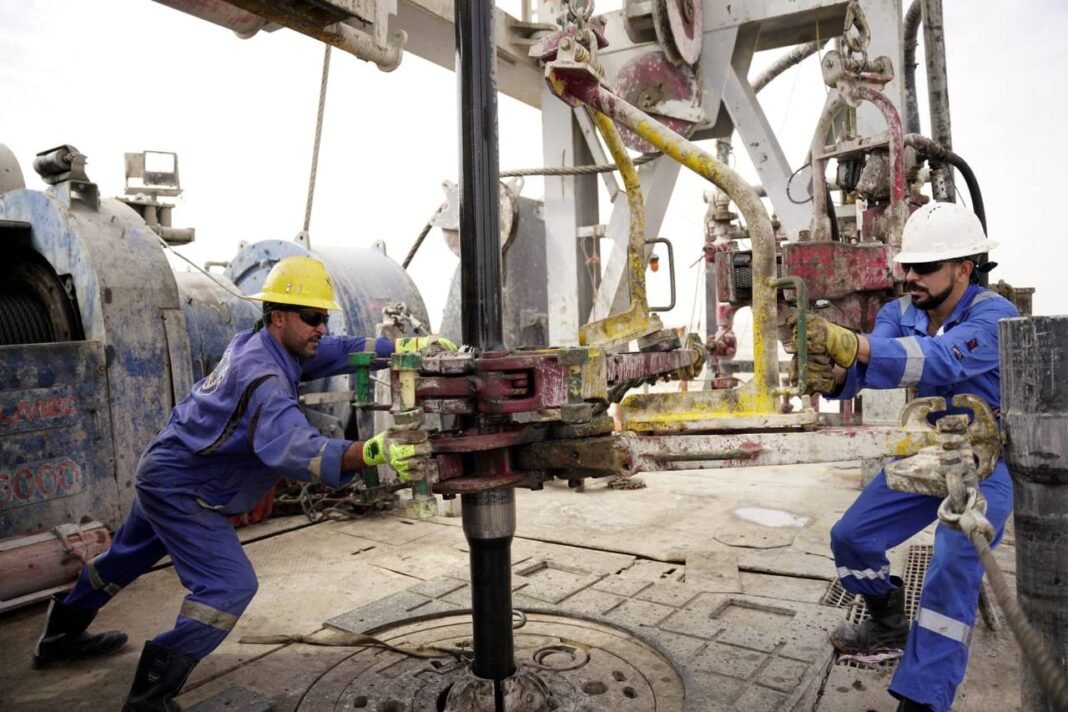
The pace of Iraq oil discoveries has accelerated sharply after the country uncovered more than 11.5 billion barrels of reserves within the past 18 months. Officials and energy experts believe the findings could strengthen Iraq’s long-term production plans and support efforts to expand its role in global energy markets. The discoveries also arrive at a critical time as the country works to offset declining reserve estimates.
Recent exploration activity identified several new oil fields, including two major discoveries announced in May 2026. One of the largest developments emerged from the Al-Qarnain exploration block in Najaf province, where authorities estimated reserves at around 8.83 billion barrels.
The discovery has drawn strong attention because of its location near the Iraqi-Saudi border. Energy officials described the area as one of Iraq’s most promising undeveloped exploration zones. The Al-Qarnain block stretches across nearly 8,773 square kilometers, creating opportunities for future drilling operations and additional reserve estimates.
According to official figures, the newly discovered crude lies at depths of nearly 1,965 meters underground. Experts classified the oil as light crude with high economic value, making it attractive for commercial production and export markets. Initial testing at the site recorded production rates exceeding 3,200 barrels per day.
Chinese company Zhenhua Oil currently operates the exploration project. The company reportedly proposed a fast-track investment strategy to move the field into production as quickly as possible. Iraqi officials believe rapid development could help strengthen national output capacity over the next few years.
The latest Iraq oil discoveries may also help reverse concerns about declining reserves. Forecasts previously suggested Iraq’s proven reserves could fall below 140 billion barrels during 2025 for the first time in years. Since 2018, the country’s reserves remained relatively stable at around 145 billion barrels.
Energy analysts now expect the recent discoveries to restore Iraq’s reserve levels closer to the record figure of 148.76 billion barrels reached in 2016. Officials see this progress as essential for supporting future investment plans and expanding production infrastructure nationwide.
Baghdad continues working toward a long-term target of increasing oil production capacity to six million barrels per day by 2029. Authorities argue that stronger production will allow Iraq to meet rising international demand while protecting its position among the world’s leading oil exporters.
The growing number of exploration successes also reflects Iraq’s renewed focus on untapped border regions and remote energy zones. Officials expect additional surveys and drilling campaigns to continue in the coming months. Several areas across southern and western Iraq remain under active exploration.
The recent Iraq oil discoveries highlight the country’s ongoing importance in the global energy sector. As investment increases and exploration expands, Iraq aims to transform undeveloped reserves into long-term economic growth and stronger energy exports.