

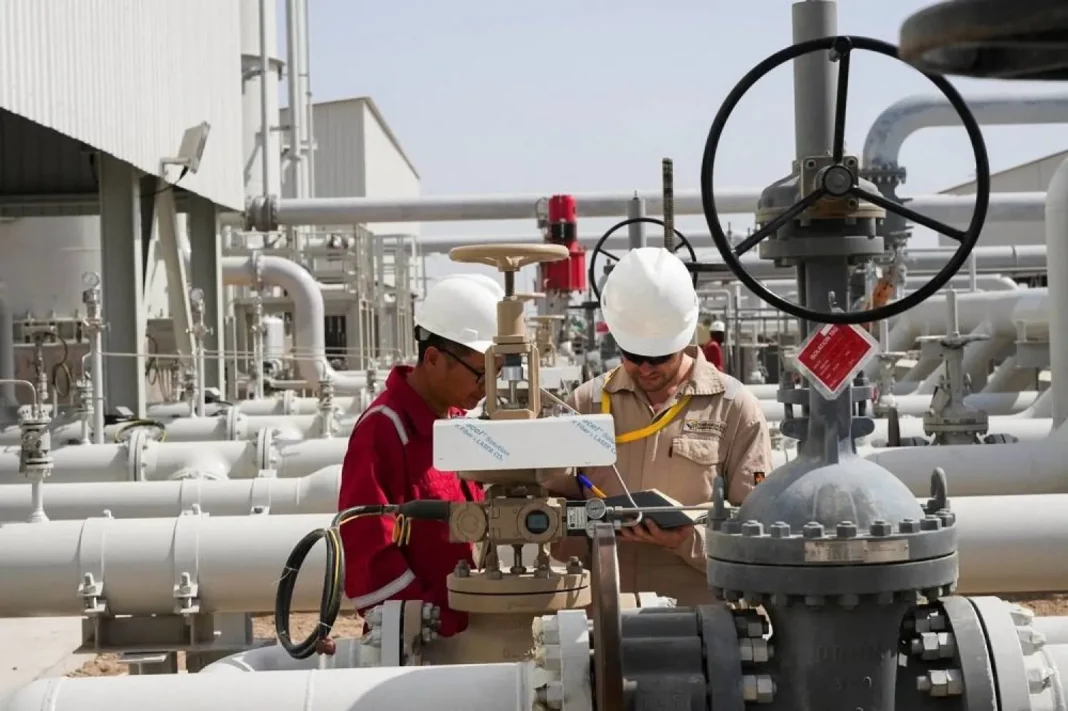
Baghdad – Iraq gas self-sufficiency plans are gaining attention after officials announced new efforts to boost domestic energy production and cut reliance on imports. The government aims to achieve full gas self-sufficiency by 2030 despite regional instability and pressure on the energy sector.
Iraqi Oil Minister Basim Khudair said the government continues working on long-term strategies to expand gas production across the country. In remarks to the Iraqi News Agency, he explained that Iraq possesses promising gas reserves capable of supporting future energy needs.
Khudair stated that halting oil exports creates major economic and operational challenges for Iraq. The country depends heavily on oil exports to sustain production and finance public spending. Reduced oil activity also affects gas extraction because associated gas production links directly to crude output.
According to the minister, Iraq gas self-sufficiency plans include accelerating development at major gas fields such as Akkas and Mansouriya. Officials hope those projects will strengthen local production and help stabilize supplies for electricity generation.
The Ministry of Oil continues supplying power plants with available fuel during the current crisis. Authorities are using natural gas, fuel oil, and crude oil to maintain electricity production and reduce pressure on the national grid.
Recent regional tensions and disruptions around the Strait of Hormuz have significantly affected Iraq’s southern energy sector. Lower oil production reduced the volume of associated gas extracted from oil fields, creating additional pressure on domestic fuel supplies.
Before the current crisis, Iraq produced nearly 1,200 million standard cubic feet of raw gas daily. However, production has now dropped to nearly 400 million standard cubic feet because of weaker oil output and export disruptions.
Official figures also showed that Iraq’s total gas-related production declined to nearly 5,000 tons per day during the crisis period. Energy experts warned that continued supply shortages may increase the risk of electricity outages during the summer season, when domestic demand usually rises sharply.
Economists believe Iraq gas self-sufficiency efforts could improve long-term energy security and reduce dependence on imported fuel. Iraq has spent years importing gas to support electricity production, especially during peak demand periods.
Analysts also stressed the importance of accelerating alternative energy projects and infrastructure investments. Delays in major gas projects could worsen fuel shortages if regional instability continues throughout the year.
Meanwhile, Iraqi authorities continue monitoring the energy situation closely as summer approaches. Officials hope increased investment and expanded gas development projects will help Iraq avoid a deeper electricity crisis in the coming years.