

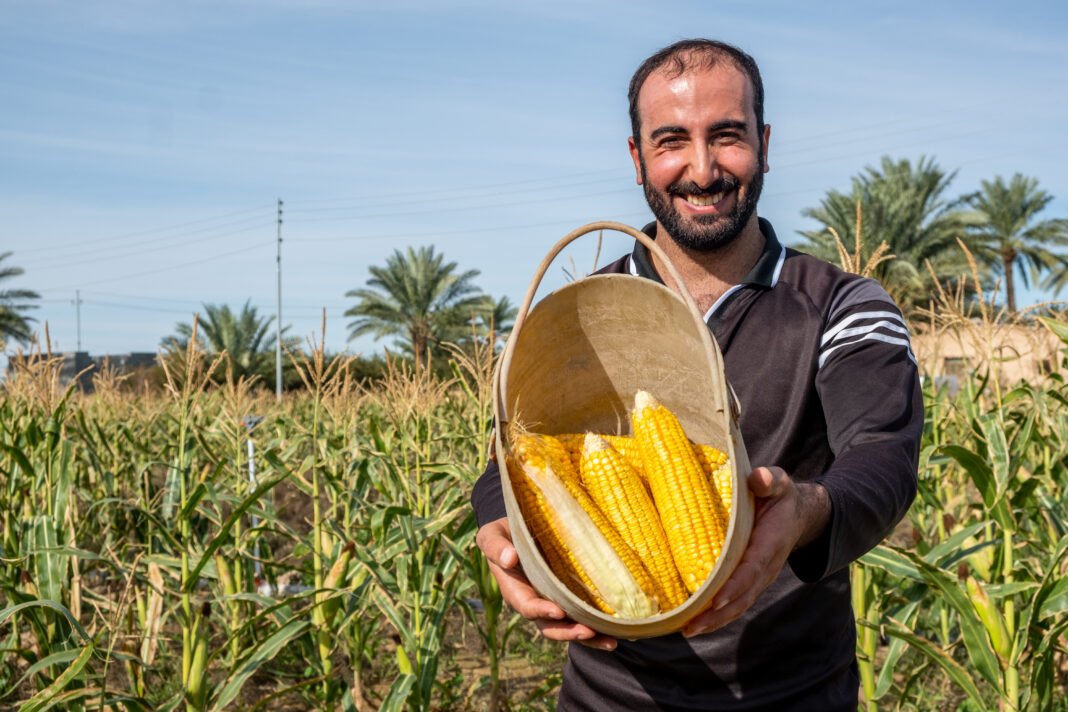
Baghdad – Iraq accelerates reforms as the Iraq jobs push farm industry strategy targets unemployment. Officials aim to expand domestic production and reduce reliance on imports. The Iraq jobs push farm industry plan now drives economic policy.
Prime Minister’s financial adviser Mudher Mohammed Salih confirmed the approach. He said unemployment stands at nearly thirteen percent. Therefore, the government focuses on agriculture and industry to create jobs.
First, authorities plan to boost grain production. They will offer above-market procurement prices to farmers. In addition, they will provide input support and structured crop planning. These steps aim to increase output and stabilize rural income.
Next, the government moves to strengthen industry. Officials will allocate land for factories and secure fuel supplies. They will also support technology imports and expand financing options. As a result, private sector activity should grow steadily.
Moreover, the plan already supports more than one thousand three hundred industrial projects. The government allocated over one trillion Iraqi dinars as sovereign guarantees. This support helps companies access foreign funding for construction and industrial chains.
At the same time, officials plan to launch the Riyada Bank. This institution will finance small businesses and youth projects. Consequently, it may open new opportunities for entrepreneurs across the country.
However, challenges remain significant. Economist Manar Al-Obaidi highlighted a large gap between production and imports. The domestic industry generates limited output compared to massive import levels. Therefore, Iraq still depends heavily on foreign goods.
In addition, the industrial sector creates a relatively small number of jobs. Even with informal work included, employment remains limited. Meanwhile, hundreds of thousands of young people enter the labor market each year. This imbalance increases pressure on policymakers.
Furthermore, growth in large industrial projects remains modest. Although expansion continues, the sector still contributes a small share to the national economy. As a result, officials must accelerate reforms to achieve real impact.
Despite these obstacles, the Iraq jobs push farm industry plan shows a clear direction. It connects agriculture, industry, and finance into one strategy. This coordination may improve long-term economic stability.
In conclusion, the Iraq jobs push farm industry effort aims to reshape the economy. The Iraq jobs push farm industry plan seeks to create jobs and reduce imports. Strong execution will determine its success.