

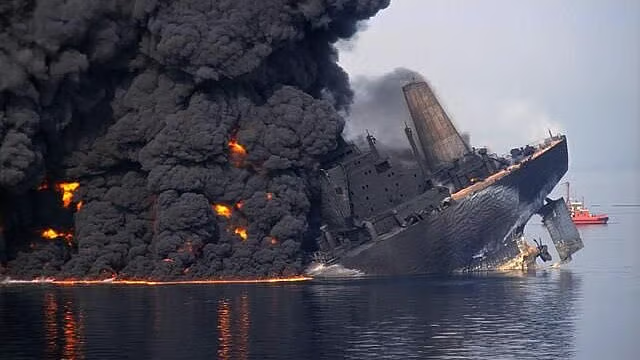
The oil price surge risk grows as global markets react to rising tensions in the Gulf. Concerns increase further as military actions threaten key energy supply routes. Investors and governments worldwide now closely monitor the situation.
A new report warned that tensions near the Strait of Hormuz could push oil prices to $150 per barrel. The escalation followed orders from Donald Trump to begin a wide naval blockade targeting Iranian ports.
Moreover, this development placed global energy markets under immediate pressure. Traders responded quickly as fears of supply disruption intensified. Analysts now expect sharp price increases if tensions continue.
The risk of an oil price surge becomes more serious due to the strategic importance of the strait. Around 20% of the global oil supply passes through this narrow waterway. Therefore, any disruption could affect energy markets worldwide within days.
Additionally, financial institutions issued strong warnings about possible outcomes. Experts at Goldman Sachs predicted that oil prices could exceed $150 rapidly. They stressed that even a short disruption would trigger a major supply shock.
Furthermore, analysts explained that a full blockade or military clash would worsen the situation. Prices could spike immediately due to reduced shipments. As a result, both producers and consumers would face serious challenges.
The risk of an oil price surge also threatens global economic stability. Higher energy costs increase inflation across major economies. Consumers pay more for fuel, transport, and goods. Consequently, economic recovery efforts could slow down significantly.
In addition, governments monitor the situation closely. Many countries depend heavily on oil imports through the Gulf region. Therefore, leaders may introduce emergency measures if conditions worsen.
At the same time, uncertainty continues to dominate market sentiment. Investors remain cautious as geopolitical signals change frequently. Even small developments now influence oil prices sharply.
Oil price surge risk reflects broader concerns about supply security. Energy markets depend on stable shipping routes and predictable policies. However, current tensions create instability across both areas.
In conclusion, the risk of an oil price surge highlights the fragile balance in global energy markets. Rising tensions in the Gulf could push prices to record levels. The situation remains highly uncertain as the world watches closely.