

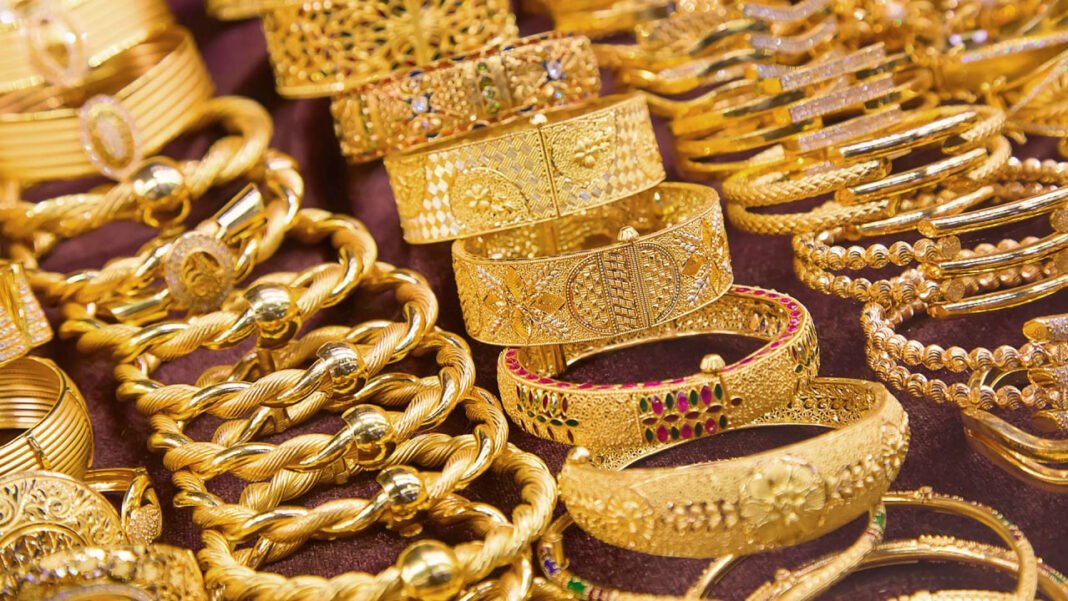
Iraq’s gold market recorded a noticeable decline across major cities. This Iraq gold prices trend reflects shifting demand. At the same time, the Iraqi gold prices show differences between local and imported gold.
First, gold prices hovered around 1 million IQD per mithqal. One mithqal equals five grams. Therefore, this benchmark helps track daily price changes.
In Baghdad, trading activity slowed slightly. Exchanges on Al-Nahr Street showed lower prices compared to the previous day. As a result, 21-carat gold dropped to 1,014,000 IQD per mithqal for selling.
Meanwhile, buying prices reached 1,010,000 IQD. This reflects a narrow margin between buying and selling rates. However, prices had stood at 1,036,000 IQD in the previous session. Therefore, the decline shows a clear downward movement.
At the same time, Iraqi 21-carat gold recorded lower values. Selling prices reached 984,000 IQD per mithqal. Buying prices stood at 980,000 IQD. This difference highlights the variation between local and imported gold.
Moreover, jewelry shops showed a price range. Gulf gold sold between 1,015,000 and 1,025,000 IQD. Meanwhile, Iraqi gold ranged between 980,000 and 990,000 IQD. These variations depend on quality and origin.
In Erbil, prices also declined but remained slightly higher. Markets recorded 22-carat gold at 1,071,000 IQD per mithqal. In addition, 21-carat gold reached 1,023,000 IQD.
Furthermore, 18-carat gold traded at 876,000 IQD. These figures show a wider range of options for buyers. Customers can choose based on purity and price.
The Iraq gold prices trend reflects broader economic factors. Currency movements often affect gold prices. In addition, demand for jewelry and investment plays a role.
Moreover, global gold trends can influence local markets. However, local supply and demand create price differences. Therefore, Baghdad and Erbil often show slight variations.
Gold remains a key asset for many Iraqis. People buy gold for savings and protection against inflation. As a result, market activity continues even during price drops.
Traders closely watch daily price changes. Small declines can encourage more buying. Therefore, lower prices may increase demand in the short term.
Looking ahead, gold prices may continue to fluctuate. Market conditions and currency rates will shape future trends. However, stability depends on both local and global factors.
In conclusion, Iraq’s gold prices declined across Baghdad and Erbil. Prices hovered near 1 million IQD per mithqal. This shift reflects normal market movement and changing demand.