

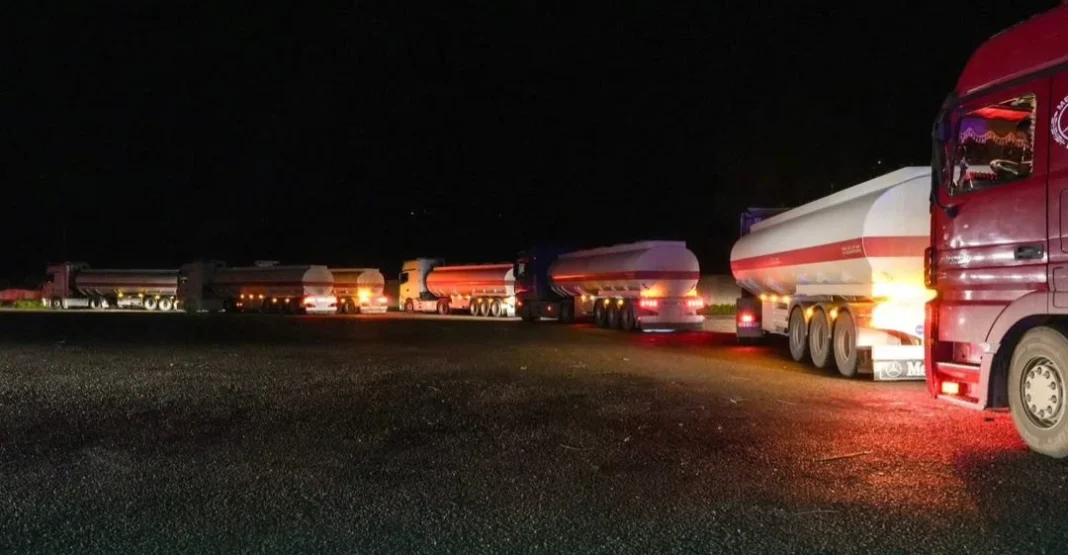
Iraq has sent its third major oil shipment via Syria, using an overland route to maintain exports amid regional disruptions. The Iraq-Syria oil route ensures that energy supplies continue flowing despite obstacles at sea. The decision also highlights Iraq’s flexibility in responding to geopolitical challenges.
Damascus officials report that 180 tankers carrying Iraqi fuel oil arrived at the Al-Tanf crossing. The convoy is heading to the Baniyas refinery, where it will be processed for export to international markets. Authorities expect the delivery to reach the refinery later today, completing the third shipment under the Iraq-Syria energy agreement.
Safwan Sheikh Ahmed, director of corporate communications at the Syrian Petroleum Company, confirmed that operations ran smoothly. He noted that coordination between Syrian and Iraqi authorities ensured the convoy’s safe passage despite logistical and security challenges.
The overland route via Syria has become crucial after disruptions in maritime traffic caused by the ongoing U.S.-Israeli war on Iran. Tensions in the region have significantly affected shipping through the Strait of Hormuz, a key channel for global oil exports. Southern Iraqi oil fields have also seen reduced output due to operational difficulties, increasing the urgency of alternative export routes.
Ali Shaddad explained that Iraq is actively developing contingency plans to maintain stable export flows. The Iraq-Syria oil route is part of these plans, allowing Iraq to reach Mediterranean ports safely. Analysts note that the alternative route not only bypasses regional bottlenecks but also strengthens Iraq’s energy cooperation with Syria.
This shipment reflects Iraq’s commitment to securing its international trade relationships. By using the Syria route, the country can continue to supply global markets while minimizing the impact of regional conflicts. The convoy also underscores the importance of regional partnerships in energy security, particularly when traditional maritime routes face disruptions.
In addition, experts point out that maintaining steady oil exports is vital for Iraq’s economy. Oil revenues represent a major portion of the national budget, and any delays in exports could affect public finances and economic planning. Therefore, the Iraq-Syria oil route is critical in preserving both financial stability and international market confidence.
Furthermore, the successful transit of 180 tankers demonstrates logistical capability and strategic planning. Authorities coordinated security, customs, and transport operations to ensure safe delivery. This operation also sends a strong signal to markets that Iraq remains reliable in meeting its export commitments.
In conclusion, Iraq continues to adapt to a complex regional environment by using the Syria overland route for oil exports. The Iraq-Syria oil route keeps shipments moving despite maritime disruptions and security risks. This approach ensures a steady supply, protects revenues, and highlights Iraq’s strategic flexibility in the energy sector.