

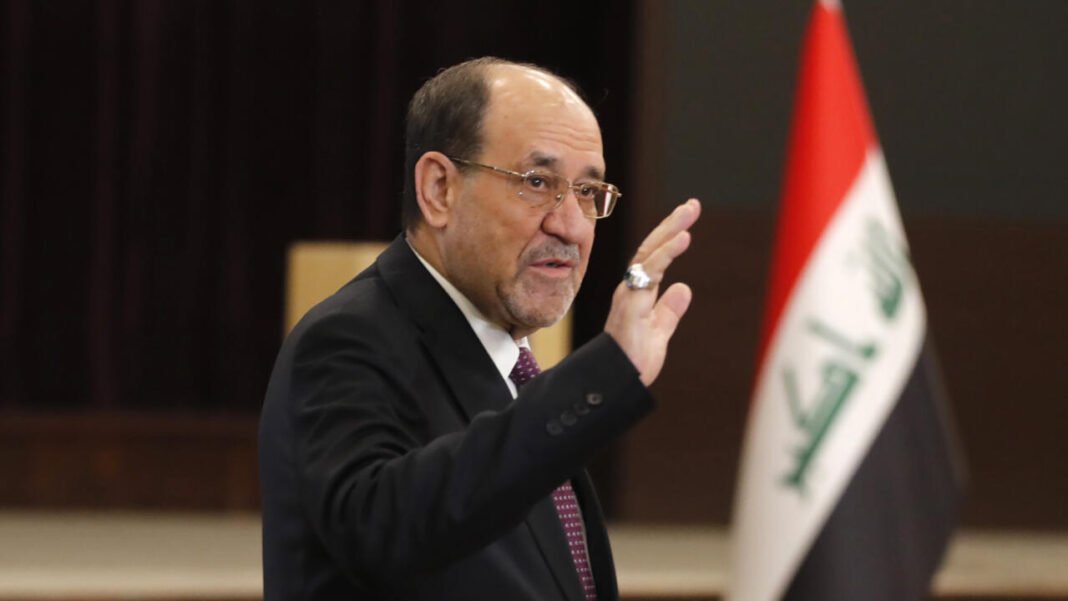
Iraq entered a new political phase after the Coordination Framework reversed course. Leaders withdrew the nomination of Nouri al-Maliki for prime minister. The move triggered 48-hour consultations to select a replacement.
A senior political source confirmed the decision after an emergency leadership meeting. Notably, Maliki did not attend the gathering. Key figures also stayed absent during the final discussions.
The Prime Minister’s nomination shift followed weeks of internal disagreement. Several alliance members expressed concern about political and economic consequences. Therefore, leaders sought to prevent deeper instability.
Reports indicated that strong international pressure influenced the debate. Officials in Washington warned of sweeping economic sanctions if Maliki returned to office. Those warnings reportedly created a political deadlock inside the bloc.
Maliki previously served as Iraq’s prime minister from 2006 to 2014. His potential return divided major political factions. As a result, alliance leaders reconsidered their strategy.
The Prime Minister nomination shift now opens a competitive consultation period. The Coordination Framework will hold intensive talks for 48 hours. Leaders aim to reach consensus on a broadly acceptable candidate.
Any nominee must secure support from Shiite, Sunni, and Kurdish blocs. Iraq’s political system requires cross-sectarian agreement to form a stable government. Therefore, coalition building remains critical.
Two prominent names quickly emerged in discussions. Mohammed Shia al-Sudani stands as one potential option. Former premier Haider al-Abadi also appears among the leading alternatives.
The Prime Minister’s nomination shift reflects wider concerns about economic stability. Iraq faces regional tensions and financial pressures linked to oil revenues. Consequently, political leaders seek to avoid confrontation with global powers.
Analysts believe the decision signals a pragmatic recalibration. The Coordination Framework wants to protect Iraq’s diplomatic standing. At the same time, it aims to preserve internal unity.
This political development comes during heightened regional conflict. Iraq already manages airspace closures and economic disruptions. Therefore, leaders prioritize stability during government formation talks.
Observers expect an official announcement soon. The alliance plans to present a consensus figure capable of gaining parliamentary approval. Speed remains essential to prevent prolonged uncertainty.
The Prime Minister’s nomination shift marks a significant turning point. Iraq now enters a delicate negotiation phase. Political blocs must cooperate to secure a smooth transition.