

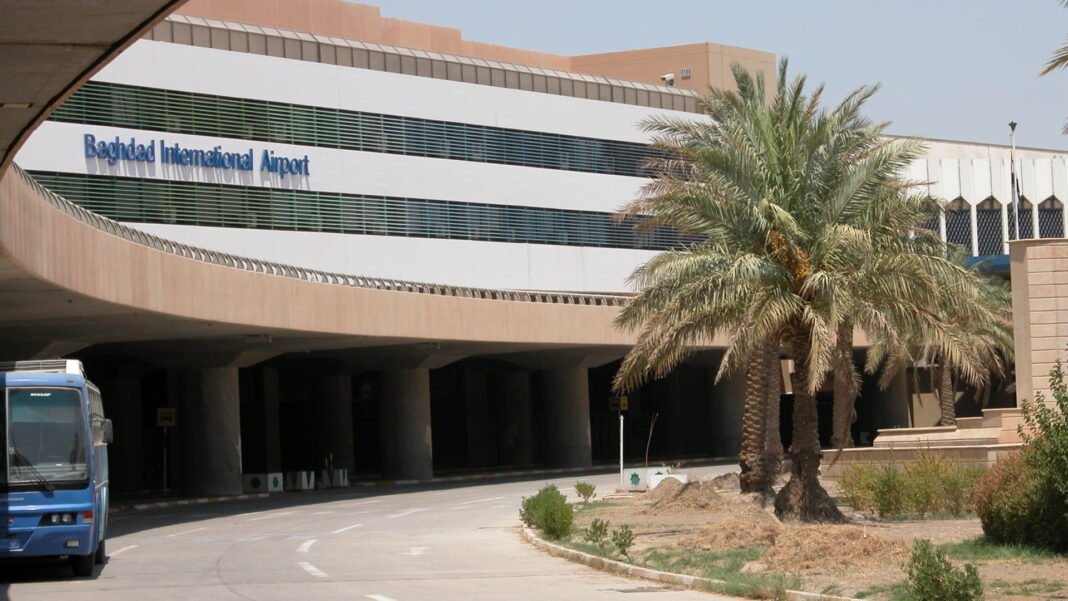
Iraq entered its second day of full airspace shutdown as regional conflict disrupts flights across the Middle East. Authorities halted civilian aviation after major US and Israeli strikes targeted Iran. As a result, regional skies turned unusually quiet.
Officials confirmed that the Iraq airspace closure continues amid rising security fears. Security agencies reviewed threats after Iran launched missile and drone attacks across the Gulf. Consequently, aviation authorities chose caution over risk.
The regional conflict disrupts flights across Iraq and neighboring states. Flight tracking platforms showed almost empty skies above Iraq, Iran, Kuwait, and Bahrain. Meanwhile, Qatar and the United Arab Emirates imposed strict flight limits.
Airlines immediately canceled routes and redirected aircraft toward safer corridors. Therefore, tens of thousands of passengers faced delays and sudden rerouting. Many travelers remained stranded in transit hubs.
Furthermore, aviation experts described this shutdown as one of the most serious regional disruptions in years. Airlines scrambled to adjust flight paths to avoid potential missile trajectories. At the same time, insurance risks increased for carriers operating near conflict zones.
The crisis intensified after reports confirmed the killing of Ali Khamenei in the initial strikes. That development triggered widespread fears of escalation. Consequently, governments across the Gulf strengthened air defense readiness.
Baghdad authorities stressed that passenger safety remains their top priority. Officials continue to monitor regional airspace threats closely. However, they have not announced a reopening timeline.
The regional conflict disrupts flights beyond Iraq’s borders. Aviation networks rely on interconnected routes across the Middle East. Therefore, closures in one country quickly impact global schedules.
Airlines in Europe and Asia also adjusted routes to avoid Iraqi and Iranian airspace. Longer detours increased fuel consumption and operational costs. As a result, ticket prices may rise if tensions persist.
Iraq airspace closure continues amid rising security fears as military exchanges reshape regional stability. Security analysts warn that further retaliation could prolong restrictions. Meanwhile, airports in Baghdad and other Iraqi cities operate with limited ground services.
The regional conflict disrupts flights at a time when travel demand remains strong. Business travel and religious tourism now face uncertainty. Additionally, cargo shipments experience delays that affect trade flows.
Iraqi authorities coordinate with regional partners to assess risks. They aim to reopen skies once conditions stabilize. However, military developments will determine the timeline.
For now, Iraq airspace closure continues amid rising security fears, and travelers must wait for official updates. Airlines advise passengers to check schedules regularly. The situation remains fluid and unpredictable.