

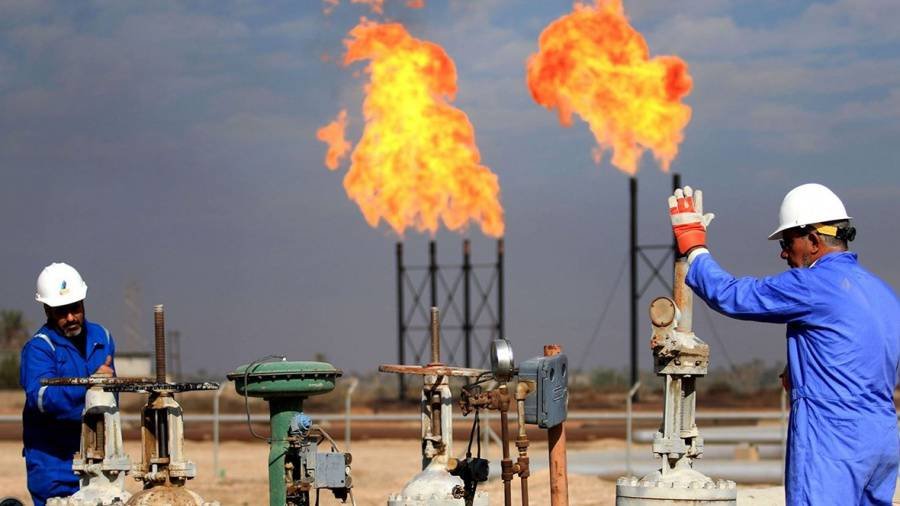
Iraq faces fresh market pressure as Iraq Basrah crude prices decline amid a wider global oil downturn. The energy market shows increased volatility, and traders react quickly to shifting international signals. Moreover, global demand concerns continue to influence regional pricing trends.
Recently, Iraq Basrah crude prices decline followed movements across major oil benchmarks. Market participants watched global indicators closely and adjusted positions carefully. Consequently, Basrah oil values reflected broader international sentiment.
Basrah Heavy crude recorded a noticeable drop during trading sessions. The price moved lower as selling activity increased steadily. Meanwhile, Basrah Medium crude also declined, reflecting similar market behavior. These changes signaled cautious expectations among investors.
At the same time, global crude markets showed downward momentum. Brent crude experienced a clear price reduction as traders responded to economic uncertainty. In parallel, United States crude benchmarks followed the same direction. Therefore, international weakness directly affected Iraqi crude performance.
Additionally, traders linked price movements to slowing global economic activity. Concerns over industrial demand weighed heavily on oil markets. As a result, buyers showed less urgency during trading hours. This behavior placed further pressure on prices.
Meanwhile, Iraq remains closely connected to global oil trends. Basrah crude often mirrors international benchmarks due to export linkages. Consequently, external shocks quickly influence local pricing structures.
Furthermore, market analysts highlighted cautious sentiment across energy trading desks. Investors reduced exposure to risk assets, including crude oil. Thus, oil prices reacted sharply to global financial signals.
At the regional level, Iraq continues exporting Basrah crude to international markets. Stable export flows remain important for revenue planning. However, price fluctuations create challenges for short-term financial expectations.
Moreover, oil income supports many areas of the Iraqi economy. Energy revenues help fund public spending and development projects. Therefore, price declines raise concerns for budget stability.
In addition, Iraq monitors market movements closely to manage economic risks. Authorities focus on maintaining production efficiency despite price pressure. This strategy helps offset revenue losses during downturns.
Meanwhile, global energy markets remain sensitive to policy signals. Interest rate expectations and currency movements affect oil demand forecasts. Consequently, traders adjust oil positions rapidly.
Furthermore, geopolitical developments also influence oil sentiment. Supply security concerns sometimes balance demand worries. However, current conditions emphasize demand-side weakness.
As Iraq Basrah crude prices decline, producers and traders remain alert. They track international data releases and market commentary closely. This vigilance helps manage exposure to ongoing volatility.
Additionally, market participants expect continued fluctuations in the near term. Economic uncertainty limits confidence in strong price recovery. Therefore, cautious trading behavior persists.
In the broader picture, Iraq continues to rely on oil as a key economic pillar. Basrah crude plays a central role in export earnings. Maintaining competitiveness remains essential during global downturns.
In conclusion, Iraq Basrah crude prices decline reflects global oil market weakness. International benchmarks guide local pricing outcomes. Iraq’s energy sector now navigates a challenging market environment.