

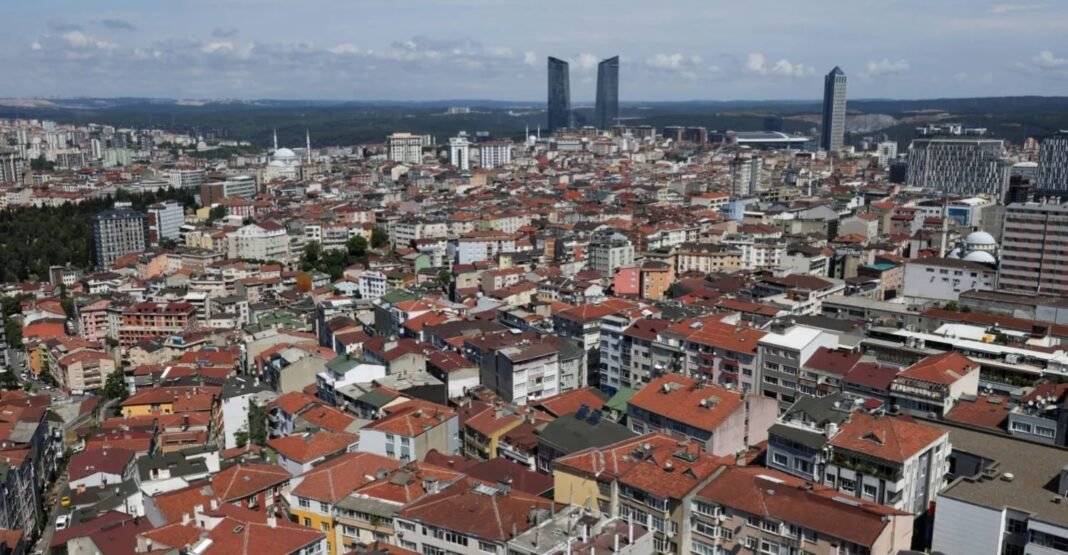
Iraqis ranked as the fifth-largest group of foreign buyers of real estate in Türkiye in August 2025, purchasing 118 houses, according to the Turkish Statistical Institute (TURKSTAT). This shift highlights the changing dynamics of Turkey’s property market, where international demand is becoming increasingly diverse.
TURKSTAT data showed that Turkey’s overall house sales rose by 6.8% in August compared to the same month last year. The total number of properties sold reached 143,319, reflecting a stronger domestic housing demand. However, sales to foreign nationals moved in the opposite direction. Transactions fell by 18.8% year-on-year, with foreign buyers purchasing 1,810 houses.
Despite this decline, certain nationalities remained active players in Turkey’s housing sector. Russians continued to dominate the market with 283 houses bought in August. They were followed by Iranians with 155 units, while both Germans and Ukrainians purchased 118 houses each. Iraqis matched this number but ranked fifth based on TURKSTAT’s reporting. Azerbaijanis secured sixth place with 77 houses, followed by Kazakhs with 68, Chinese with 62, Saudis with 59, and Kuwaitis with 47.
For nearly a decade, Iraqis were the leading foreign buyers in Turkey’s real estate market. Since 2015, they consistently topped the charts, benefiting from Turkey’s geographical proximity, cultural ties, and accessible property investment laws. However, their dominance began to fade in early 2021. Iranians surpassed them first, followed by Russians in April 2022 when geopolitical tensions and economic shifts boosted Russian demand.
The recent ranking shows that Iraqis still remain strong participants but no longer dominate the market. Analysts note that factors such as stricter visa regulations, economic uncertainty, and competition from other foreign buyers contributed to this shift. Meanwhile, Russians and Iranians maintain strong positions due to investment-driven motivations and long-term settlement plans.
The decline in foreign housing purchases also reflects Turkey’s wider economic landscape. Currency fluctuations, rising construction costs, and shifting investor sentiment have influenced demand patterns. Yet, the Iraqi community continues to view Türkiye as a favorable destination for investment and residency.
Overall, while Iraqis no longer lead the market, their continued activity underscores the enduring ties between Iraq and Türkiye in real estate and beyond.