

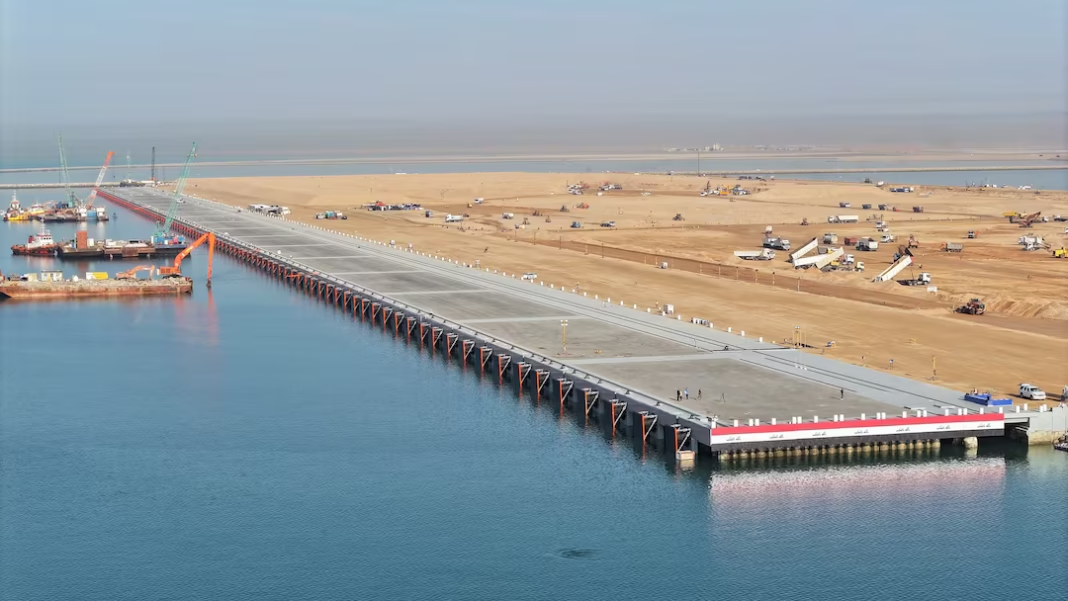
Iraqi commercial ports show strong momentum as “Iraqi Commercial Ports” handle over 22 million tons of cargo in the year’s first half. This significant surge highlights Iraq’s growing capacity in maritime transport.
Therefore, ships keep flocking to Iraq’s ports, showing the world that “Iraqi Commercial Ports” now play a vital role in trade. The General Company for Ports of Iraq works hard to improve these ports and boost Iraq’s position in global commerce.
Additionally, Farhan Al-Fartousi, who leads the General Company for Ports of Iraq, explained the impressive figures. He said 1,522 ships arrived at the ports of Umm Qasr North, Umm Qasr South, Khor Al-Zubair, and Abu Flous. He noted that total cargo tonnage hit 22,423,518 tons.
Cargo moves smoothly through these ports, helping trade flow steadily. The numbers clearly show how much Iraq’s port sector progresses. Khor Al-Zubair Port handled the most goods, managing 9,696,697 tons carried by 396 ships.
Meanwhile, Umm Qasr North Port welcomed the most vessels. It received 689 ships and handled 6,855,426 tons of cargo. This keeps the port bustling with activity every day.
Umm Qasr South Port also contributed strongly, processing 5,409,424 tons brought by 252 ships. Despite being smaller, Abu Flous Port still managed 461,971 tons with 185 ships arriving.
Iraq continues to push forward with a solid development plan. This plan aims to enhance competitiveness and modernize operations. As a result, “Iraqi Commercial Ports” keep drawing more shipping lines and boosting Iraq’s economy.
Every port works around the clock to handle cargo efficiently. Crews unload goods quickly to keep trade flowing. This efficiency helps Iraq reach higher standards and strengthen ties with trading partners.
Moreover, Iraq aims to align its port operations with global benchmarks. This goal inspires steady investments and modernization projects. In turn, these improvements help “Iraqi Commercial Ports” shine as hubs of regional trade.
Looking ahead, Iraq wants to attract more ships and expand services. The country’s ports stand ready to handle future challenges and seize new opportunities. Therefore, Iraq’s maritime sector remains a crucial pillar in its economic plans.
In conclusion, “Iraqi Commercial Ports” continue to grow stronger each month. These ports prove that Iraq has the potential to become a major shipping center in the region. With consistent progress, Iraq’s ports promise a bright future for trade and commerce.