

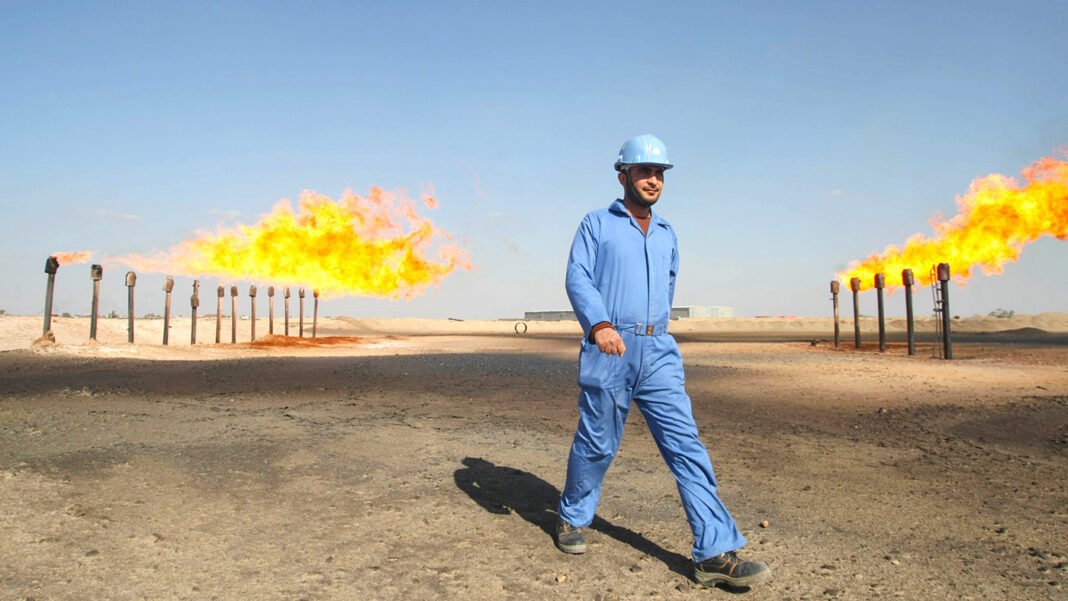
Iraq’s East Baghdad oil field continues its rapid development with a strong push toward higher daily output.
According to Midland Oil Company, the field will reach 120,000 barrels per day by mid-2026. Officials also said this growth reflects Iraq’s push for energy self-sufficiency.
Firas Fawzi, Head of Southern Operations at Midland Oil, provided key updates on the site’s progress. He confirmed that new artificial intelligence systems are in place at the East Baghdad oil field. These tools help boost efficiency and offer early warnings about equipment or flow issues.
The field lies in Nahrawan and began operations with only 1,500 barrels per day. That was when Chinese firm EPS took over the site in 2018.
Since then, output has grown steadily. Today, the field produces 60,000 barrels per day. Moreover, by September 2025, officials expect it to reach 90,000 barrels. Finally, the full target of 120,000 barrels per day will arrive by June 2026.
Currently, 25,000 barrels per day go to the Dora refinery. The remaining oil supports power stations like Wasit and Al-Quds thermal plants.
Additionally, the East Baghdad oil field now holds 95 discovered wells. Of these, 58 wells are active and in regular production. Fawzi noted that further drilling will continue as the demand grows.
Midland Oil also confirmed that it approved several tech upgrades. These include remote monitoring, predictive maintenance tools, and AI-controlled flow systems.
With these innovations, the East Baghdad oil field now stands as a model for other Iraqi sites. Its growth shows how modern technology can drive oil production quickly and safely.
Meanwhile, Iraq’s Energy Ministry plans to replicate this success in other regions. Officials hope to combine smart systems and local expertise to raise national output.
This energy growth will support Iraq’s economic plans. More oil production means more supply for local refineries, power plants, and exports.
Fawzi emphasized that local teams now lead many field operations. He said Iraqi engineers have played a major role in recent upgrades.
Looking ahead, the oil field will stay under close monitoring. Teams will focus on safety, environmental care, and meeting future targets on time.