

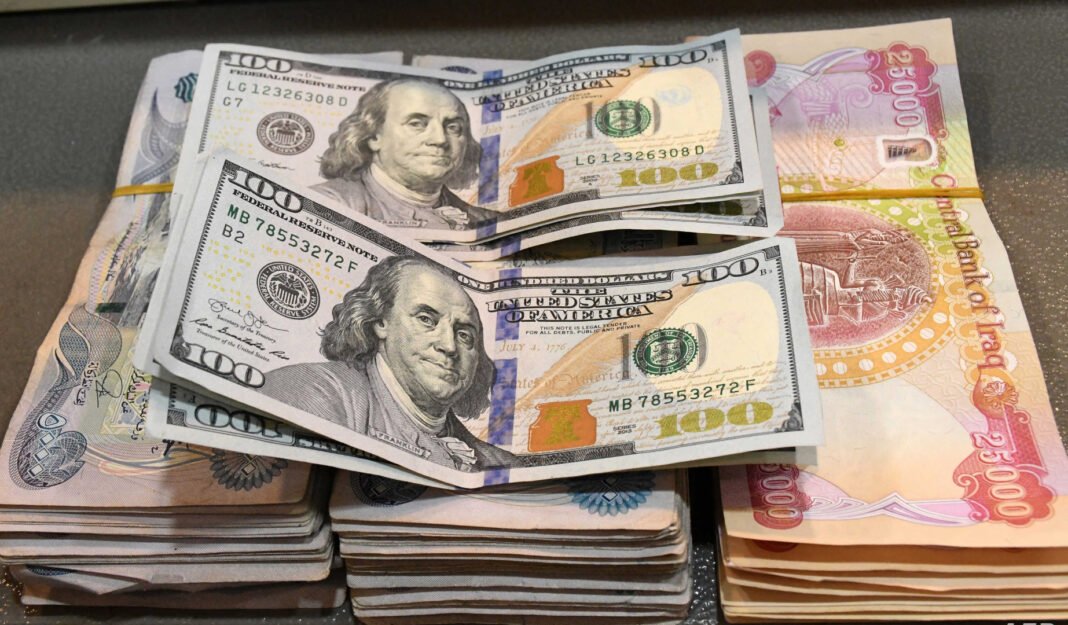
The USD/IQD exchange rate showed different movements across Iraq on Saturday. In Baghdad, the dollar gained against the dinar, while in Erbil, the rate remained stable.
According to a market survey, Baghdad’s al-Kifah and al-Harithiya central exchanges recorded 141,600 IQD per $100. This marked an increase compared to previous levels. The rise in Baghdad highlighted stronger demand for dollars in the capital’s markets.
Local exchange shops in Baghdad also reflected this trend. Selling prices reached 142,750 IQD per $100, while buying prices stood at 140,750 IQD. The spread showed active trading and a widening margin between selling and buying.
Meanwhile, the USD/IQD exchange rate in Erbil remained stable. Selling prices were 141,400 IQD per $100, and buying prices registered at 141,300 IQD. The narrow margin between buying and selling pointed to calmer trading conditions in Erbil compared with Baghdad.
Analysts explained that Baghdad’s increase was driven by stronger dollar demand among importers and traders. Seasonal payments and regional trade flows often affect the capital more sharply. By contrast, Erbil’s stability came from steadier inflows of foreign currency and tighter market controls.
The Central Bank of Iraq continues to monitor fluctuations in the USD/IQD exchange rate. Officials aim to maintain currency stability while meeting import requirements. However, differences between provinces highlight the challenges of balancing national policy with local demand.
Observers also noted that exchange rates in Iraq often respond to global shifts in the US dollar. Regional political developments and trade agreements add further pressure. For Baghdad, the weekend increase suggests volatility may continue in the short term.
In Erbil, the outlook remains calmer unless demand rises suddenly. Traders said that without external shocks, stability in the Kurdistan Region could continue.
For now, the USD/IQD exchange rate shows a split picture. Baghdad faces higher rates and wider margins, while Erbil holds steady.