

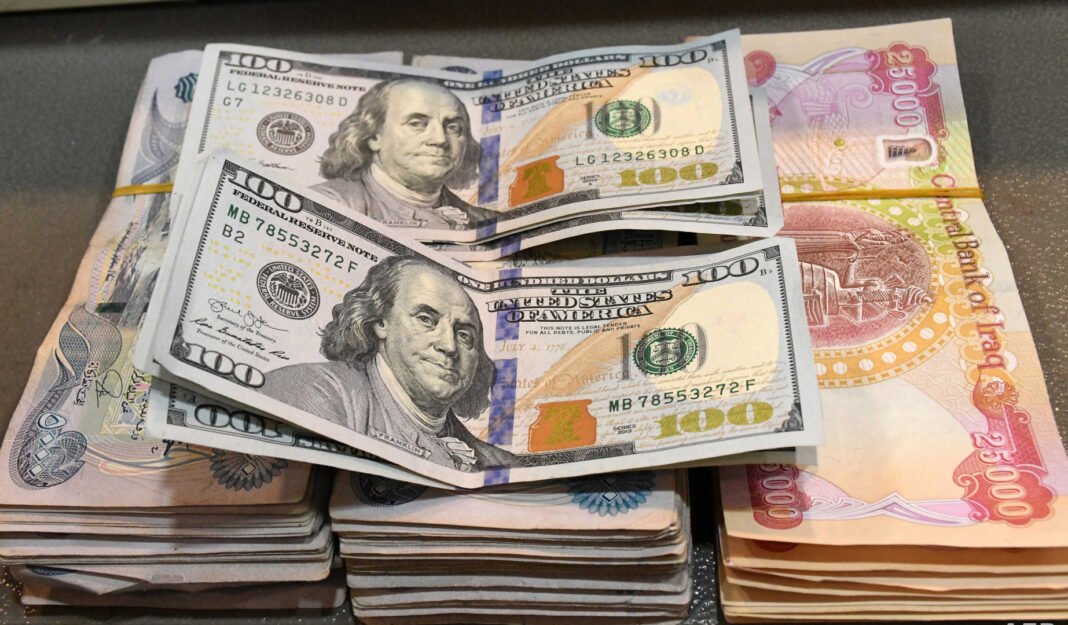
Iraq’s currency market recorded slight declines as USD/IQD exchange rates slip in Baghdad and Erbil. Traders opened the session with lower dollar prices across major exchanges. This movement reflects ongoing adjustments in local currency demand.
The US dollar traded around 153,000 dinars per 100 dollars at the start of trading. However, main exchange centers in Baghdad showed a lower figure. Dealers at Al-Kifah and Al-Harithiya exchanges priced the dollar at 152,600 dinars per 100 dollars. The previous session recorded 152,700 dinars. Therefore, the market showed a 100-dinar decline.
USD/IQD exchange rates slip in Baghdad and Erbil as exchange shops adjusted buying and selling prices. In Baghdad, shops sold 100 dollars for 153,000 dinars. Meanwhile, they bought 100 dollars for 152,000 dinars. This spread highlights routine retail margins in the currency market.
In Erbil, the regional capital followed a similar trend. Exchange shops sold 100 dollars for 152,750 dinars. At the same time, they bought 100 dollars for 152,650 dinars. These figures place Erbil slightly below Baghdad’s retail selling price.
Market observers link minor fluctuations to daily supply and demand dynamics. Traders respond quickly to changes in dollar availability. As a result, small price differences appear between sessions. However, the variation remains limited within a narrow range.
USD/IQD exchange rates slip in Baghdad and Erbil during a period of relative market stability. Dealers continue to monitor liquidity levels closely. In addition, they track regional and international financial signals. These factors influence trader sentiment inside Iraq’s parallel currency market.
Currency exchange activity remains concentrated in Baghdad’s main trading hubs. Al-Kifah exchange plays a central role in price formation. Al-Harithiya exchange also shapes daily benchmarks. Therefore, movements in these centers quickly affect retail shops.
In Erbil, exchange shops maintain competitive pricing to attract customers. Traders often adjust rates within hours. Consequently, customers compare prices before completing transactions. This competitive environment keeps spreads tight.
Despite the decline, the dollar remains near the 153,000-dinar level. The difference between buying and selling prices reflects standard operational margins. Analysts note that such small shifts rarely signal structural change. Instead, they indicate short-term balancing between supply and demand.
USD/IQD exchange rates slip in Baghdad and Erbil, yet the overall trend shows stability rather than volatility. Financial observers expect similar movements in upcoming sessions unless major economic factors emerge.