

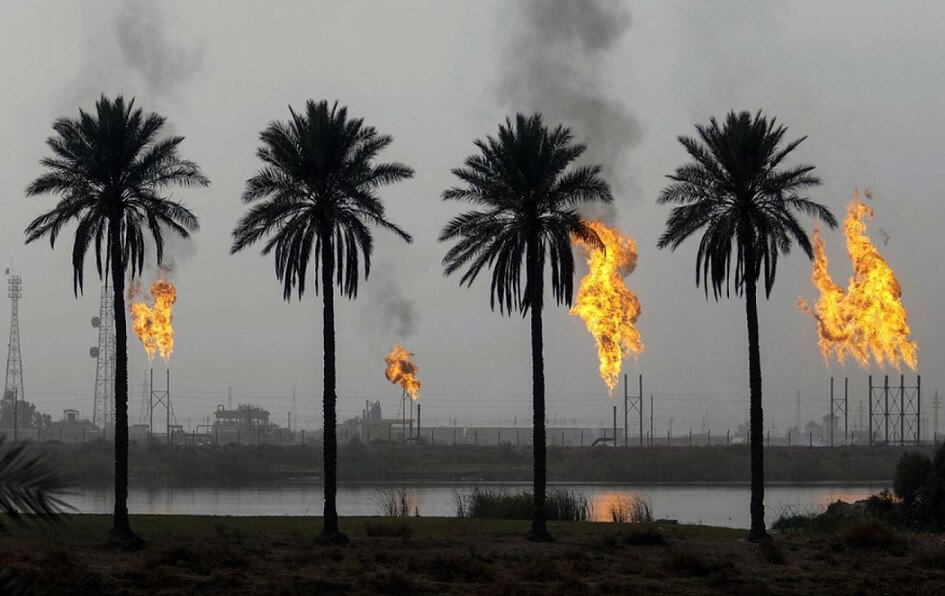
Iraq’s Basrah crude prices fell, following a broad decline in global oil markets. Investors reacted to weaker demand, financial market volatility, and a stronger U.S. dollar.
Basrah Heavy crude prices fell 1.02% to $64.02 per barrel. Basrah Medium decreased 0.99% to $65.87 per barrel. Both grades mirrored international benchmarks. Brent crude futures fell 6 cents, or 0.1%, to $64.38 a barrel. West Texas Intermediate (WTI) futures declined 10 cents, or 0.17%, to $60.46.
Analysts said risk-off sentiment caused investors to exit energy markets. Asian stocks tumbled, and Wall Street experienced a tech-led selloff, raising concerns about stretched valuations. These factors pressured Basrah crude pricesthroughout the session.
The U.S. dollar index hovered near a three-month high. A stronger dollar makes dollar-denominated oil more expensive for other currency holders. This dynamic reduced global demand and further weighed on Basrah crude prices.
On the supply side, OPEC+ decided to raise output by 137,000 barrels per day in December. However, the group will pause further increases in early 2026. Analysts noted that this limited adjustment is unlikely to provide significant support to Basrah crude prices in November and December.
U.S. crude inventories also rose last week, according to the American Petroleum Institute (API). Higher stockpiles suggest softer demand and added downward pressure on regional oil prices.
Market watchers say that a combination of rising inventories, global supply changes, and currency fluctuations will likely keep Basrah crude prices under pressure in the near term. Traders will monitor OPEC+ decisions, U.S. inventory data, and currency trends to gauge future movements.
Despite the decline, analysts expect Basrah crude to remain a key reference for Middle East oil markets. Prices may recover if demand improves or OPEC+ tightens output.