

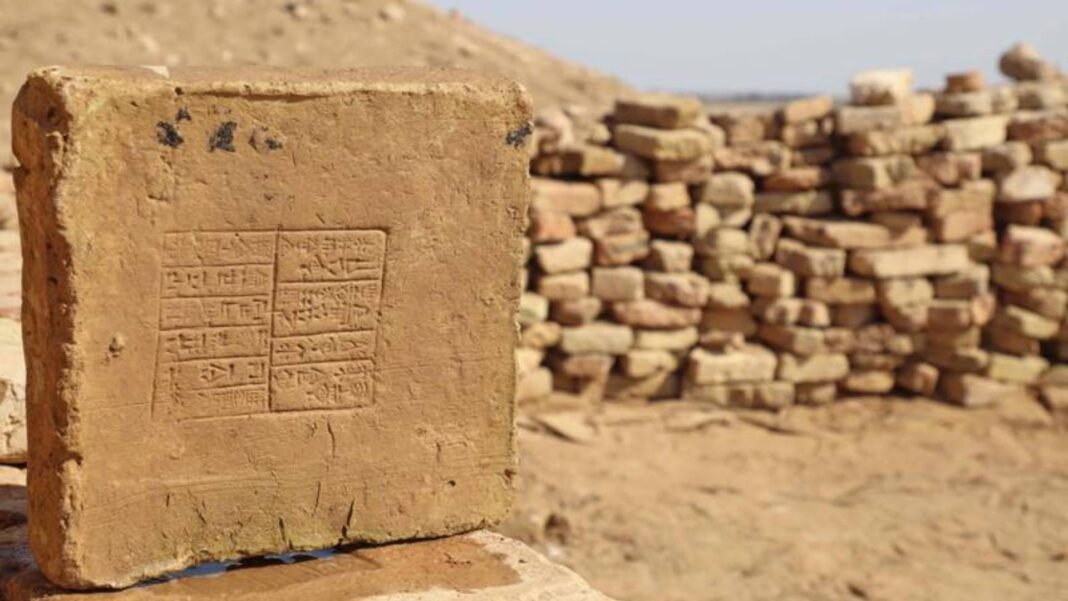
Iraq leads world writing history with the oldest known writing system. More than 5,000 years ago, people in ancient Mesopotamia created the first organized script. As a result, Iraq became the starting point of recorded human history.
Scholars confirm that the ancient Sumerians developed cuneiform around the 35th century BC. They lived between the Tigris and Euphrates rivers. This fertile land supported agriculture, trade, and early cities. Consequently, society needed a reliable system to record information.
The Sumerians introduced cuneiform in the city of Uruk. Today, Uruk lies near the modern town of Al-Warka in southern Iraq. At that time, Uruk stood as one of the largest cities in the world. Therefore, administrators required an efficient method to track goods and transactions.
Scribes used a reed stylus to press wedge-shaped symbols into wet clay tablets. Then, the clay hardened under the sun. This process created permanent records of trade and administration. Iraq leads world writing history because these tablets still survive today.
At first, cuneiform focused on bookkeeping and economic activity. However, it quickly expanded beyond simple records. Writers began to express laws, royal decrees, prayers, and literature. Over time, the script captured complex ideas and emotions.
Among the most famous works stands the Epic of Gilgamesh. Many historians consider it the first great literary masterpiece. In addition, the Code of Hammurabi ranks among the earliest written legal collections. These texts show how writing shaped law, culture, and storytelling.
Historians argue that writing marked the shift from prehistory to recorded history. Before writing, people relied on oral tradition. After writing emerged, societies preserved knowledge across generations. Therefore, Iraq leads world writing history as the birthplace of documentation.
Meanwhile, other civilizations developed scripts in later centuries. The Indus Valley civilization created its script in South Asia. Ancient Egypt introduced hieroglyphs in the 32nd century BC. Later, cultures in Iran, Crete, Anatolia, and the eastern Mediterranean formed their own systems. Early Chinese characters appeared in the 13th century BC. The Phoenician alphabet emerged in the 11th century BC and influenced many later alphabets.
Although these cultures advanced writing in unique ways, the earliest organized system began in Mesopotamia. Thousands of clay tablets discovered across Iraq confirm this legacy. Archaeologists continue to study these artifacts. They reveal details about urban government, trade networks, religion, and science.
Despite years of conflict and damage to heritage sites, Iraq remains central to understanding human civilization. Museums and research institutions preserve many recovered tablets. Scholars analyze them to uncover new insights into early society.
Iraq leads world writing history not only through invention but also through preservation. The first marks pressed into clay represent more than symbols. They represent humanity’s decision to record its story.