

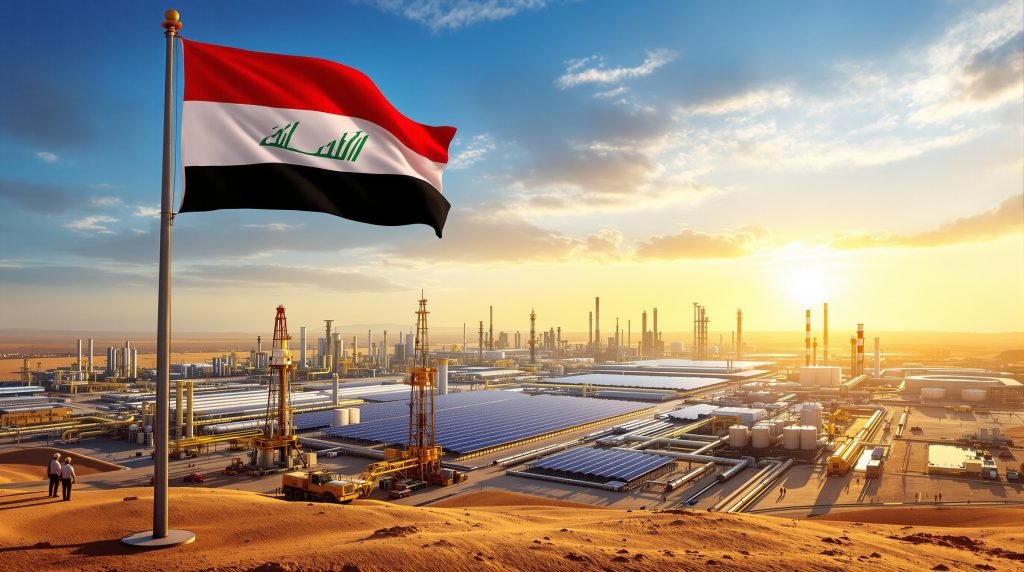
Iraq continues to expand its financial revenues through a growing dependence on oil exports. The Iraqi Ministry of Finance announced that the country’s total revenues reached nearly $63 billion by the end of August. This increase highlights Iraq’s steady position in the global energy market and its continuous reliance on oil as a key driver of the national economy.
The latest figures show that Iraq’s total financial revenues stood at around 82 trillion Iraqi dinars. Oil exports generated nearly 74 trillion dinars, equal to about $56 billion. This represents around 90 percent of Iraq’s entire budget. In contrast, non-oil revenues amounted to 8.5 trillion dinars, or roughly $6.5 billion.
The key phrase Iraq’s financial revenues reflects the nation’s ongoing economic growth and challenges. Iraq’s financial revenues come mainly from crude oil sales, which continue to dominate its income structure. However, government officials aim to diversify sources and reduce heavy reliance on energy exports.
Moreover, experts note that Iraq’s economy remains vulnerable to global oil price fluctuations. When oil prices drop, the country faces serious risks to its financial stability. The government designed its national budget on an oil price estimate of $70 per barrel, reflecting caution about future price volatility.
Economic advisor Mazhar Saleh emphasized the importance of maintaining tighter financial control in the coming year. He explained that despite recent growth, Iraq still needs stronger fiscal management to prevent potential deficits. His remarks underline the urgent need for Iraq to balance income and spending effectively.
In addition, Iraq’s Parliamentary Finance Committee expects a noticeable increase in non-oil income in the near future. The committee forecasts non-oil revenues to reach up to $22 billion as the government continues to diversify its financial sources. This transition marks an essential step toward reducing economic vulnerability and promoting long-term sustainability.
Meanwhile, new reforms aim to improve the country’s financial systems and attract private investment. The government focuses on strengthening trade, supporting small enterprises, and developing modern industries. Through these initiatives, Iraq seeks to create a more balanced and secure economy.
As Iraq’s financial revenues continue to grow, the government faces the dual challenge of maintaining oil-based income while building stronger non-oil sectors. The balance between these two goals will determine Iraq’s future economic stability and growth potential.